
Key points
- US FSIS section 416.3 requires equipment construction that facilitates thorough cleaning and allows sanitary inspection.
- FSIS section 416.4 ties cleaning and sanitizing frequency to preventing insanitary conditions.
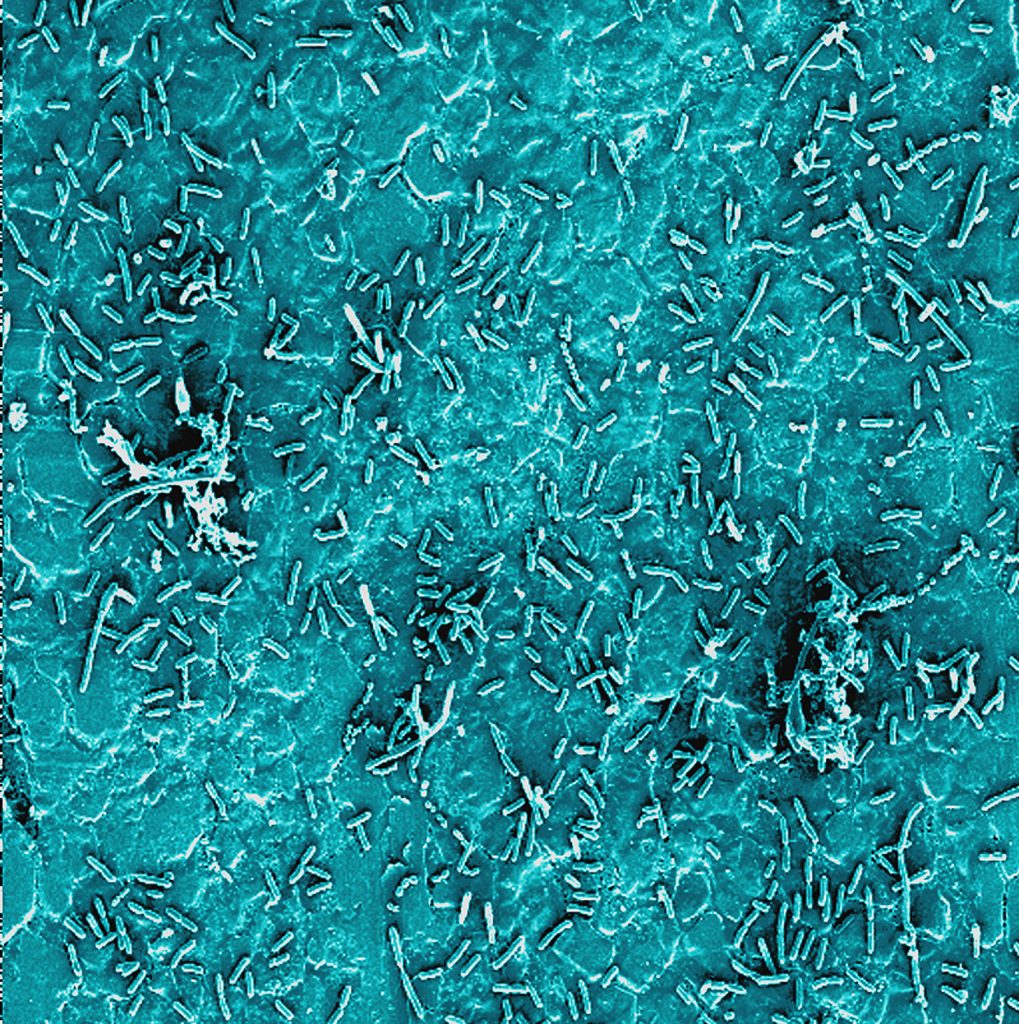
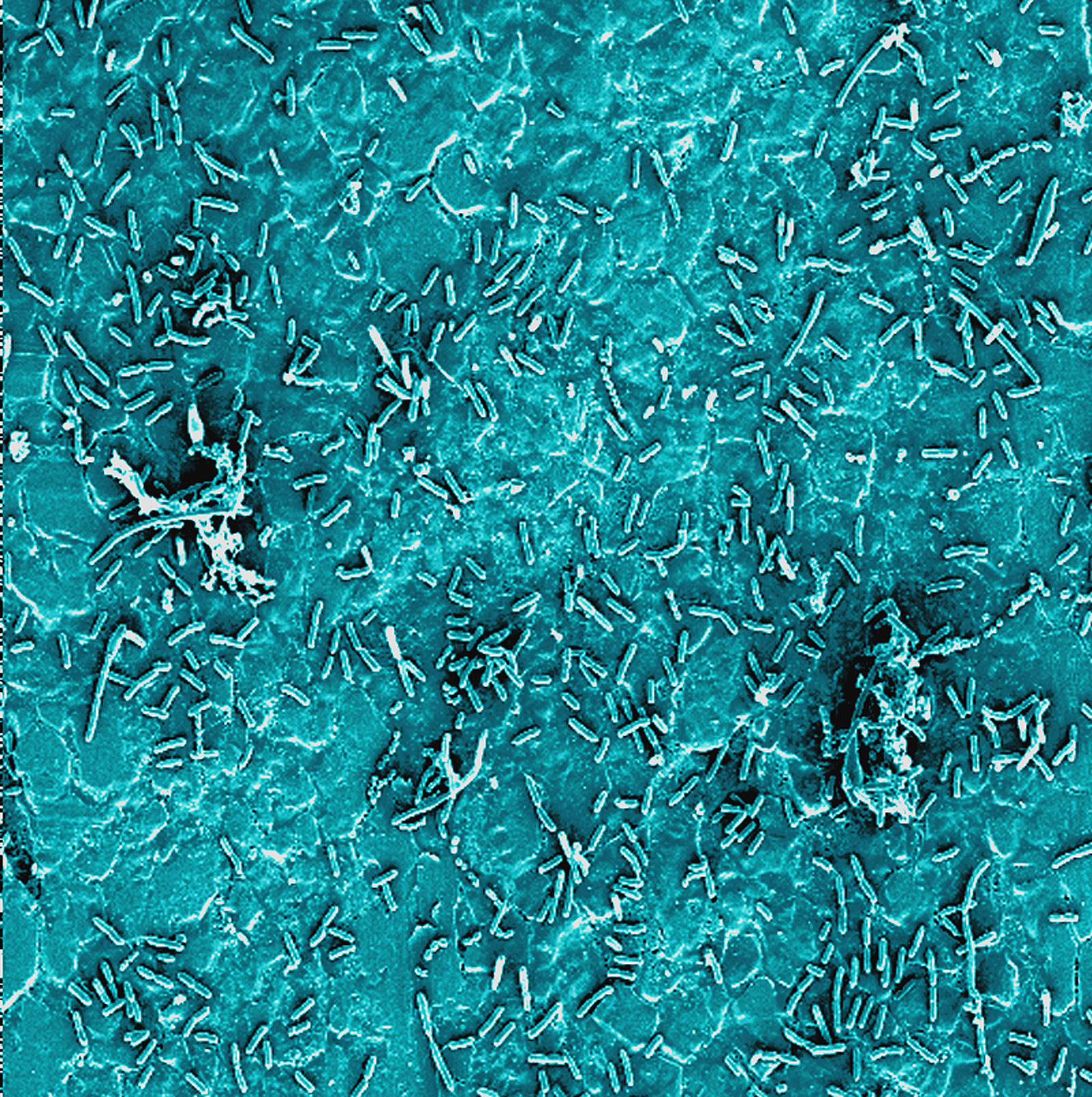
- An old ARS microscopy image illustrates why material alone cannot substitute for access and a verified cleaning process.
A stainless-steel label does not make a line self-cleaning. Inspect contact surfaces, joints, service access and verification before sign-off.
What the rules actually cover
The USDA FSIS sanitation guide reproduces requirements in 9 CFR 416.3 for cleanable equipment and access for sanitary inspection, and in 416.4 for cleaning and sanitizing food-contact surfaces as often as needed. These are United States requirements cited as a design reference; they are not presented as law in every export market. A buyer must confirm the rules that apply to its facility.
Review the full assembly
On a slaughter-line equipment drawing, mark food-contact surfaces, joints, guards, drains, hinges and parts that must be opened for cleaning. Ask whether staff can reach and inspect them safely and whether cleaning leaves residues or standing water. State the intended procedure, chemicals and verification responsibility in the operating brief; a material callout without an access drawing is incomplete.
What the photograph can and cannot prove
ARS published the pictured microscopy in research on bacterial attachment to stainless steel. It demonstrates that a surface can have microbial attachment under study conditions; it does not test a Zhengye product, identify contamination in a present-day plant or prove a specific finish meets a standard. Surface treatment research is useful context, but final acceptance requires the installed process to be inspected.
Practical handover
At commissioning, agree who opens the equipment, who inspects after cleaning, what is recorded, and how nonconforming areas are corrected. This independent checklist was checked on 15 October 2026; the ARS study dates from 1998. Plant-specific sanitation, chemicals and worker safety need local approval.
Practical question
Is stainless steel alone enough to demonstrate hygienic equipment?
No. Review construction, access, cleaning frequency and observed condition of the installed assembly.
Related equipment and planning resources
Sources and further reading
Sources checked: