
PIG PROCESSING
Explore every stage of your pig slaughter line.
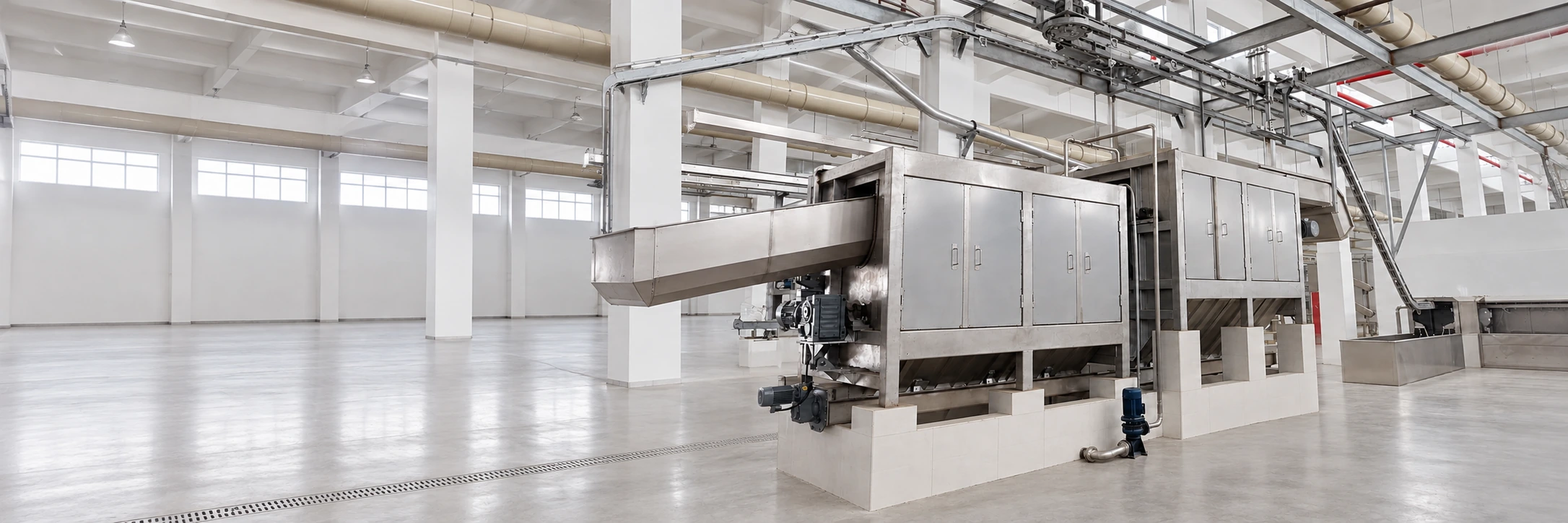
Zhengye Slaughter Machinery builds pig slaughterhouse lines and supplies the pig slaughter equipment inside them, with receiving, scalding, dehairing, dressing and rail transfer planned as one connected process. Compare configurations for your capacity and building.
Explore Every Step of Pig Processing
Follow the 21 steps in our pig processing flow. The images below show machines, conveyors and work-platform examples for each step. Receiving and lairage are planned before this sequence; the final configuration follows your animal type, capacity, building and project requirements.
What a complete pig slaughter line can include
For a complete-line quotation, define where the supply starts and ends. The equipment scope can cover receiving, stunning and bleeding, scalding and dehairing, dressing and inspection, and carcass transfer to chilling. Confirm which rails, platforms, controls and installation services belong in the quotation. List any refrigeration, cutting or waste-handling equipment you also need.
- Capacity: Share your target pigs per shift, working hours per shift, pig weight range and peak intake. These inputs help size each station and identify where equipment or transfer speed could limit output.
- Layout: Mark available floor space, clear height, columns, drains, utilities and the cold-room entry on a floor plan. Review the overhead rail and carcass transfer interfaces when checking levels, supports and clearances.
- Automation: Decide which operations can remain operator-led and where powered transfers would help. Compare the scalding system connections and spiral dehairing machine configurations together, because the scalding outlet has to match the dehairer’s inlet.
Pig slaughter process drawing
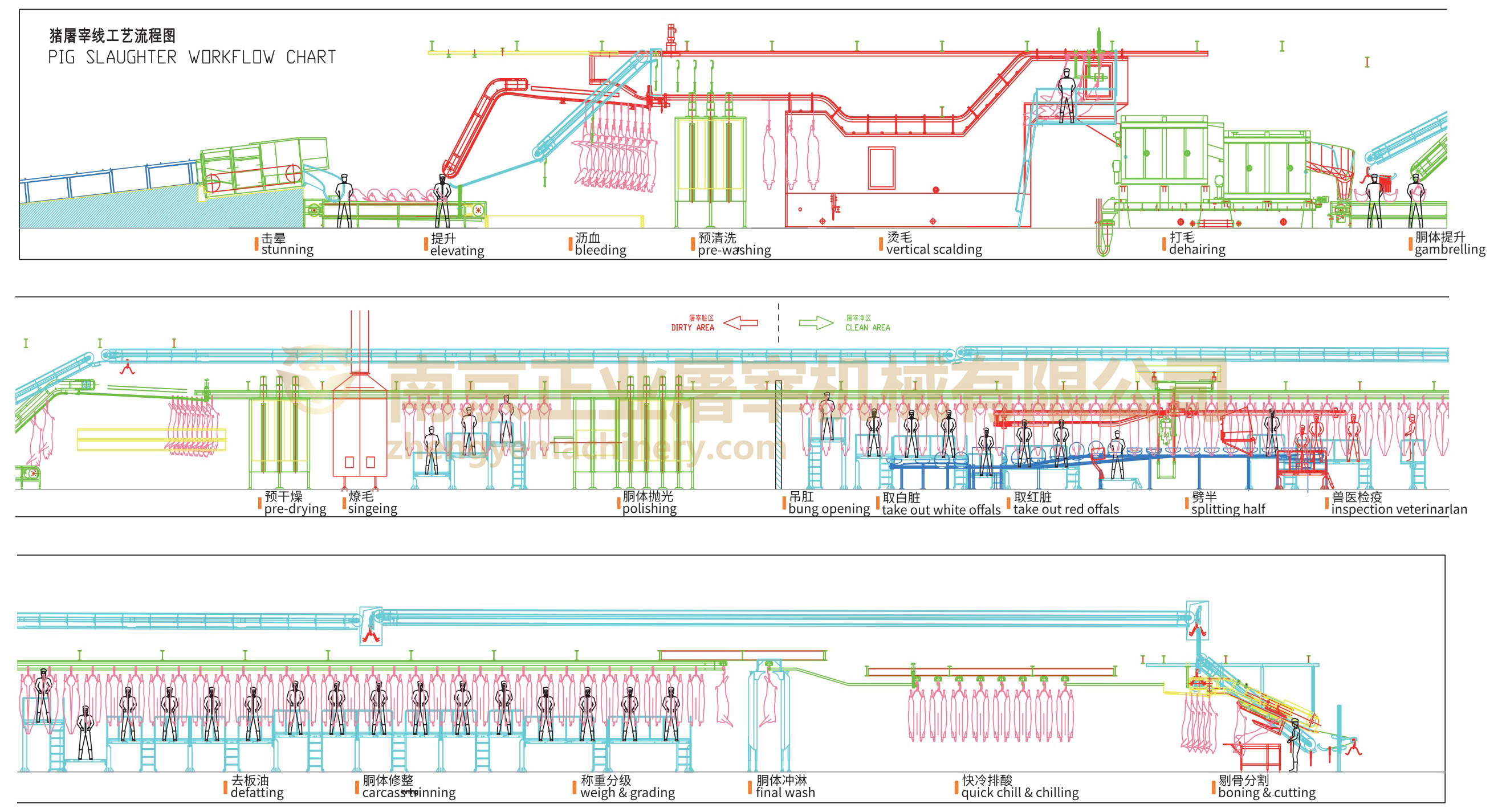 View the full-size process drawing →
Stunning
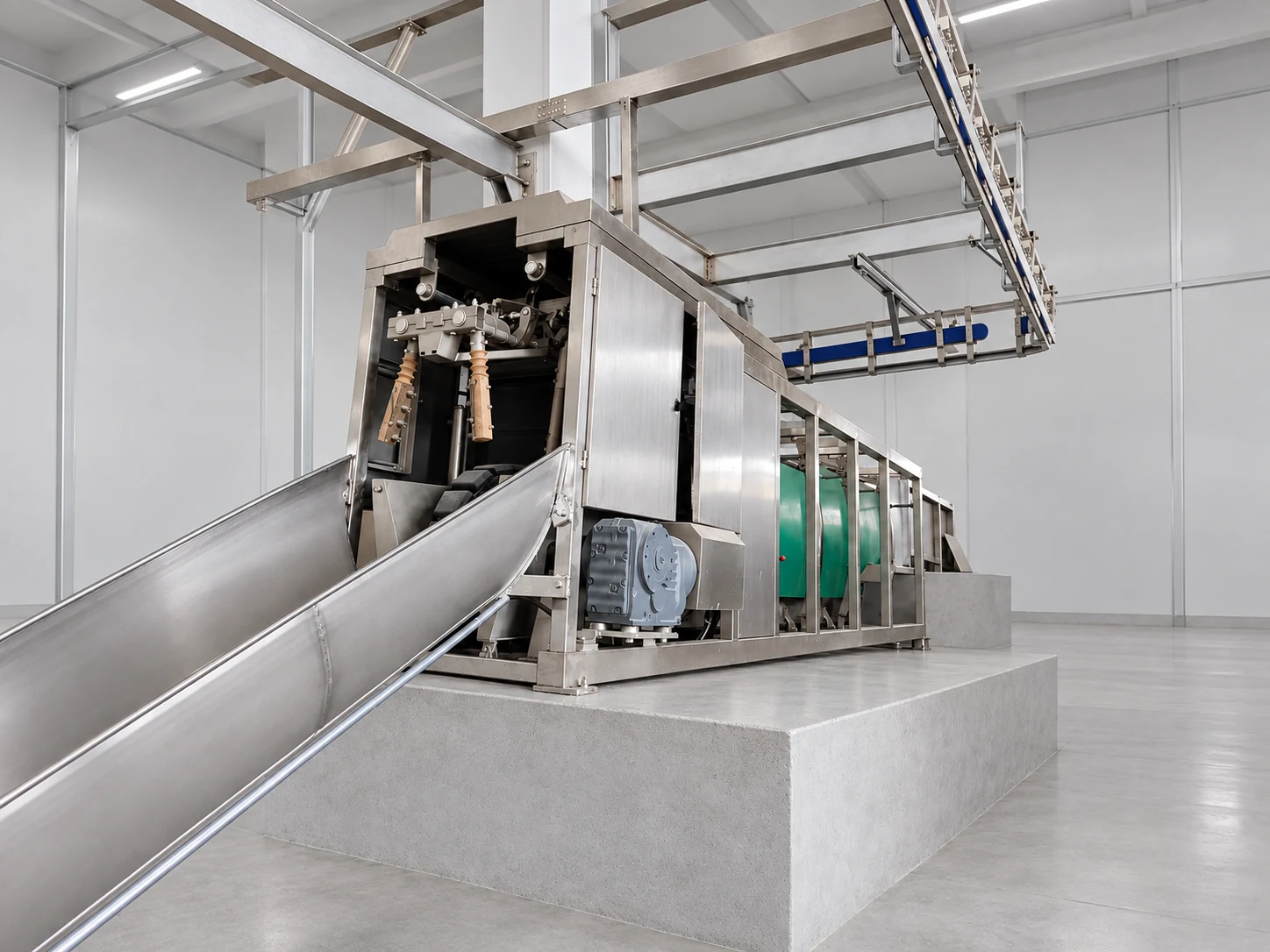
Connect animal reception, the stunning station and transfer to hoisting.
Hoisting
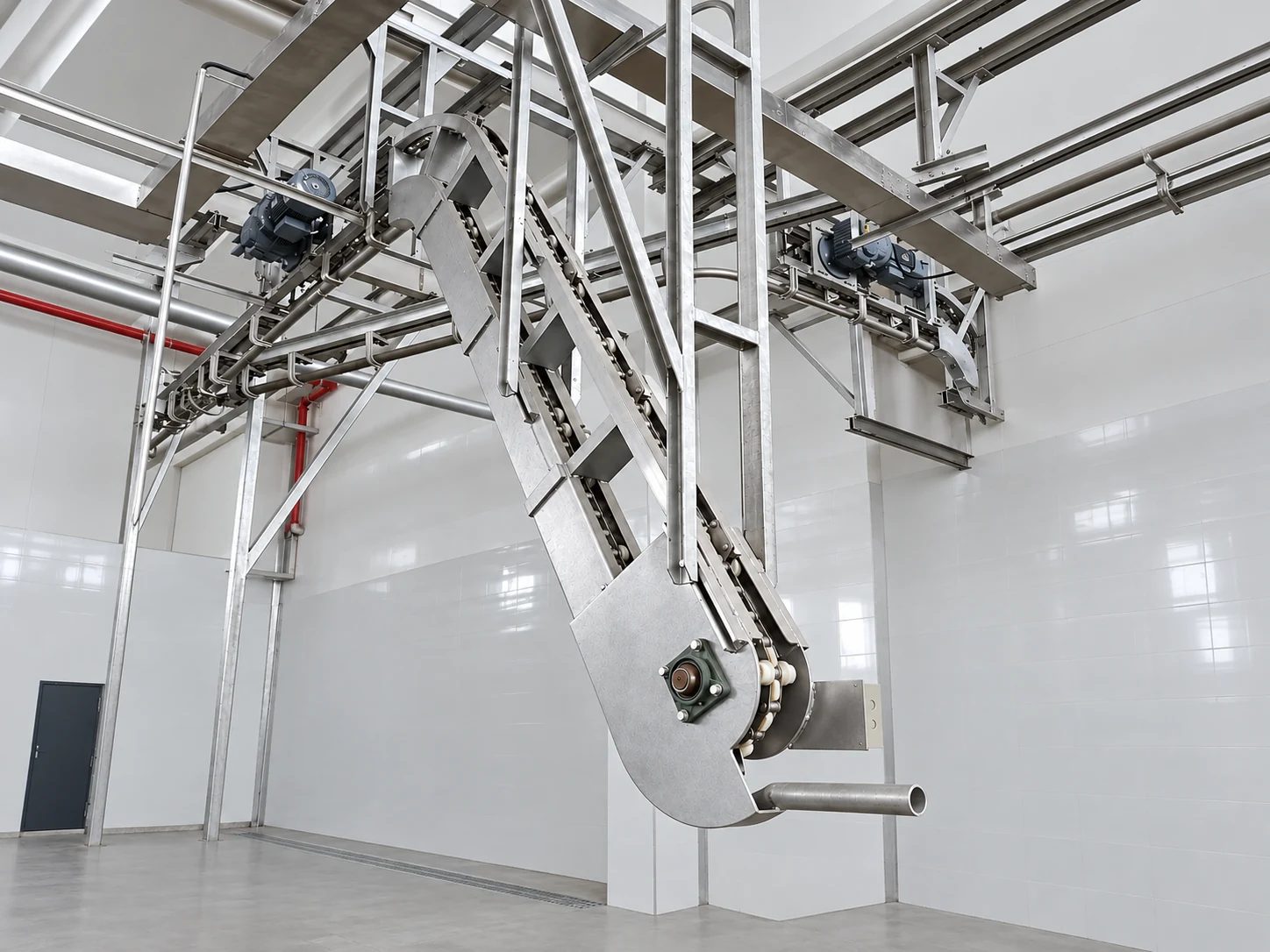
After stunning and transfer, lift the pig onto the suspended bleeding rail.
Bleeding
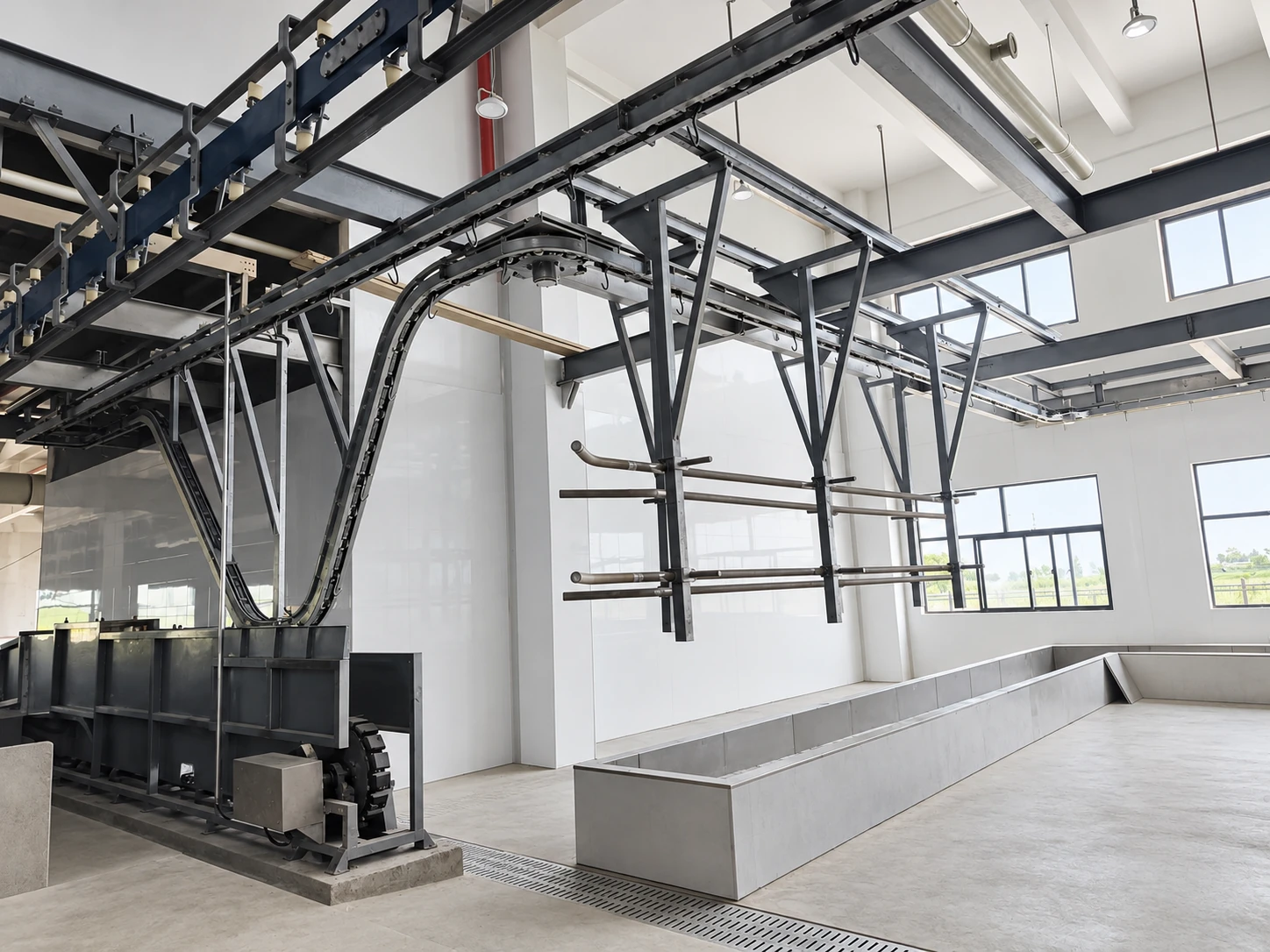
Use suspension and blood-collection equipment to convey the pig through the bleeding section.
Pre-scalding pig washing
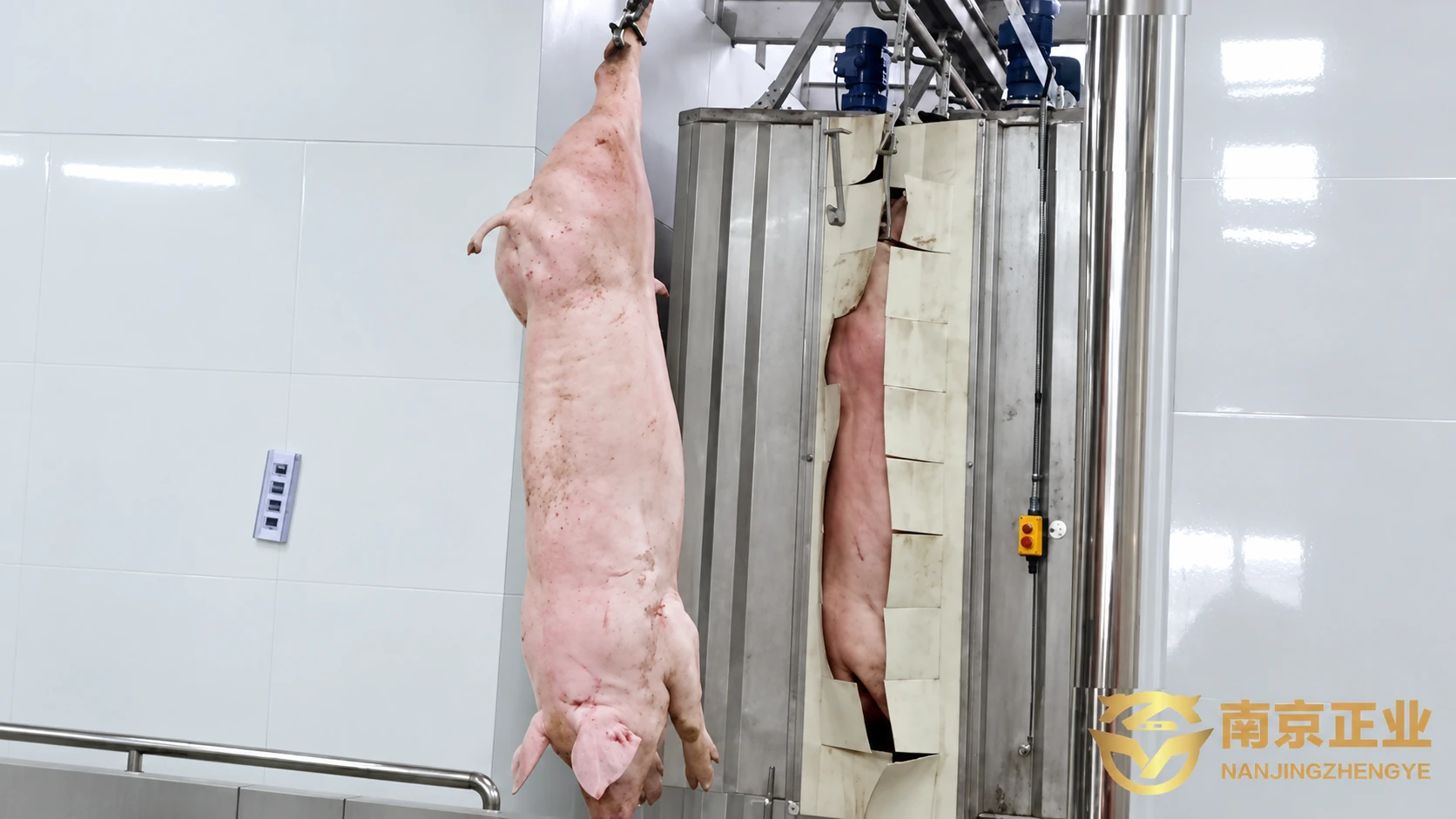
Wash the hide-on pig surface before scalding and connect the wash enclosure to the suspended conveyor.
Scalding
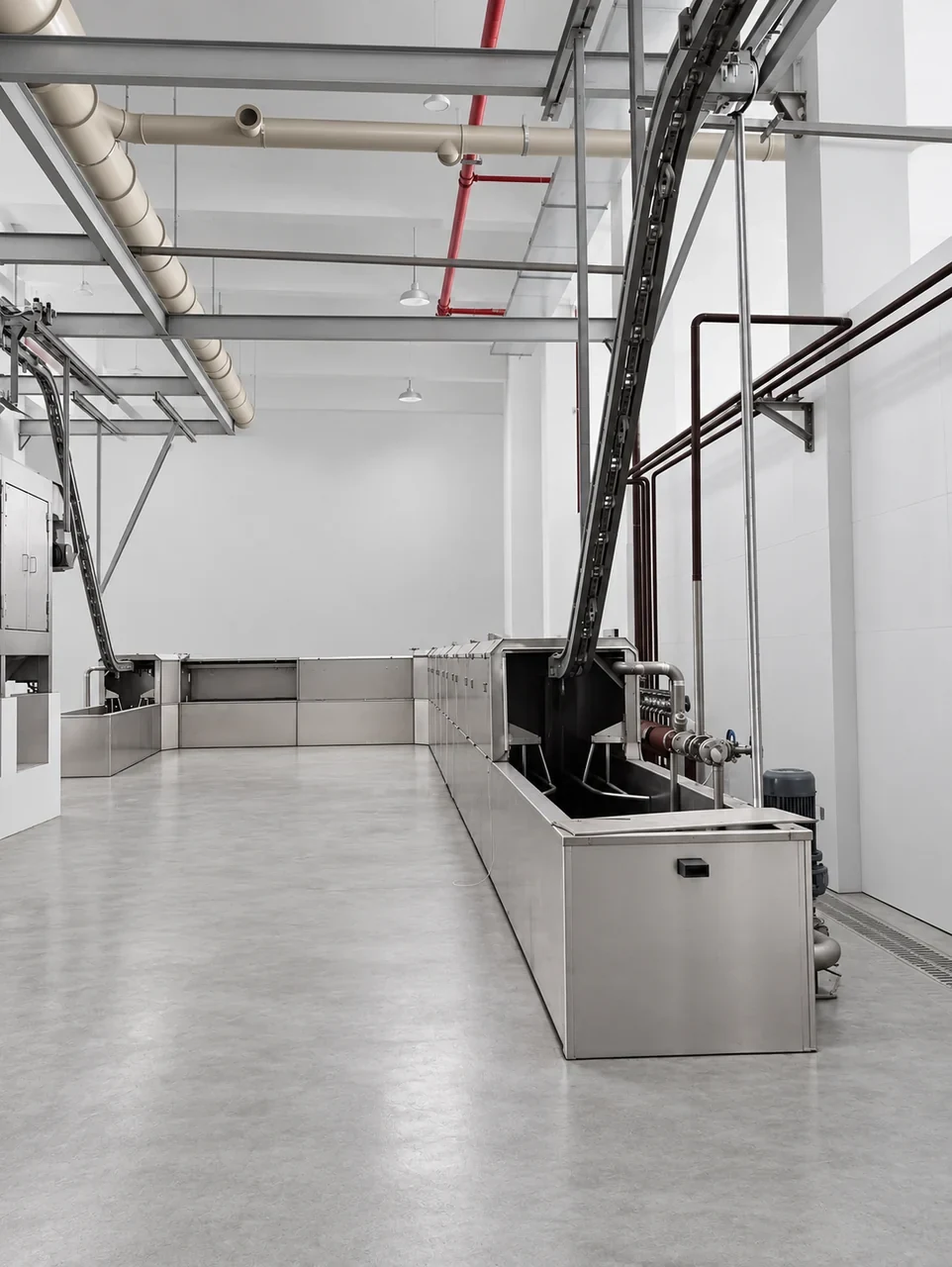
Configure the scalding canal and associated scalding and transfer equipment to prepare for dehairing.
Dehairing
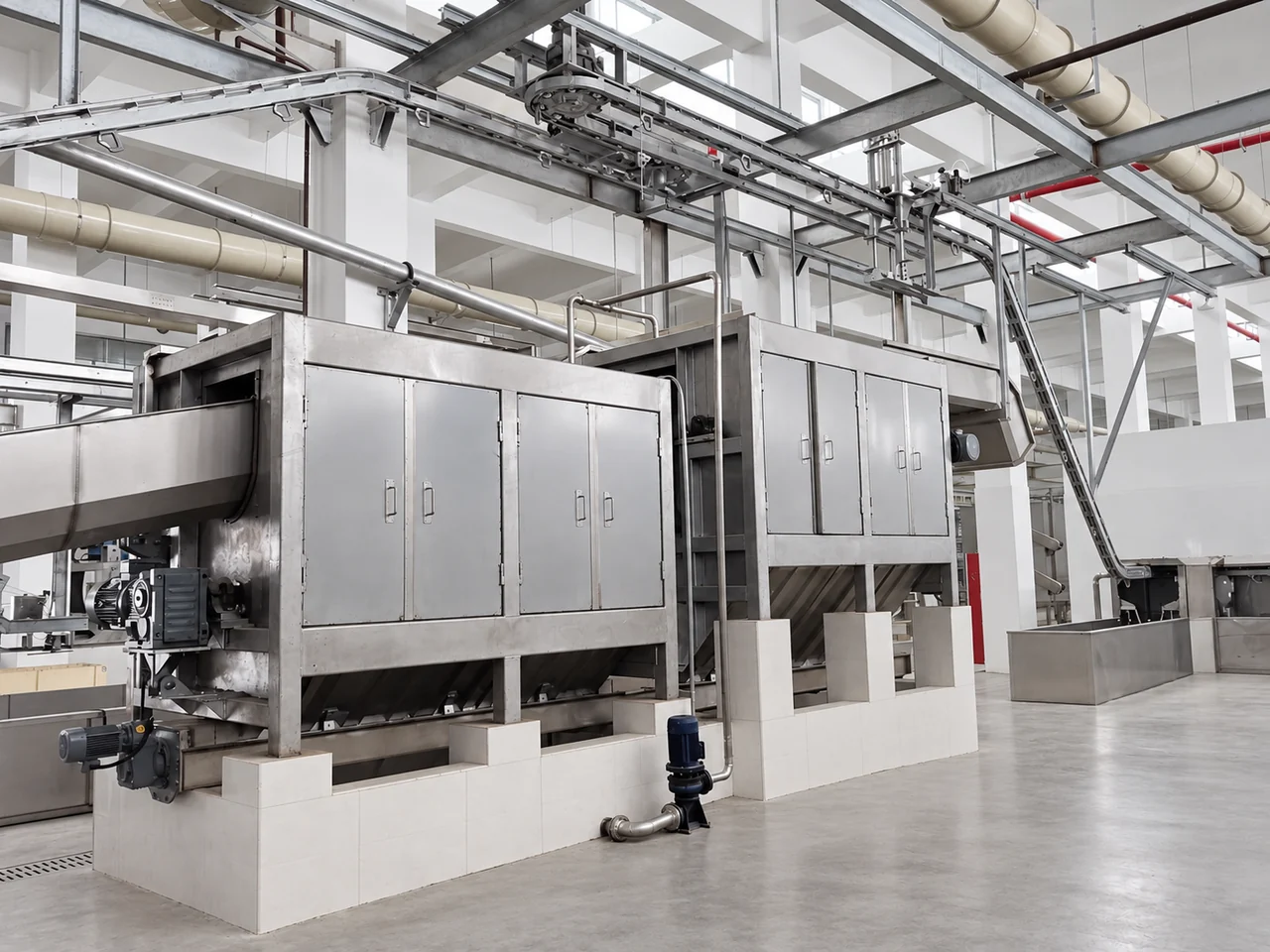
Remove hair after scalding and connect the dehairing machine to its inlet and outlet transfer equipment. View the spiral pig dehairing machine video to discuss the inlet, outlet and conveyor connections.
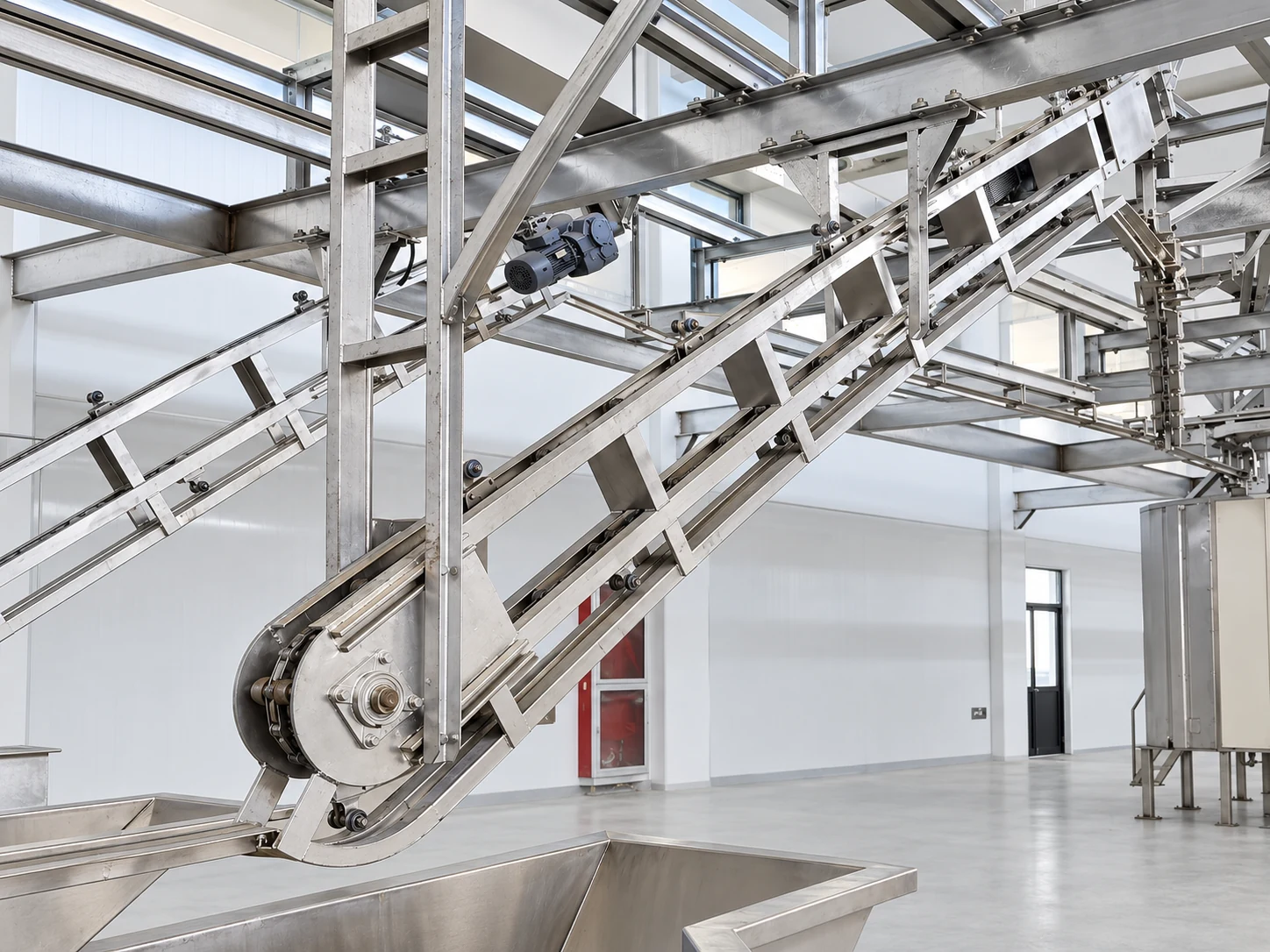
Carcass hoisting
Use gambrels and the hoist transfer section to lift carcasses onto the dressing rail.
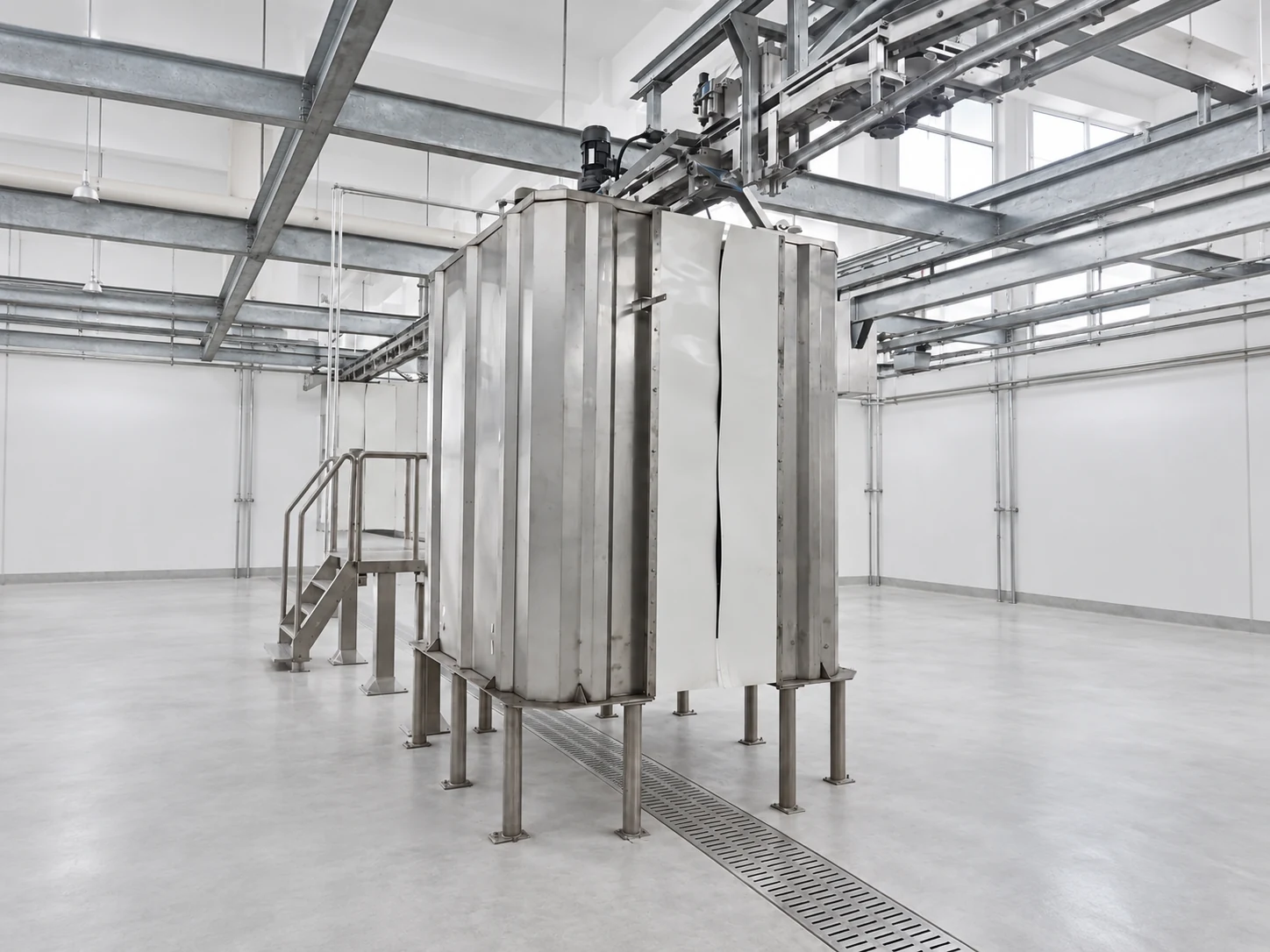
Pre-drying
Remove surface water before singeing and connect the drying section to the conveyor.
Pre-drying configuration of a dual-purpose machine; the final layout follows the selected line design.
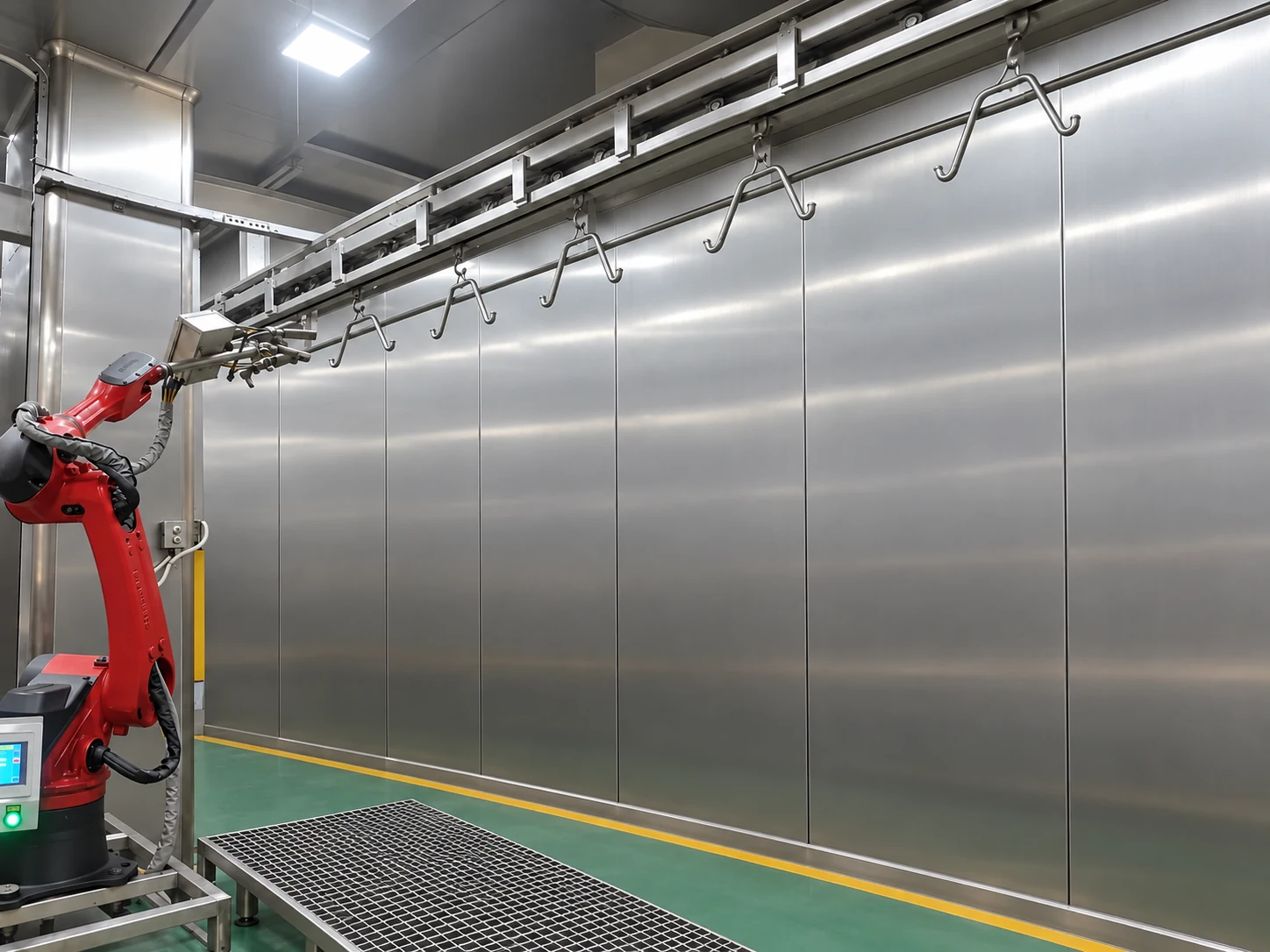
Singeing
Treat residual surface hair after pre-drying, then transfer the carcass to polishing.
Singeing robot detail from the workshop video.
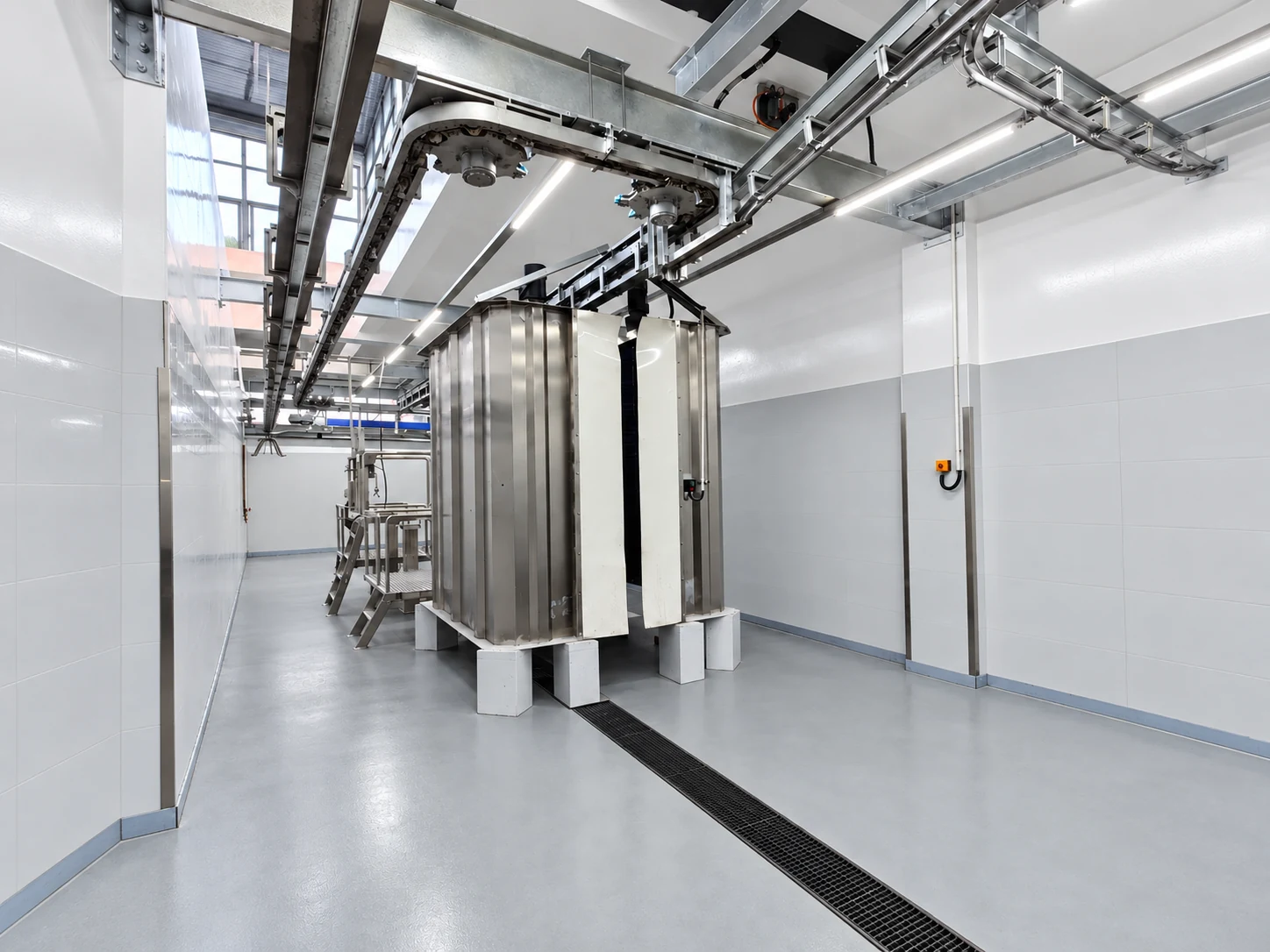
Carcass polishing
Brush the carcass after singeing to remove remaining burnt hair and surface residue.
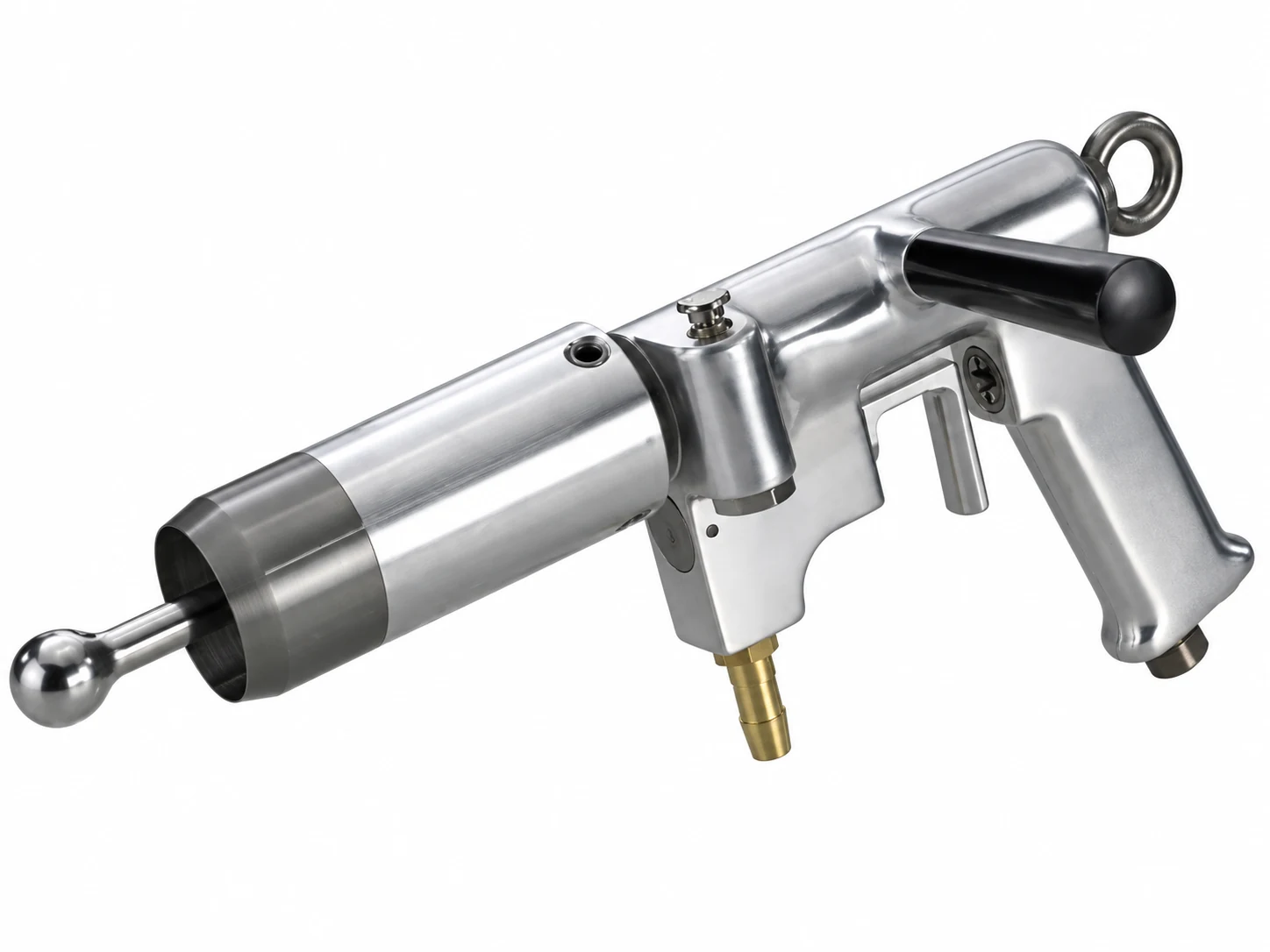
Bung opening
At the dressing stage, use the bung-cutting tool for a precise cut around the anus. Connect suction to remove rectal contents and reduce carcass contamination risk.
The image shows a bung-cutting tool. The workstation and suction system follow the line design.
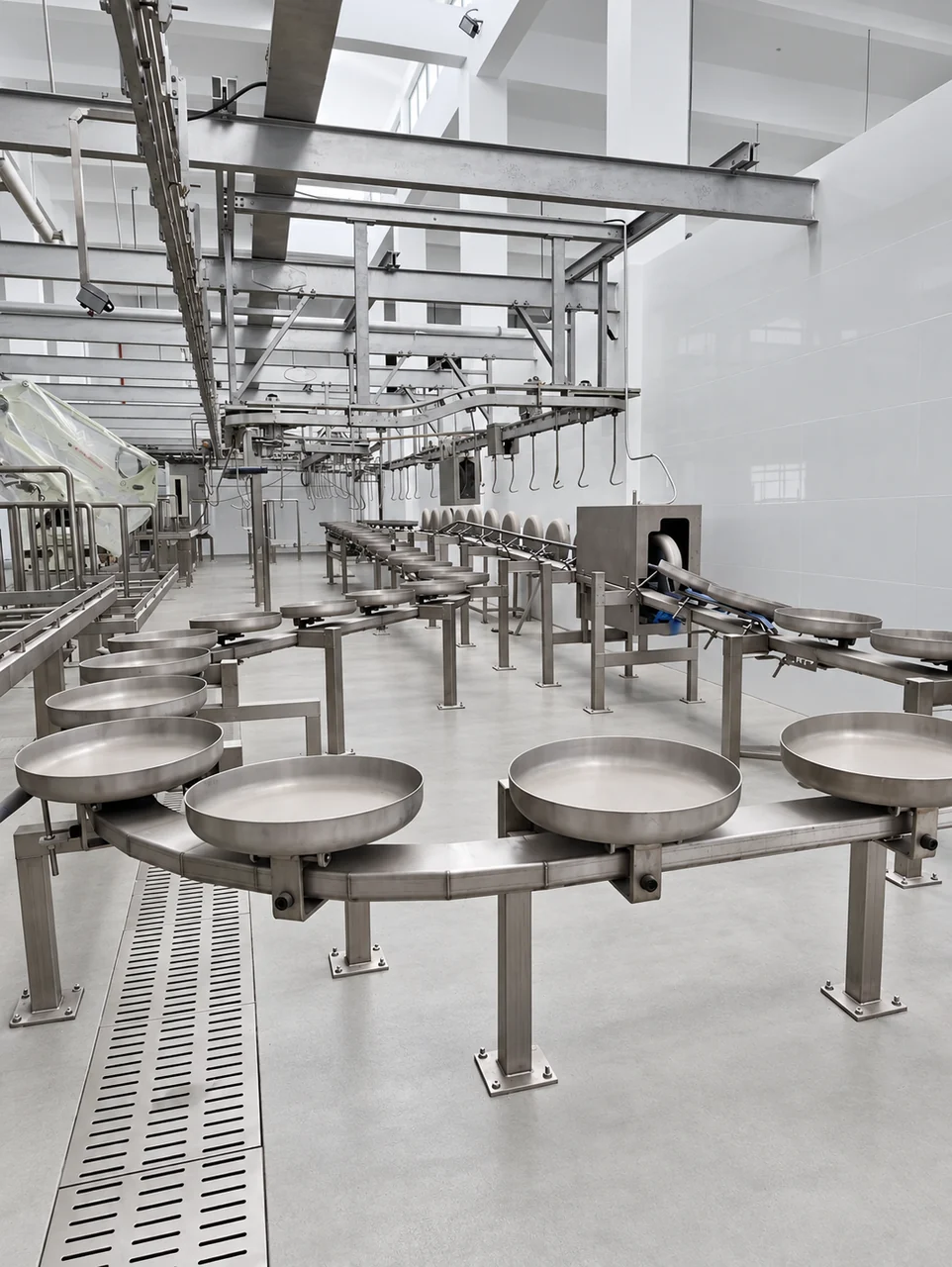
White offal removal
Provide access for white offal removal and connect reception, conveying and inspection.
Viscera reception trays and conveying equipment.
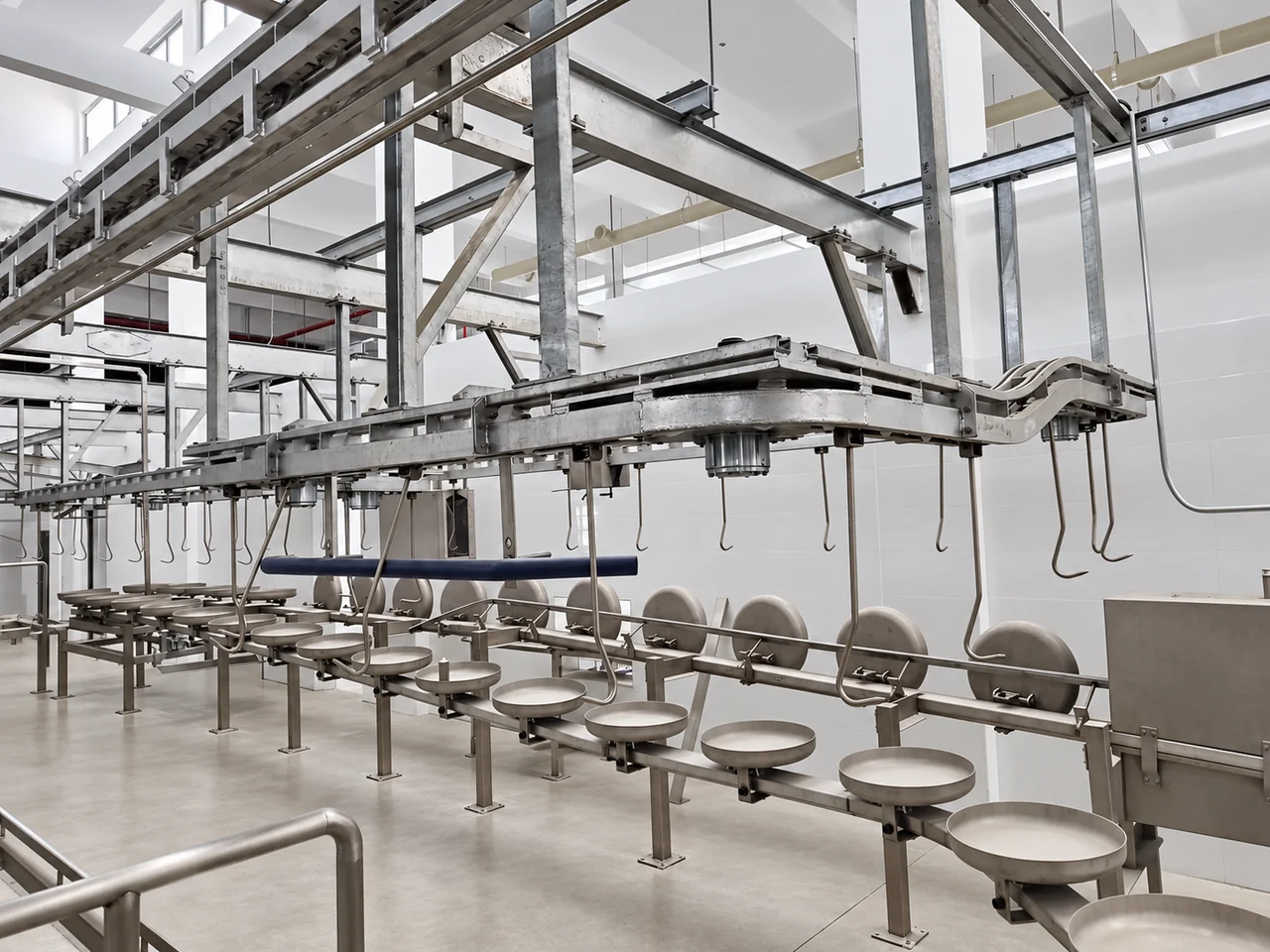
Red offal removal
Connect red offal removal to viscera reception, conveying and inspection arrangements.
Suspended viscera conveying and inspection interfaces.
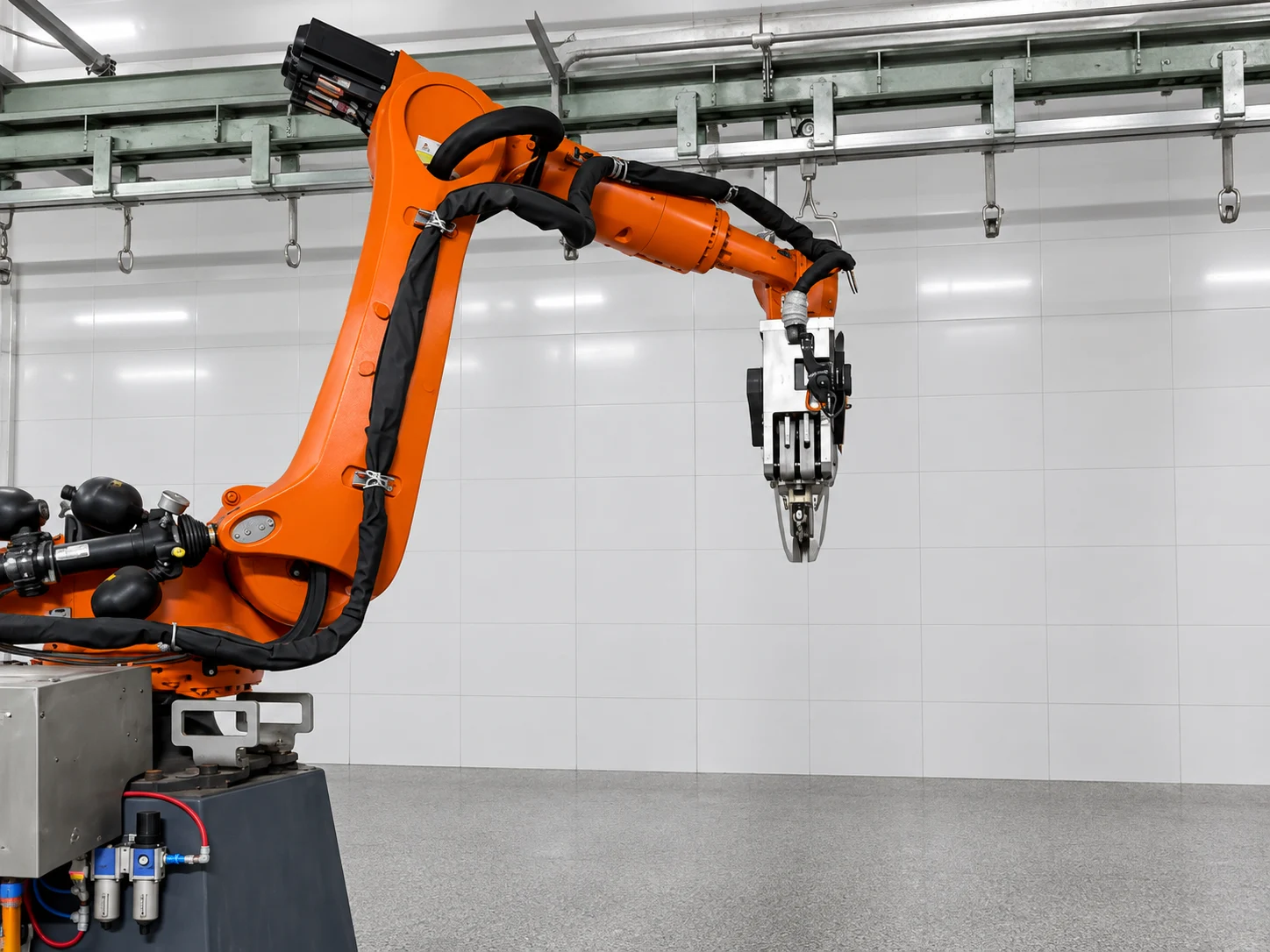
Robotic carcass splitting
Use robotic splitting equipment and connect it to upstream and downstream carcass conveyors. Workstation layout and safety protection follow the project design.
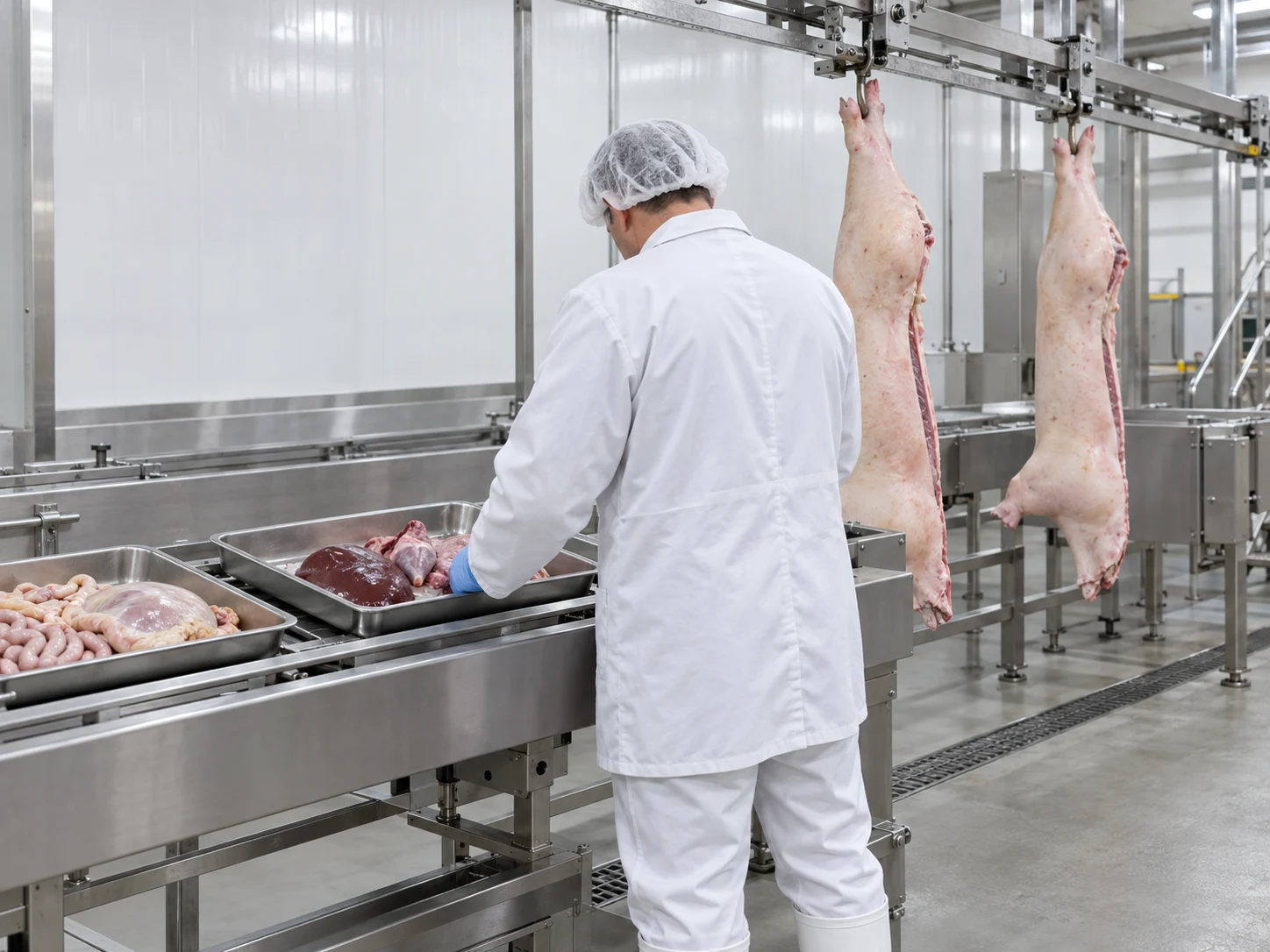
Veterinary inspection
Post-mortem inspection covers carcass dressing and viscera processing. Provide corresponding stations and synchronized conveying for carcasses, red offal and white offal so inspection records remain linked to the same pig.
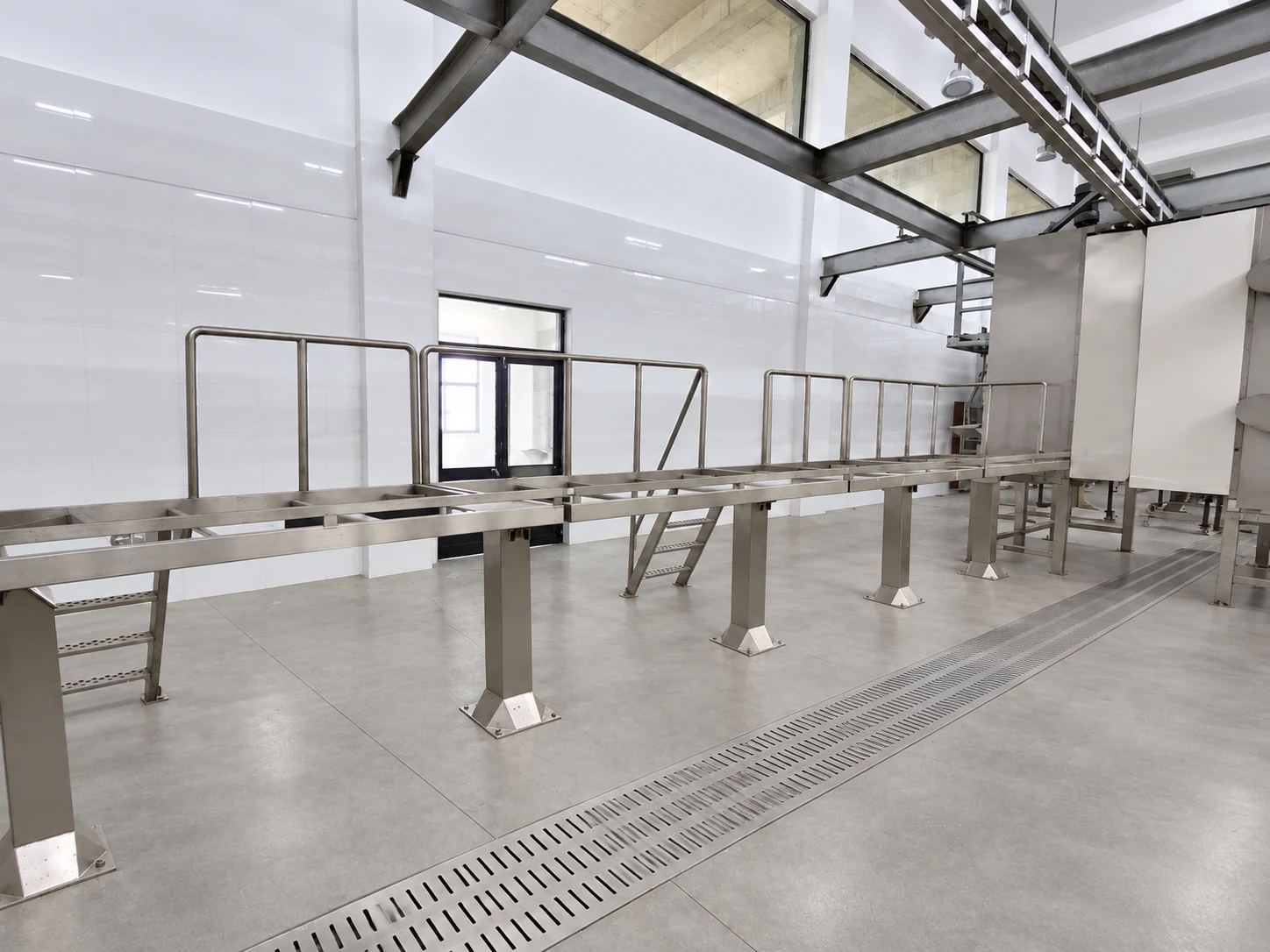
Leaf fat removal
Provide a dedicated manual leaf fat removal station after the inspection section.
Work platform configuration for planning a manual leaf fat removal station.
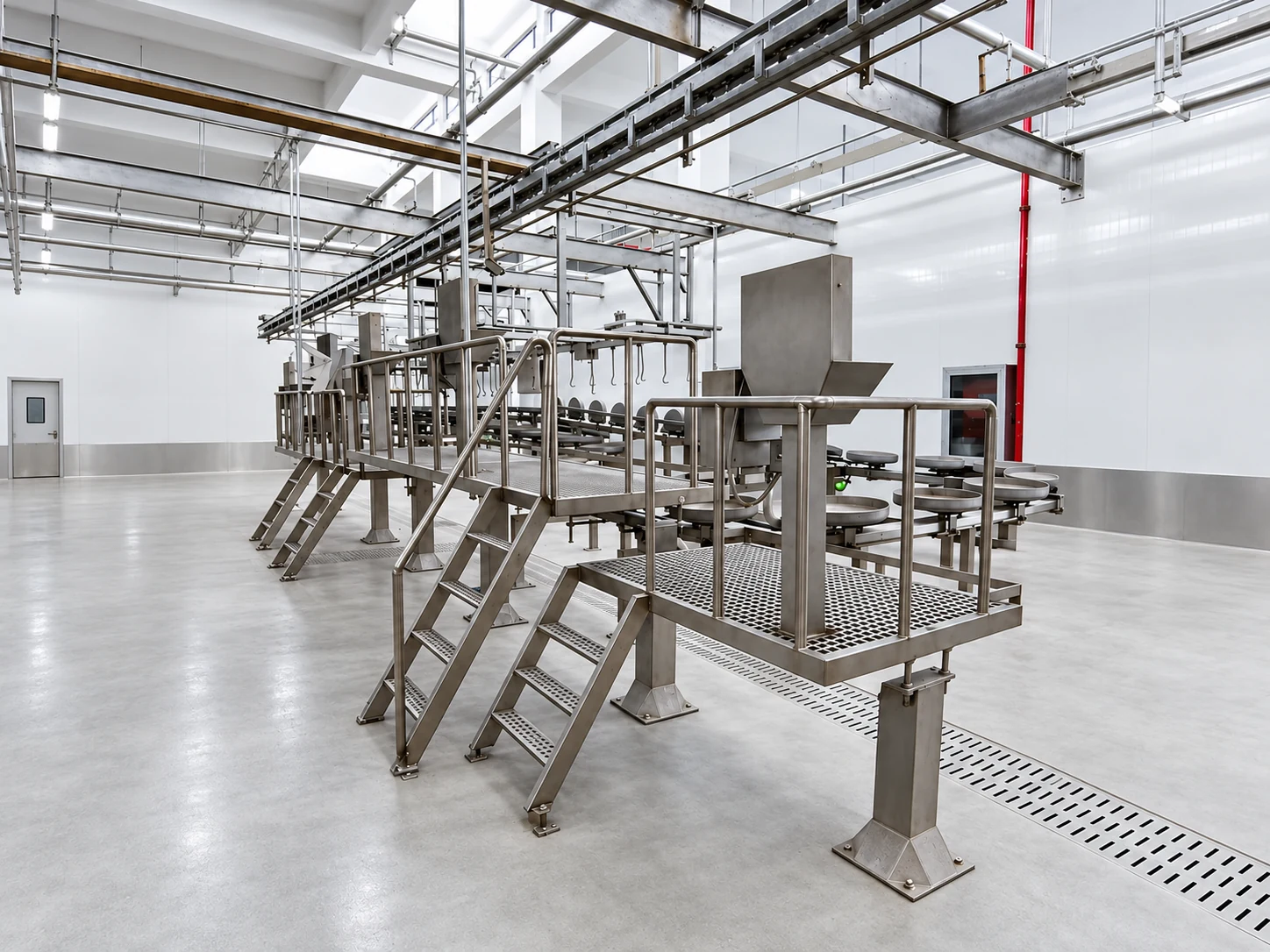
Carcass trimming
Provide access for final trimming before weighing, washing and chilling.
Carcass processing conveyor and operator platforms shown in the pig equipment brochure.
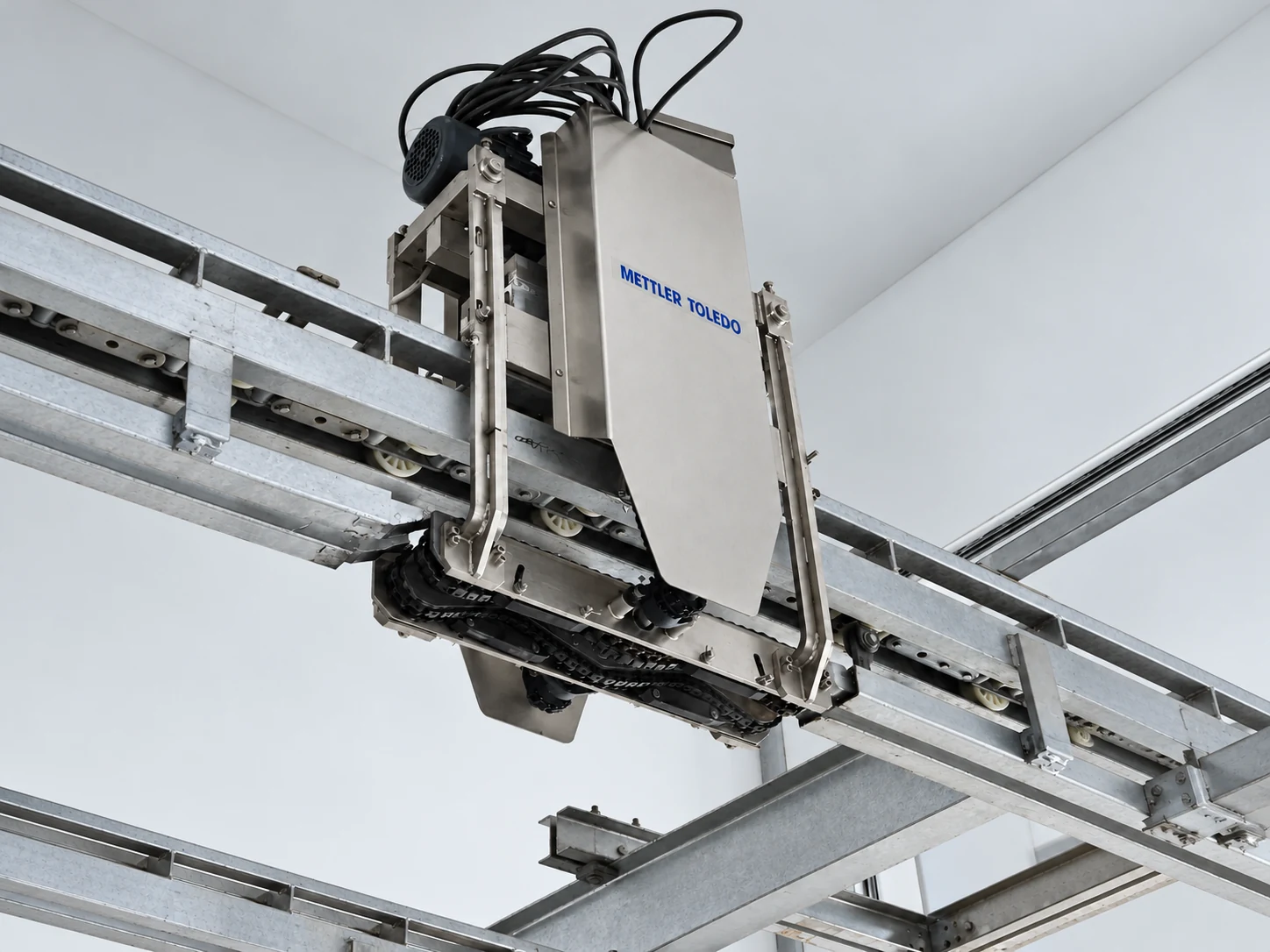
Weighing
Weigh carcasses on the rail, record weight data and connect downstream conveying.
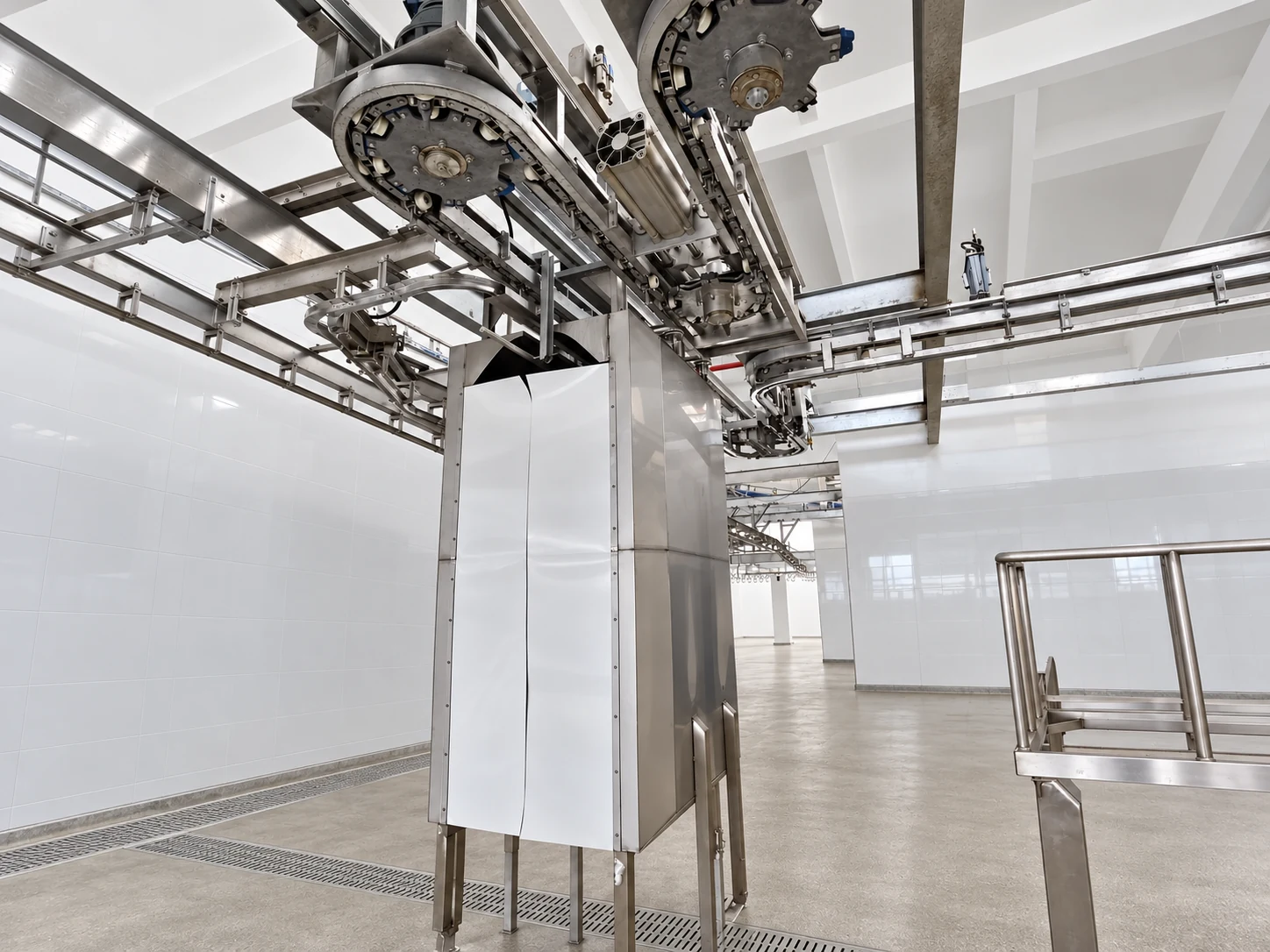
Carcass washing
Convey dressed carcasses through the line spray-washing section before transfer to chilling.
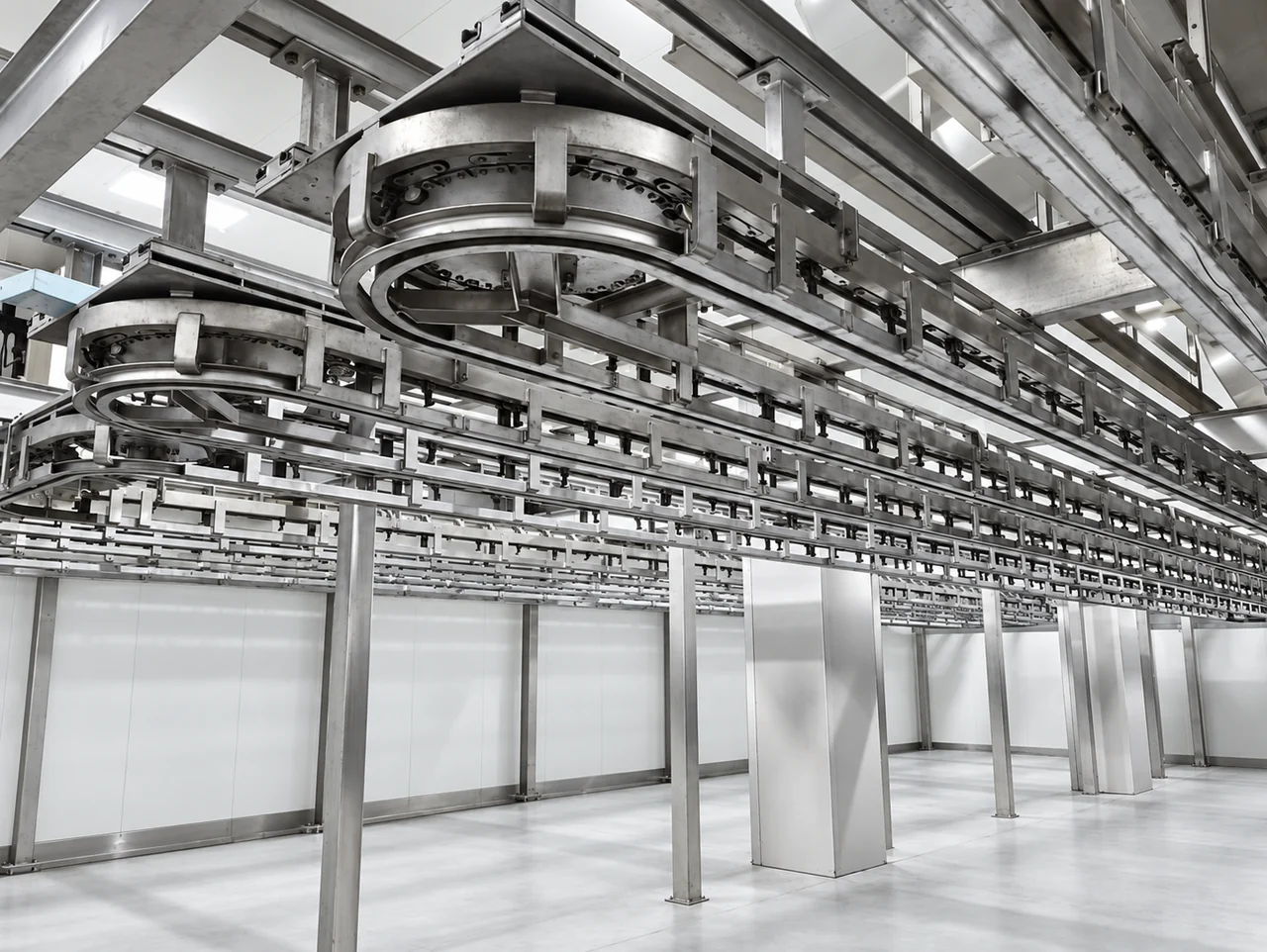
Rapid chilling
Connect the chilling conveyor, chilling room and subsequent refrigerated holding arrangements.
The image shows the conveyor arrangement; refrigeration equipment is configured separately.
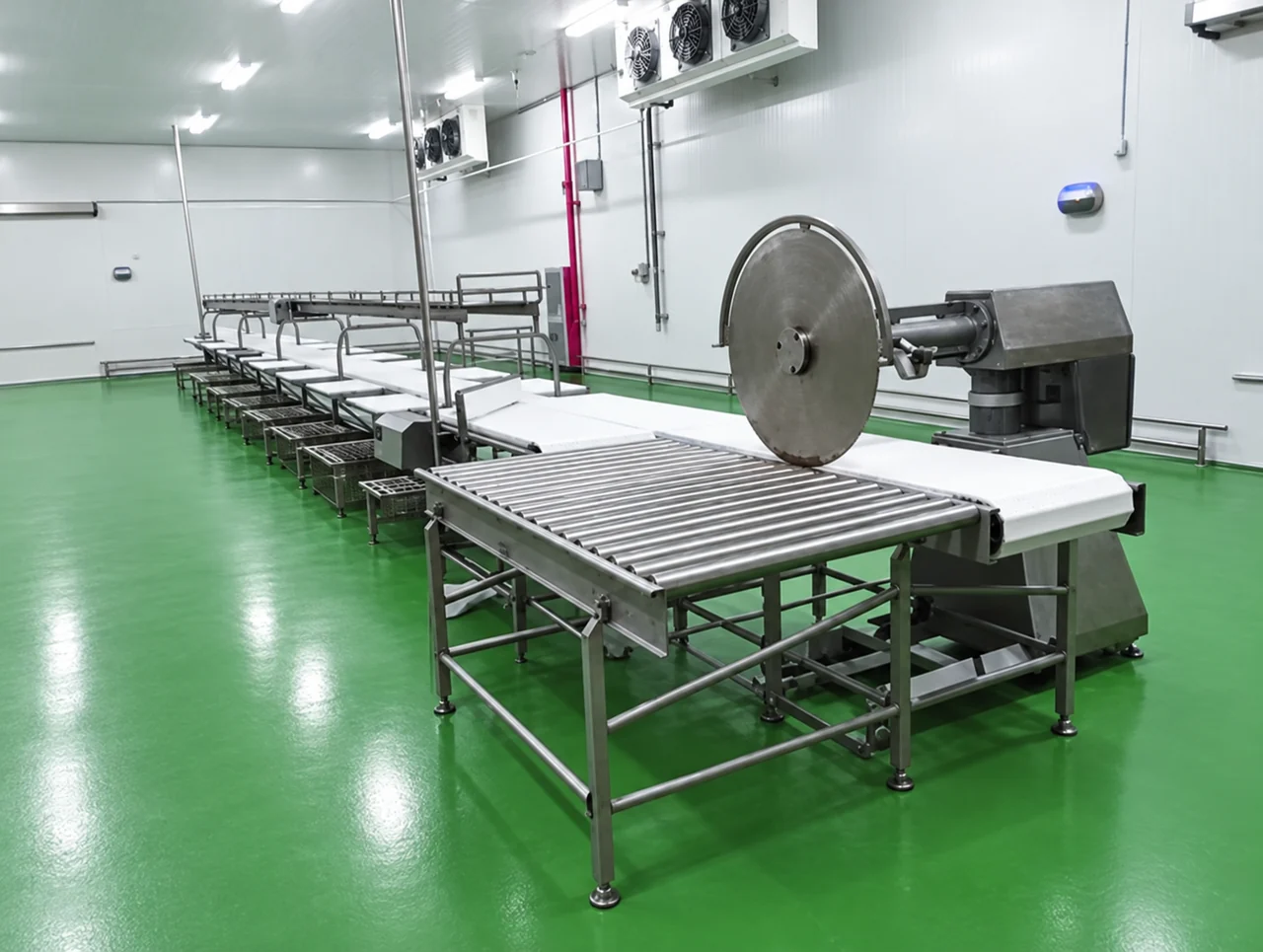
Deboning and cutting
Connect product conveying to transfer chilled carcasses into the deboning and cutting work area.
Pig Slaughterhouse Layout and Capacity
A pig slaughterhouse is decided by three things: lairage capacity, the scalding and dehairing section, and the chilling room. Pigs arrive in batches, so the lairage has to hold at least one day of intake, and the scalding tank has to match the line rhythm rather than the daily total. Buyers often describe the same facility as a pig abattoir or a pig slaughterhouse; on this page both mean the line that runs from lairage to chilled carcass. Get those three areas wrong and the plant either backs up at receiving or runs the chiller half empty.
For 30 to 100 pigs per shift, a compact pig slaughterhouse with a single scalding tank, manual dehairing and a shared dressing area keeps the investment low and the layout simple. Between 200 and 600 pigs per shift the line usually moves to a continuous scalding tunnel, mechanical dehairing, a singeing and polishing station, and powered bleeding and splitting conveyors. Above that, the pig slaughterhouse is built as parallel dressing rails with separate offal, head and trotter routes plus an automated chilling tunnel.
Because a pig slaughterhouse handles carcasses of roughly 70 to 100 kg, floor falls, washdown access and the wet-area boundary matter more than rail height. Send the building plan and your target pigs per shift and we will lay the pig slaughterhouse out around the walls you already have.
Capacity Configurations
Manual to Semi-Automatic Configuration
Manual to semi-automatic configuration, with compact scalding and dehairing equipment, a simple rail system and provision for expansion.
Semi-Automatic Configuration
Semi-automatic configuration with powered conveyors at bottleneck stations, balancing labor and equipment investment.
500–2,000 heads/shift
Configure synchronized conveying, scalding and dehairing for the target capacity. The automation level follows project requirements.
What Decides Your Configuration
Four factors drive the design: target heads per shift, average pig weight and breed, available building length (dehairing lines are long), and whether you plan to add chilling, cutting or rendering later. Tell us these four and we will return a process flow, equipment list and layout.
Detailed machine specifications and per-capacity configurations are available on our dedicated pig equipment site and in technical proposals.
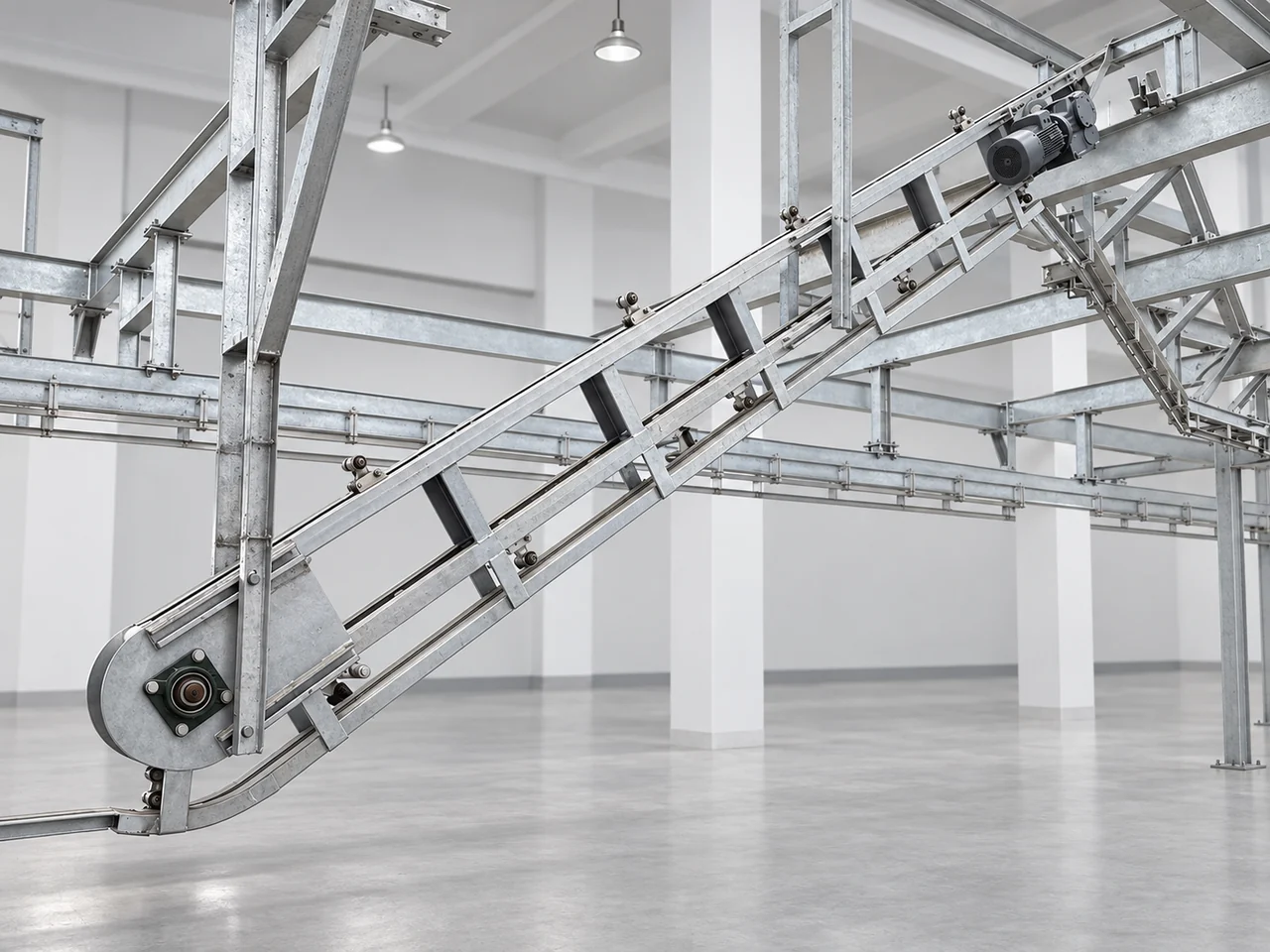
Project Inputs and Supply Scope
Use these inputs to review the equipment proposal. Design parameters, equipment configuration and the scope of supply and services follow the agreed proposal, quotation and contract.
| Project item | Information to provide or confirm |
|---|---|
| Animals and product requirements | Provide pig size and breed, target heads per shift, the shift schedule and the required product form. |
| Confirmed capacity configuration | 500–2,000 heads per shift; the equipment and workstation arrangement follows the project requirements. |
| Building and project conditions | Provide the floor plan, clear height or available rail height, existing water, power and steam conditions, and the project location. Mark any undecided conditions for confirmation. |
| Equipment and service boundaries | Review core and optional equipment, refrigeration and cold rooms, downstream processing, civil works and utilities, on-site installation and training separately in the quotation. Included items follow the contract. |
| Drawing provision | Drawings are prepared to customer requirements and provided as agreed in the contract. |
| Component brands | The regular configuration uses the company’s usual component brands. Higher-grade options can be selected to meet customer requirements; confirm the specific brands and models in the proposal. |
| Equipment testing | Each machine undergoes individual machine testing. |
| Wear spare parts | Selected wear spare parts are provided. Confirm the list and quantities for the project. |
Line Proposal Questions
Can drawings follow my building and process requirements?
Drawings can be prepared to customer requirements. The documents provided and delivery arrangements follow the contract.
Can component brands be upgraded?
The regular proposal uses the company’s usual component brands. Higher-grade requirements can be accommodated and specified in the equipment proposal.
How do I confirm what the quotation includes?
Check the equipment list, optional items, refrigeration and cold rooms, civil works and utilities, installation and training separately. The agreed quotation and contract define the scope of supply and services; process images alone do not establish that scope.
Are machines tested individually, and are wear spare parts provided?
Each machine undergoes individual testing, and selected wear spare parts are provided. Confirm the spare-parts list and quantities for the project.
Ready to Build Your Pig Line?
Send animal type, heads per shift, automation level and country for a matched equipment list and budget range.
Pig Processing Line Video
Filmed footage of the pig processing line and its equipment.