Halal Sheep & Goat Slaughter Line | 100-3,000 heads/shift
Halal Sheep and Goat Lines Built for Compliance and Peak Season
Zhengye engineers halal sheep and goat slaughter lines for plants that must hold bleeding time, skinning quality and hygienic separation at high throughput. The line can be configured for routine slaughter, Qurban peaks, or both, with capacity stages that match the building and cold chain.
Our starting point is the customer’s certified method and target authority. We then translate those requirements into restraint, slaughter access, bleeding rail length, clean-zone routing and documentation that can be reviewed during an audit.
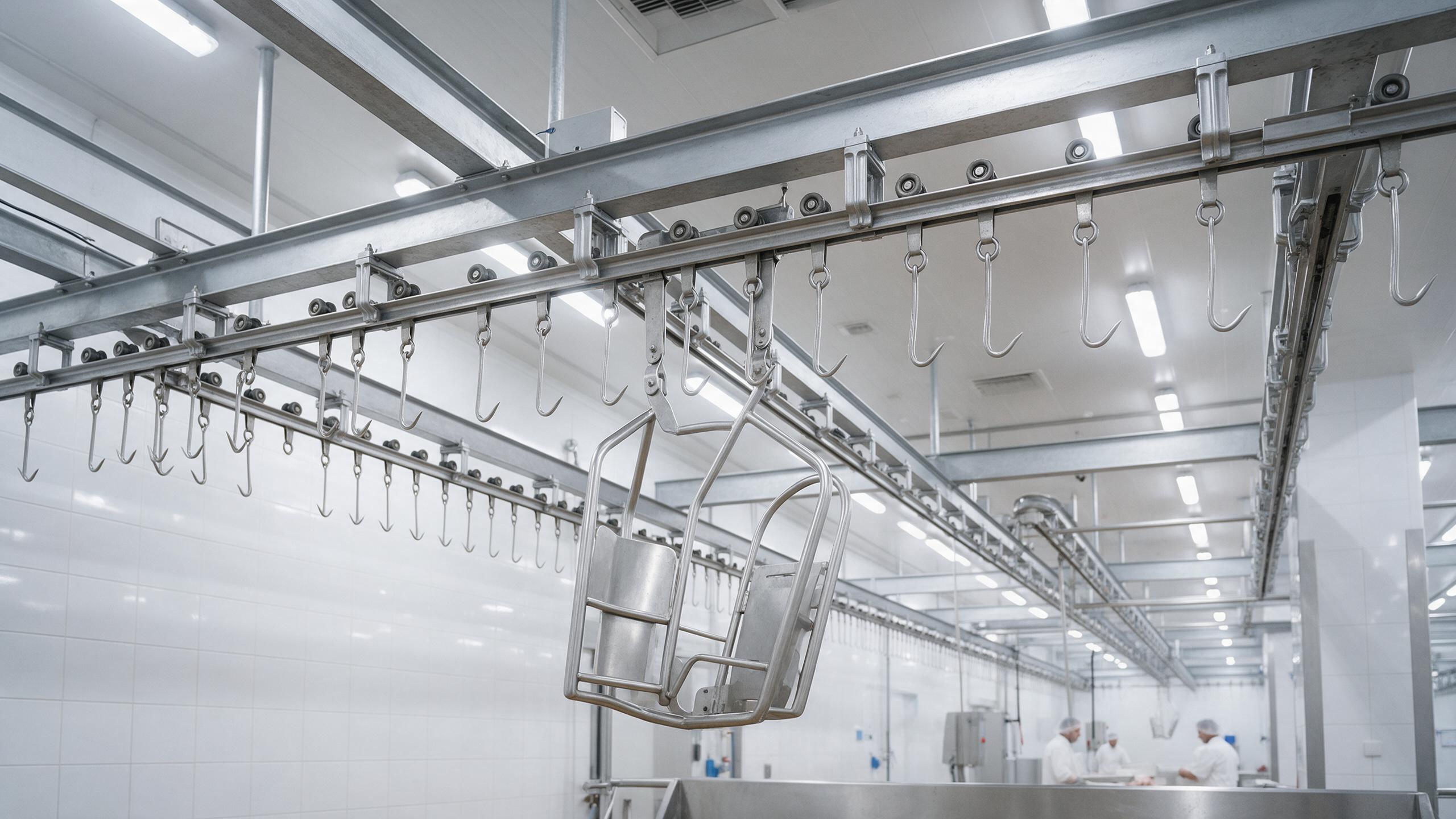
Typical Halal Sheep and Goat Process Flow
Small animals move quickly, so a minor imbalance at restraint or skinning can cascade through the entire line. We calculate station spacing, rail speed and staffing together, and place the slaughterman, bleeding rail and first dressing operation so the required interval cannot be shortened accidentally during busy periods.
Engineering Details That Decide Performance
Restraint and access
Cradle or restrainer geometry is matched to sheep, goats or a mixed animal supply. The operator must have safe, unobstructed access for the required cut without excessive stress or line delay.
Bleeding rail
Bleeding time is converted into rail length at the selected line speed, with enough room for inspection and no shortcut into dressing. Peak-season operating rules can be marked directly on the line.
Skinning and pelt value
Pre-skinning positions, pulling direction and hook spacing are balanced so machine skinning improves output without tearing the pelt or contaminating the carcass.
Separation, Cleanability and Halal Audit Readiness
Auditors look for evidence that the process is controlled in normal production, not only on the day of inspection. The line should make the approved workflow easy to follow: clear segregation of clean and dirty operations, dedicated utensils, visible status identification, controlled movement of skins and offal, and washdown details that do not create hidden soil traps.
- Dedicated knife sterilization and hand-wash points near slaughter and dressing stations
- Separate routes for edible product, hides, heads, offal and waste
- Stainless steel food-contact surfaces with smooth, cleanable connections
- Floor slopes and drainage placed to keep splash away from exposed carcasses
- Labels, hooks and rail routing that distinguish approved and held product
- Changeover procedures for halal and non-halal operating periods where applicable
- Layouts, equipment lists and process descriptions prepared for certification review
Built for Qurban and Seasonal Peaks
Qurban demand can compress a month of normal work into a few days. A line that is merely oversized at the conveyor will still fail if lairage, stunning/restraint, bleeding, skinning, inspection, chilling and dispatch cannot absorb the same peak. We plan the bottleneck as a complete system and identify which stations can run extended shifts, which operations need temporary labor, and where product must be held under controlled temperature.
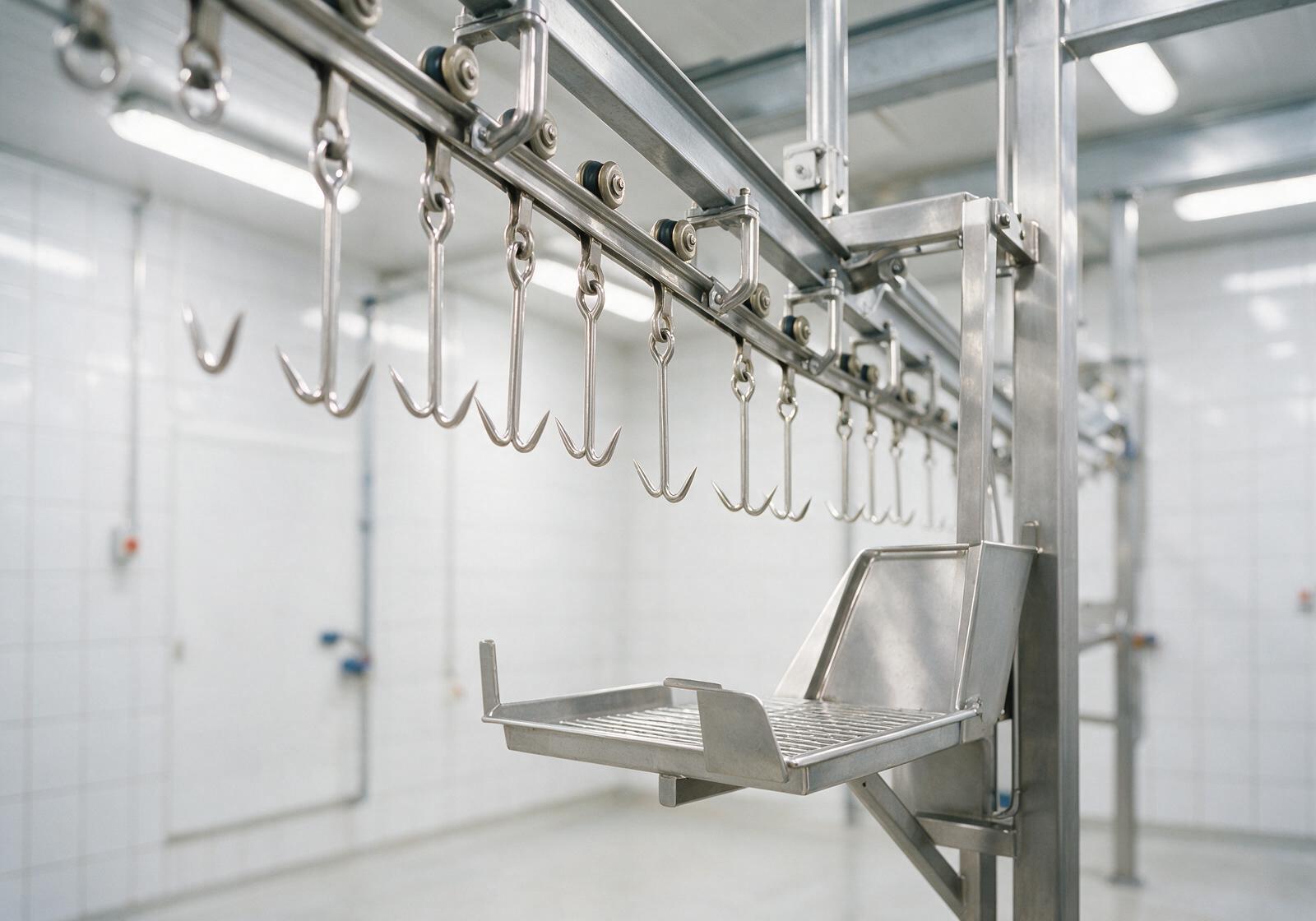
Peak-season design questions
- Peak heads per day versus normal weekly throughput
- Number of operating hours and shift pattern allowed by the local authority
- Lairage capacity for animals arriving before the peak
- Bleeding and dressing staffing at maximum line speed
- Chilling room capacity and dispatch timing
- Cleaning, waste removal and byproduct handling during the peak
Capacity Configurations
| Capacity | Typical configuration | Best fit |
|---|---|---|
| 100-500 heads/shift | Manual to semi-automatic stations, compact rail network, selective machine assistance | Regional supply, small abattoirs and phased investment |
| 500-1,500 heads/shift | Powered bleeding and dressing conveyors, machine skinning, synchronized inspection | Routine urban supply and medium export processing |
| 1,500-3,000 heads/shift | Continuous conveyors, multi-station skinning and balanced peak-season workflow | High-throughput halal plants and Qurban-focused operations |
From Inquiry to a Running Line
- Requirement review: animal mix, throughput, target authority, building and utilities
- Process concept: flow diagram, rail layout, capacity balance and equipment list
- Technical proposal: scope boundary, drawings, budget range and delivery schedule
- Manufacturing: fabrication, pre-assembly and agreed inspection checkpoints
- FAT and shipment: test records, export packing and loading confirmation
- Installation and commissioning: erection, dry runs, production trials and training
- After-sales: spare parts, maintenance guidance and remote troubleshooting
Documents and Decisions Prepared for the Project
A useful project package is more than a quotation. It should show how the line works, where every product stream goes and which assumptions still need confirmation. For a halal sheep or goat project, we prepare a process flow, equipment list with quantities, preliminary rail layout, utility requirement table, scope boundary and project milestone schedule. When the building drawing is available, we mark the equipment footprint, rail heights, floor openings, drainage points and maintenance access on the layout.
Certification-focused documents include a process description, food-contact material statement, equipment and component list, cleaning-access notes, diagrams showing clean and dirty routes, and the operator workflow around restraint, slaughter and bleeding. These documents do not replace the certifier’s own rulebook, but they give the project team and auditor a consistent description of what is installed. If the authority requires separate time windows, dedicated utensils or a written changeover procedure, those requirements are translated into layout and operating provisions early enough to affect the design.
- Process flow and capacity assumptions for each shift and peak period
- Equipment list, material statement and responsibility boundary
- Preliminary and approval-stage general arrangement drawings
- Utility, drainage and maintenance-access requirements
- Description of slaughter, bleeding and segregation controls
- Inspection, cleaning and changeover points shown on the layout
- Factory test plan, shipment list and installation sequence
- Commissioning targets and operator-training checklist
Frequently Asked Questions
Can one line process both sheep and goats?
Yes, when the size difference is known before design. Restraint, rail height, skinning equipment and station spacing can be selected for a mixed animal supply. If the size range is very wide, interchangeable or adjustable components may be needed.
How do you protect bleeding time during peak production?
The rail length is calculated at the maximum operating speed, and mechanical or visual controls prevent product from moving into dressing too early. Staffing and inspection points are also planned for the peak rhythm rather than only the normal shift.
Do you provide a halal certificate?
No. Halal status is granted to the facility and its operations by a recognized authority. We provide line design, material information, layouts and documentation support for the audit, but the final certificate comes from your certifier.
What capacity should we choose for Qurban?
Do not size only for the busiest day. Check lairage, required slaughter interval, skinning, inspection, chilling and dispatch together. We can model a sustained peak capacity and a separate temporary surge capacity.
What is the smallest practical line?
Complete lines generally begin around 100 head per shift. Below that, we normally recommend a set of standalone stations with a clear upgrade path rather than a full conveyor line.
Can the line be expanded after commissioning?
Yes. Extension sections can be allowed for in rail supports, building space and utilities. The intended expansion should be disclosed during design so later work is not blocked by a low ceiling, undersized drainage or a fixed panel location.
What do you need for a first proposal?
Send animal type and size, heads per shift or peak day, target market, certification body, building drawing, voltage and available water/steam. We can then provide a process flow and equipment budget range.
Build a Sheep Line That Holds Its Rhythm at Peak
Send your animal mix, peak throughput and target authority. We will respond with the process assumptions, capacity balance and information needed for a proposal.