Complete Equipment List | Pig, Cattle & Sheep
Slaughter Line Equipment List: What a Complete Project Actually Includes
A complete slaughter line is more than stunning, bleeding and dressing machines. It also includes restraint, rail systems, conveyors, inspection stations, hygiene equipment, control panels, utilities and the interfaces between them. Missing one interface can delay commissioning even when every individual machine has arrived.
This page gives a practical equipment framework for pig, cattle and sheep projects. Use it to compare quotations, check scope boundaries and prepare the information needed for a capacity-based proposal.
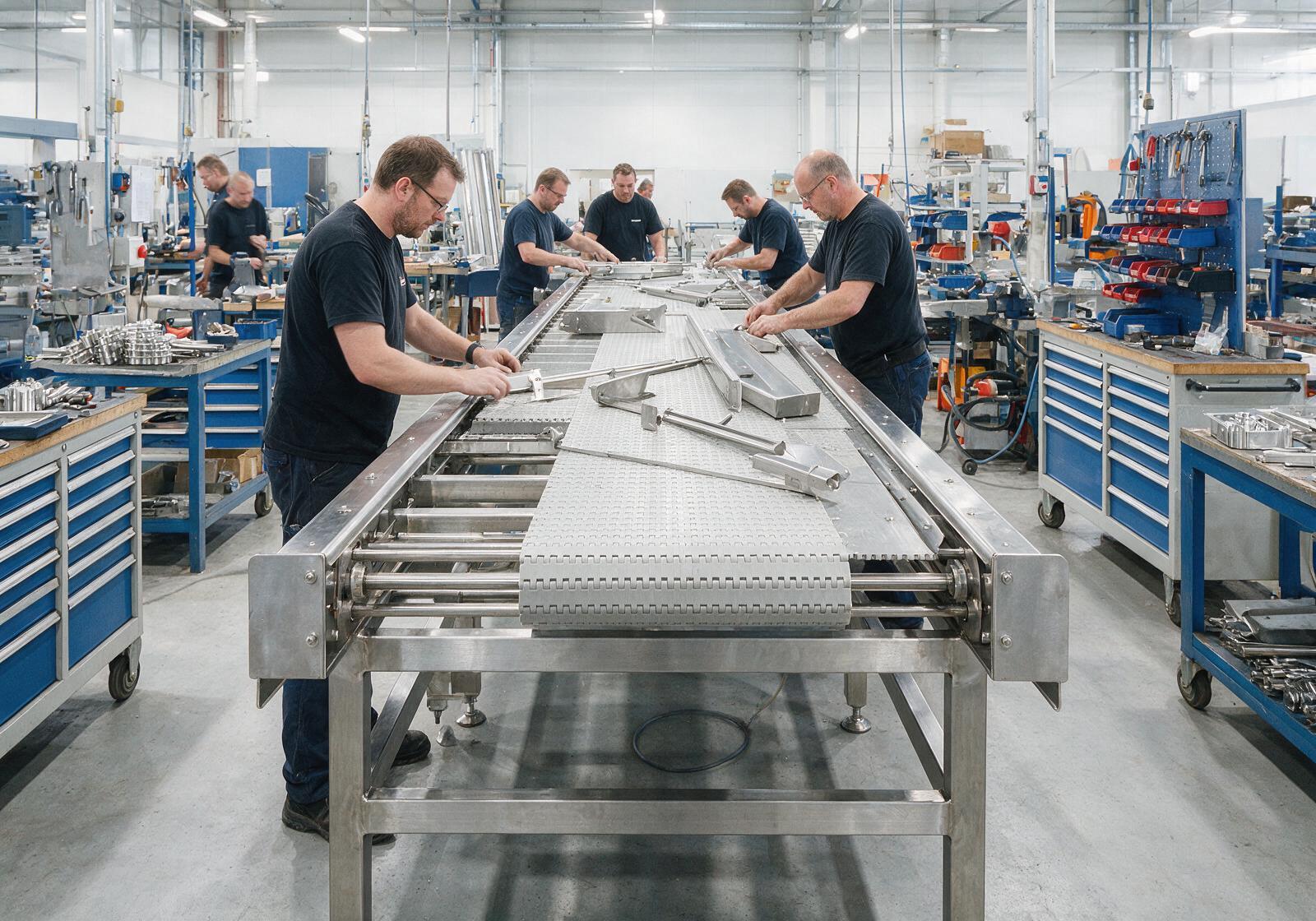
Start With the Process, Not the Machine List
Two plants can both process 500 head per shift and still require different equipment. Animal weight, product mix, automation level, building height, chilling capacity, halal requirements and labor availability all change the correct selection. A responsible equipment list therefore follows a process flow and a capacity balance, not a generic catalog page.
Core Equipment Groups in Every Line
Receiving and restraint
Lairage gates, race, weighing and inspection area, restrainer or killing box, animal handling surfaces and the utility connections that support them.
Bleeding and transfer
Bleeding rail, hooks and trolleys, discharge station, rail switches, drip collection and enough travel time to meet the required slaughter process.
Dressing stations
Scalding, dehairing and singeing for pigs; hide pulling and splitting for cattle; pre-skinning and skinning for sheep and goats.
Evisceration and inspection
Offal tables, viscera conveyors, inspection stands, trimming surfaces, holding areas and controlled routes for edible and condemned material.
Hygiene equipment
Knife sterilizers, hand-wash sinks, apron wash stations, hose points, drainage details and washdown-compatible surfaces.
Chilling and dispatch
Transfer rails, weighing, chilling room railwork, temperature monitoring interfaces, cold-store handling and dispatch loading equipment where included.
Master Equipment List by Function
| Function | Typical equipment | Key scope questions |
|---|---|---|
| Pre-slaughter handling | Receiving gates, races, restraint, stunning equipment, weighing and inspection platforms | Animal size, throughput, stunning method, animal welfare and local regulation |
| Bleeding | Bleeding rail, hooks, trolleys, transfer switches, blood collection option | Required bleeding time, line speed, collection or drainage, hygiene zoning |
| Pig dressing | Scalding tank or canal, dehairing machine, singeing furnace, polishing machine, gambrelling and shaving stations | Pig weight, required skin finish, water/steam demand and floor loading |
| Cattle dressing | Killing box, head and hoof stations, hide puller, splitting saws, quartering conveyor | Cattle weight, rail height, building clearance, hide handling and splitting speed |
| Sheep and goat dressing | Restraint, bleeding rail, pre-skinning hooks, skinning machine, pelt handling and washing stations | Sheep/goat mix, peak season, pelt value and skinning output |
| Evisceration | Platforms, viscera tables, offal conveyors, inspection points, pans and holding trolleys | Product flow, edible/inedible separation, inspection authority and cleaning routine |
| Splitting and trim | Splitting saws, splitting rail, saw sterilization, carcass transfer and trimming stations | Carcass size, automation level, chain speed and washing requirements |
| Weighing and classification | Rail scale, station indicators, classification station and data capture option | Traceability, label format, integration and reporting requirements |
| Chilling and transfer | Chilling rails, transfer switches, cold-room doors, temperature probes and loading rails | Room temperature, capacity, batch structure, cooling curve and dispatch method |
| Utilities and control | Control panels, motors, reducers, pneumatic set, cabling, pipework interfaces and local isolators | Voltage, frequency, IP rating, ambient conditions, spare-parts plan and local service access |
Equipment Selection by Animal
Pig Slaughter Line Equipment
Pig lines revolve around scalding and dehairing quality, followed by efficient evisceration and splitting. The equipment list normally includes a scalding tank or canal, spiral dehairer, singeing and polishing equipment, gambrelling platform, brisket opener, evisceration conveyor, splitting saw, rail scale and transfer to chilling. Capacity, pig weight and required skin appearance decide whether the line is manual, semi-automatic or continuous.
Cattle Slaughter Line Equipment
Cattle equipment is dominated by animal weight, rail height and the need to control hides and digestive contents. A typical configuration includes a restraint or rotary killing box, bleeding rail, head and hoof stations, hide puller, evisceration platform, splitting saw, quartering conveyor and chilling rail. Halal projects may add reversible stunning or a no-stun workflow, specific restraint access and documentation for the certifier.
Sheep and Goat Slaughter Line Equipment
Sheep and goat lines need careful balancing because small animals move through each station quickly. Typical equipment includes a restraint or cradle, bleeding conveyor, pre-skinning positions, skinning machine, evisceration table, inspection point, washing station and chilling transfer. For Qurban peaks, lairage, staffing, pelt handling and cold-chain capacity should be sized together with the rail speed.
Manual, Semi-Automatic or Continuous Line?
| Level | Typical equipment approach | When it makes sense |
|---|---|---|
| Manual / cell-based | Standalone machines and simple rail transfer; operators move product between defined stations | Lower capacity, limited budget, phased start-up or difficult building constraints |
| Semi-automatic | Powered conveyors only at bottlenecks; manual inspection, trimming and some transfers remain | Balanced labor and capital cost; moderate throughput with stable product size |
| Continuous / automated | Synchronized conveyors, automatic transfer, integrated controls and optional data capture | High throughput, consistent product, tight labor market or demanding traceability |
Optional and Project-Specific Scope
- Blood and byproduct handling: collection tanks, pumps, offal processing routes or waste separation
- Cold-chain integration: chilling rooms, freezers, temperature recording and dispatch railwork
- Traceability: rail scales, labels, barcode/RFID points and reporting interfaces
- Wastewater and hygiene: screening, floor drainage, hose stations and cleaning chemical dosing
- Automation: automatic transfers, centralized controls, fault indication and remote diagnostics
- Service scope: installation, commissioning, operator training, spare-parts package and maintenance plan
Seven Inputs Needed for an Accurate List
- Animal and weight: pig, cattle, sheep, goat or mixed supply, with average and maximum weight.
- Throughput: head per shift or day, operating hours and peak-season demand.
- Process: stunning method, halal requirement, dressing level and product destination.
- Building: plan, clear height, floor levels, drainage and available expansion space.
- Utilities: voltage, frequency, water, steam, compressed air, wastewater and refrigeration.
- Cold chain: required chilling time, room capacity, finished-product form and dispatch frequency.
- Delivery and service: destination, unloading conditions, installation scope and local electrical standards.
Frequently Asked Questions
Can you provide an equipment list before we have a final building plan?
Yes, but it will be preliminary. We can prepare a capacity-based list and highlight the dimensions, utilities and interfaces that must be confirmed after the building drawing is available. The final list should not be frozen until those inputs are known.
Is there one standard equipment list for 500 head per day?
No. Animal type and weight, operating hours, automation level, product mix and cold-chain capacity can all change the list. A 500-head project may also be described per day or per shift, so capacity units must be confirmed before selection.
Which items are most often missing from a quotation?
Rail switches, knife sterilization, washdown equipment, transfer conveyors, control interfaces, spare parts, installation labor and site-interface drawings are common omissions. These items can be added later, but they should be priced and scheduled from the beginning.
Can the line use locally sourced motors and electrical parts?
Often, yes, if the specification, voltage and certification requirements match the project. We can select serviceable international brands or agree on a local substitute before manufacture. The choice must be frozen before panels are wired.
Do you supply only equipment or a turnkey line?
Both scopes are possible. We can supply equipment with supervision, or take turnkey responsibility for design, manufacture, FAT, export packing, installation, commissioning and training. Civil works, utilities and some refrigeration scope are normally separated unless agreed in writing.
How can we compare quotations objectively?
Ask each supplier to provide a process flow, capacity calculation, equipment list with quantities, material specification, electrical standard, scope boundary, drawing list, test plan and spare-parts list. Compare technical coverage before comparing the bottom-line price.
Turn Your Capacity Target Into a Real Equipment List
Send animal type, weight, throughput, country and building status. We will identify the scope gaps and prepare a matched preliminary list.