
Philippines Slaughterhouse Equipment | Pig, Cattle and Sheep
NMIS-Oriented Slaughterhouse Equipment in the Philippines
Philippine projects often combine pig and cattle processing, local inspection requirements, island logistics and the need to upgrade an existing facility without stopping market supply. Some buyers also require sheep or goat equipment for regional demand.
Zhengye supplies pig, cattle and sheep slaughter line equipment and can prepare a scope around the site, capacity, building and intended inspection or accreditation path. Confirm current NMIS and local requirements with the relevant authority.
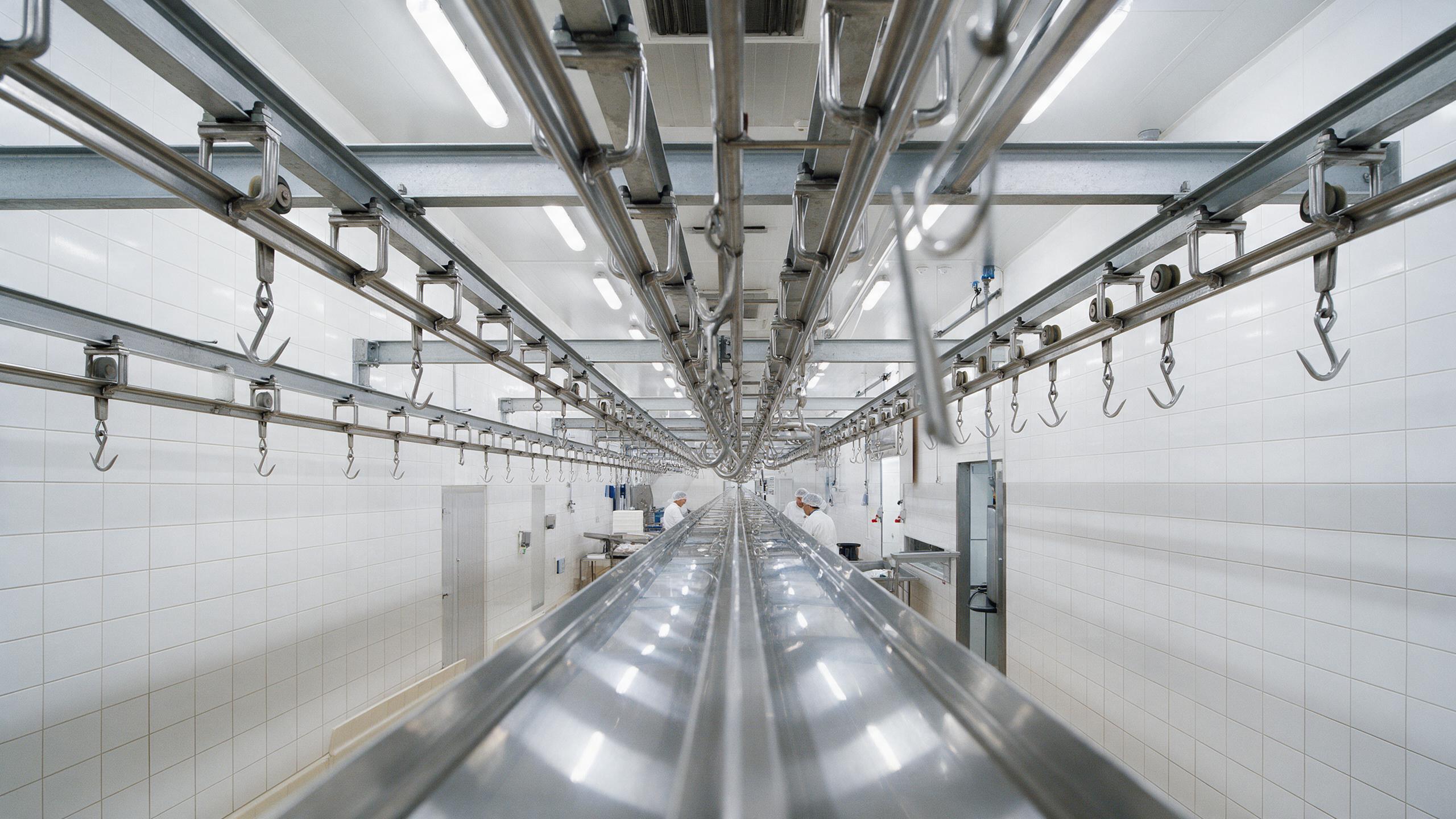
Halal Slaughterhouse India | Buffalo, Cattle and Goat Lines
Halal Slaughterhouse Equipment for Indian Buffalo and Goat Plants
Indian projects usually mean buffalo for carabeef export, goat and sheep for the domestic and Gulf trade, and an inspection path built around FSSAI licensing and, where meat is exported, APEDA plant registration. The equipment scope follows that split rather than one generic line.
Zhengye builds buffalo, cattle, goat and sheep slaughter lines and prepares the scope around your state, building, water and power conditions. Statutory approvals and halal certificates stay with your company and the bodies licensed to issue them.
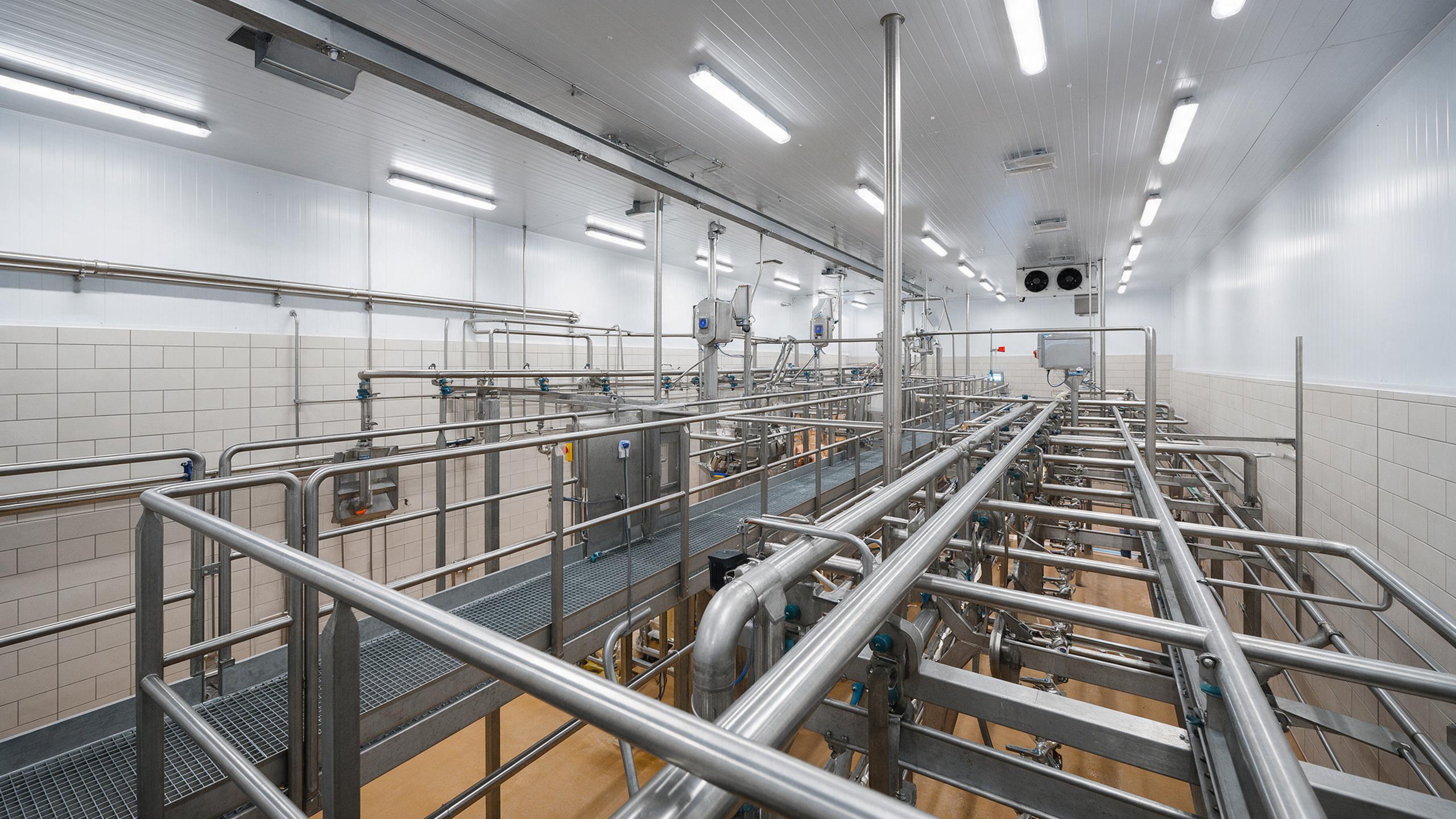
Buffalo, not cow, decides the line
Most Indian states restrict cow and bull slaughter while permitting buffalo. Line equipment therefore has to suit buffalo weights of roughly 250–450 kg live, heavier restrainers, a stronger bleeding rail and a dehiding sequence planned for a thicker hide.
Why a Halal Slaughterhouse in India Needs a Local Scope
A halal slaughterhouse India buyers describe in a tender is rarely a copy of a Gulf plant. Carcass weight is different, the export product is usually frozen boneless buffalo meat rather than chilled carcasses, and the plant has to satisfy a state animal husbandry department at the same time as a food safety licence and, for export, a plant registration number.
Three practical consequences follow. First, the slaughter floor is sized for buffalo and goat on separate shifts rather than a mixed cattle line. Second, the boning room, blast freezing and packing area carry as much weight in the layout as the kill floor, because carabeef leaves the plant as boxed frozen product. Third, water volume, effluent load and rendering capacity are checked earlier than in a domestic-only project.
If your project is a domestic goat or sheep plant for a municipal market, the same equipment family applies but the scope stops at chilling and dispatch. Our sheep and goat line page covers that layout in detail.
- Halal slaughterhouse India, export-oriented: buffalo line with a boning room, blast freezer and a supervised slaughter flow.
- Cattle slaughterhouse India, domestic supply: buffalo or cattle line with a chiller and a cutting room for city and hotel trade.
- Goat slaughterhouse India, city market: small-animal dressing area with skin handling, offal trays and a simple chiller.
Approval Layers You Will Meet
| Layer | Who issues it | What it means for the equipment scope |
|---|---|---|
| Food business licence | FSSAI (central or state, depending on turnover and activity) | Layout, drainage, potable water, pest control and hygiene schedules shape room sizes and finishes. |
| Slaughter and sale permission | State animal husbandry / municipal authority | Species allowed on site, lairage capacity and inspection points are fixed by the local rules. |
| Export plant registration | APEDA, for plants producing meat for export | Plant number, hygiene standard and the ability to separate export and domestic product flows. |
| Halal certificate | A halal certifying body accredited for the market you sell into | Slaughter method, supervision, segregation of non-halal material and records. |
| Consent to establish / operate | State pollution control board | Effluent treatment, rendering odour control, boiler emissions and solid waste handling. |
Halal certificates are only as useful as their recognition. Since the 2022–23 Ministry of Commerce notifications, halal certifying bodies operating in India are expected to be accredited through NABCB, and buyers in Malaysia, Indonesia, Saudi Arabia and the UAE check whether the issuing body is recognised by JAKIM, MUIS, SFDA or the relevant GCC authority. Confirm the exact body with your importer before the equipment order, because the answer changes the supervision and segregation arrangements on the kill floor.
We prepare the technical file that supports those reviews — line drawings, capacity calculations, material certificates, utility schedules and operating instructions — and we do not claim to hold Indian registrations ourselves.
Typical Equipment Scope
Lairage and receiving
Unloading ramp, holding pens sized for the daily kill, ante-mortem inspection race, washing points and buffalo-safe gate hardware.
Restraint and bleeding
Buffalo restrainer with head holder, goat and sheep restrainer, bleeding rail and trough, knife steriliser and hook wash.
Hide and skin handling
Dehiding platform or puller, hide conveyor, goat skin table and separate offal handling to keep the two streams apart.
Evisceration and inspection
Viscera table, offal tray system, pluck and paunch handling, inspection lighting and condemned-material route.
Splitting and chilling
Carcass splitting saw, rail switches, weigh-and-grade station, blast chiller and boning room transfer.
Boning, freezing and packing
Boneless trim tables, vacuum packing, blast freezer racks, cold store and dispatch dock for export cartons.
Species and Capacity Planning
| Species | Live weight (typical) | What it changes in the line |
|---|---|---|
| Buffalo | 250–450 kg | Heavier restrainer, higher rail, longer bleeding time, dehiding by puller, two-person splitting. |
| Cattle (where permitted) | 300–500 kg | Similar rail height, different head restraint and hide pattern. |
| Goat | 15–35 kg | Light rail, single-operator dressing, separate small-animal area. |
| Sheep | 25–45 kg | Shared goat line with adjusted shackle pitch and skin table. |
Head per shift is the starting number, not the answer. A line rated for 200 buffalo in eight hours behaves differently when the plant only receives animals for five hours and has to chill the whole kill before the morning dispatch. We size the chiller and the boning room against the peak day, then check that the kill floor can still run at a steady rate. Practical Indian figures usually fall between 50 and 400 head per shift for buffalo and between 100 and 800 for goat and sheep; tell us your target and we will show the rail length, labour count and utility load that go with it.
For budgeting, the slaughterhouse cost model breaks the project into equipment, building, utilities, cold chain and working capital so a plant with a boning room is not compared against a plant without one.
Power Supply, Voltage and Electrical Adaptation
| Item | India |
|---|---|
| Single-phase supply | 230 V, 50 Hz |
| Three-phase supply | 415 V, 50 Hz, 3-phase 4-wire with neutral and earth |
| Wall sockets in common use | Type C, D and M (round pins); Type M for higher-current appliances |
| Motors | 415 V three-phase, IE3 efficiency preferred for new installations |
| Typical weak point | Voltage sag and phase imbalance, worse in rural feeders and during summer peak |
- Motors and starters are supplied for 415 V / 50 Hz, with the control circuit on a 230 V transformer that accepts 400–440 V input.
- Variable-frequency drives are set to a 415 V base with a widened input tolerance so a feeder dip does not trip the line.
- Control panels include phase-sequence and phase-failure protection, because reversed phase order and single-phasing are common causes of burnt windings.
- Earthing is treated as a design item: a separate earth pit for the panel and equipotential bonding for rails and stainless frames.
- Voltage stabilisers or an online UPS are recommended for PLC, weigh terminals and inspection lighting rather than for motors.
- Cable sizing and gland selection follow local practice, with spare capacity for a future chiller or a second shift.
If your site runs on a captive generator for part of the day, tell us the generator rating and whether it is used for starting motors. A 100 kVA set will not start a 45 kW saw and a 30 kW compressor at the same time, and the fix belongs in the start sequence rather than in a bigger transformer.
Installation, Water and Site Conditions
Indian buffalo plants are usually built inside an existing compound, so the installation plan has to work around a standing structure. Our standard sequence is: setting-out survey against the approved layout, rail and support embedded items, equipment placement, utility connections, water test, no-load run, load run with test animals, then handover with operator training.
- Rail height and hook pitch are fixed before the ceiling steel is installed — changing them later is expensive.
- Floor slopes of 1:60 to 1:80 toward the drain, with a trapped gully at the low point of each room.
- Potable water storage sized for a full shift plus cleaning, with a separate line for knife and hand wash.
- Steam or hot water for scalding and cleaning, with the boiler position agreed with the pollution board requirement.
- Rendering or condemned-material handling planned as a closed route so nothing re-enters the clean area.
- Local electricians and fitters can carry out most of the mechanical installation; our engineer supervises alignment, rail levelling and commissioning.
Humidity and monsoon conditions make stainless grade and welds worth a conversation. We specify SS304 for food-contact surfaces and paint or galvanised finish for structural steel that stays outside the wash-down zone, and we mark which parts need re-coating after five years.
Climate, Water Quality and Everyday Reliability
Most of India runs hot for much of the year, and a kill floor is a wet, hot room. Two things follow. Ventilation and airflow have to be designed for the actual summer temperature at your site, not for a European plant, and the chiller load has to be calculated with an honest incoming carcass temperature. A buffalo carcass that has spent forty minutes on the rail in 42 °C air carries more heat into the chiller than a catalogue figure assumes.
Water is the second issue. Hard water scales the hot-water circuit and the spray nozzles, and high TDS changes the cleaning routine. Send us a water analysis with the enquiry and we will flag which parts of the line need a softer or filtered supply. For buyers comparing suppliers, this is the kind of item that shows up six months after commissioning, so it is better handled in the specification.
Spare parts and service access also matter more than in a compact market. We ship a recommended first-year spare kit with the line — blades, bearings, seals, proximity switches, V-belts — and label each part against the drawing so a local purchase is possible.
Upgrade an Existing Plant or Build New?
| Starting point | Usual move | Watch out for |
|---|---|---|
| Manual buffalo line, 30–60 head/day | Add a restrainer, a puller and a proper bleeding rail | Ceiling height and floor condition may limit rail work |
| Semi-mechanised line with export ambition | Boning room, blast freezer and cold store before more kill capacity | Chilling and freezing usually become the bottleneck first |
| Goat plant serving a city market | Separate small-animal dressing area and better offal handling | Space for lairage and inspection |
| Greenfield export plant | Full line with segregated export flow and ETP | Land, power sanction and pollution consent timeline |
A staged plan is often the right answer: fix the kill floor and hygiene in year one, add boning and freezing in year two, then expand the chiller when the market supports it. The important thing is that the final layout is drawn before the first stage is built, so the second stage does not require moving a drain or a rail.
What to Send for an India Quotation
- Species and mix, with buffalo and goat split by percentage if both are planned
- Target head per shift and the number of working hours
- State and district, because slaughter rules and municipal requirements differ
- Building drawing or site dimensions, including ceiling height at the rail line
- Available power — sanctioned load in kVA and whether a generator is used
- Water source, daily volume and a water analysis if available
- Product destination: domestic chilled, domestic frozen, or export (and to which country)
- Intended halal certifying body and the market that must recognise it
You can prepare the comparison with our equipment scope template, and see how a capacity brief becomes a layout on the layout design page. For halal-specific process questions the halal slaughtering requirements page sets out what a religious supervisor typically checks.
Reference reading for your own file: halal slaughterhouse equipment for the equipment-level requirements and cattle slaughter line for the red-meat line sequence.
Frequently Asked Questions
Does Zhengye hold an Indian licence or halal certificate?
No. Licensing, plant registration and halal certification are held by the Indian operating company and issued by the competent bodies. We supply equipment and the technical documentation that supports your application.
Can you supply a buffalo line and a goat line in one plant?
Yes. The usual arrangement is separate dressing areas sharing lairage, chilling and dispatch, with a shift plan that keeps the two species apart.
Is cow slaughter equipment different from buffalo equipment?
The rail and restrainer are similar, but hide pattern, head restraint and carcass weight differ. Tell us the species actually permitted at your site.
What voltage should the equipment be built for?
415 V three-phase and 230 V single-phase, 50 Hz. We set drives and control transformers for that supply and add phase-failure protection.
Can the line run on a diesel generator?
Usually yes, if the generator is sized for motor starting and the start sequence is managed. Send the generator rating with the enquiry.
How long does installation take?
A 100-head buffalo line typically needs three to five weeks on site after the building and utilities are ready, excluding civil work and the approval timeline.
Plan the line around buffalo, goat and your state rules
Send the species, capacity, state, building drawing and power details. We will return an equipment scope, a utility schedule and the site requirements that decide the layout.