
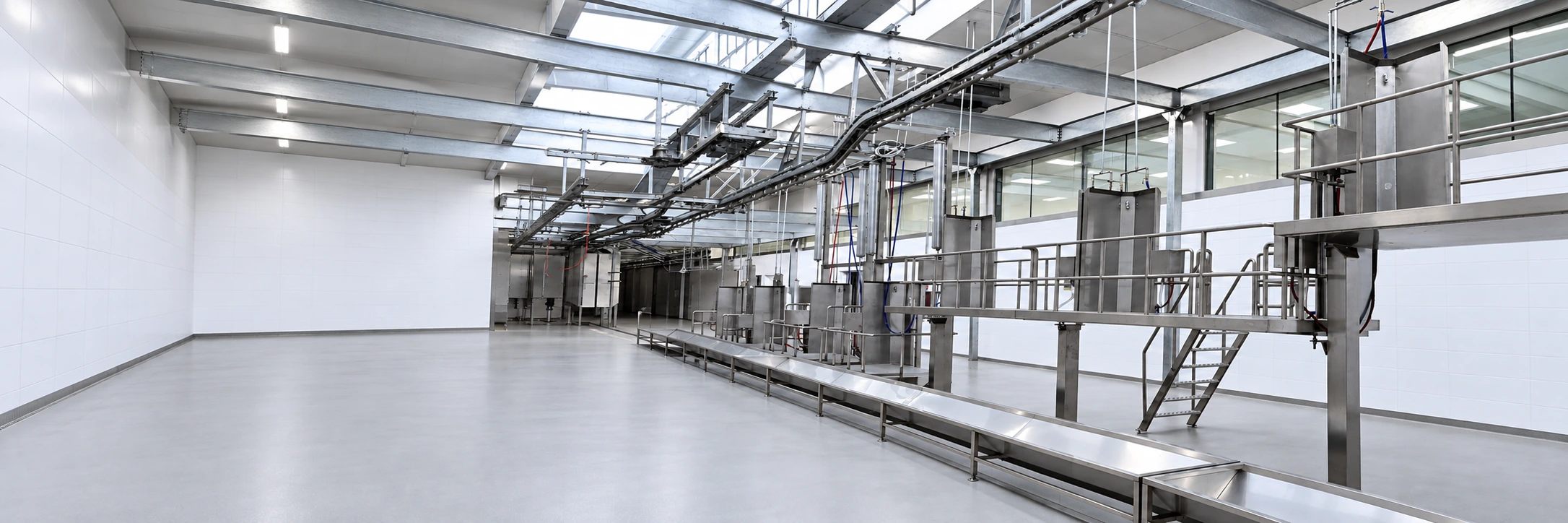
CATTLE PROCESSING · CONVENTIONAL & HALAL
A connected process for your cattle abattoir.
A cattle slaughterhouse is built as one continuous rail flow. The cattle slaughter equipment illustrated below covers restraint and hoisting, bleeding and dressing conveyors, pre-skinning and hydraulic hide pulling, evisceration and inspection, splitting and washing, and every station is sized to the one before it. Match the configuration to cattle size, target throughput, working hours, building and available rail height, and the required halal or conventional route. Review chilling, downstream processing and installation separately in the quotation.
Explore the Cattle Processing Stages
Follow the process from restraint and bleeding through dressing, inspection and downstream processing. The images below illustrate equipment and workstations for the cattle processing stages. Animal reception, line rhythm and final configuration follow your building and project requirements.
Cattle slaughter process drawing
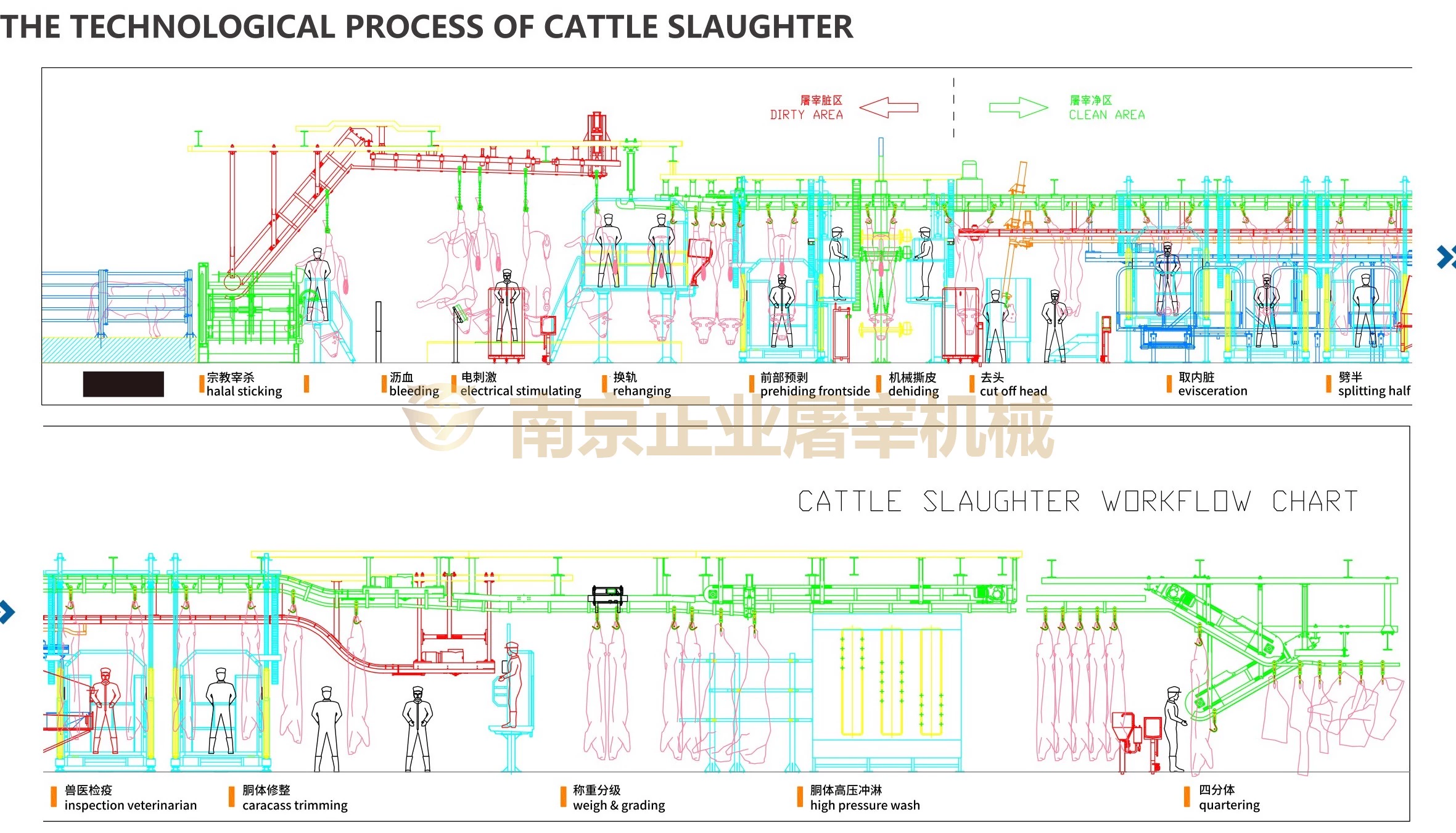 View the full-size process drawing →
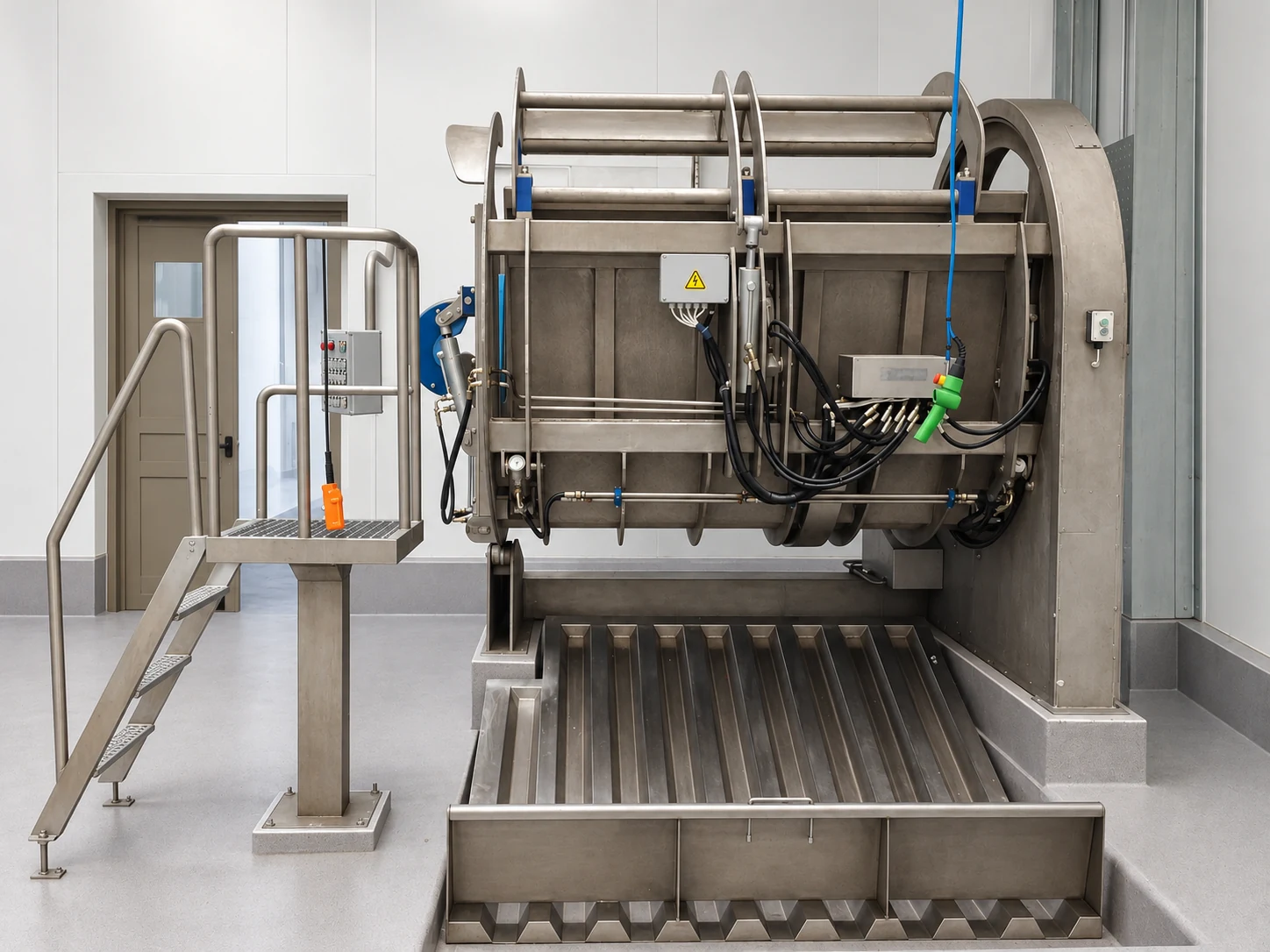
Rotary ritual slaughter box
The illustrated ritual rotary slaughter box is for a halal route. It is not mandatory equipment for a conventional route; confirm the front-end equipment against the project requirements.
Select the ritual configuration according to project requirements. Confirm operating and certification requirements with the project team and relevant certification body.
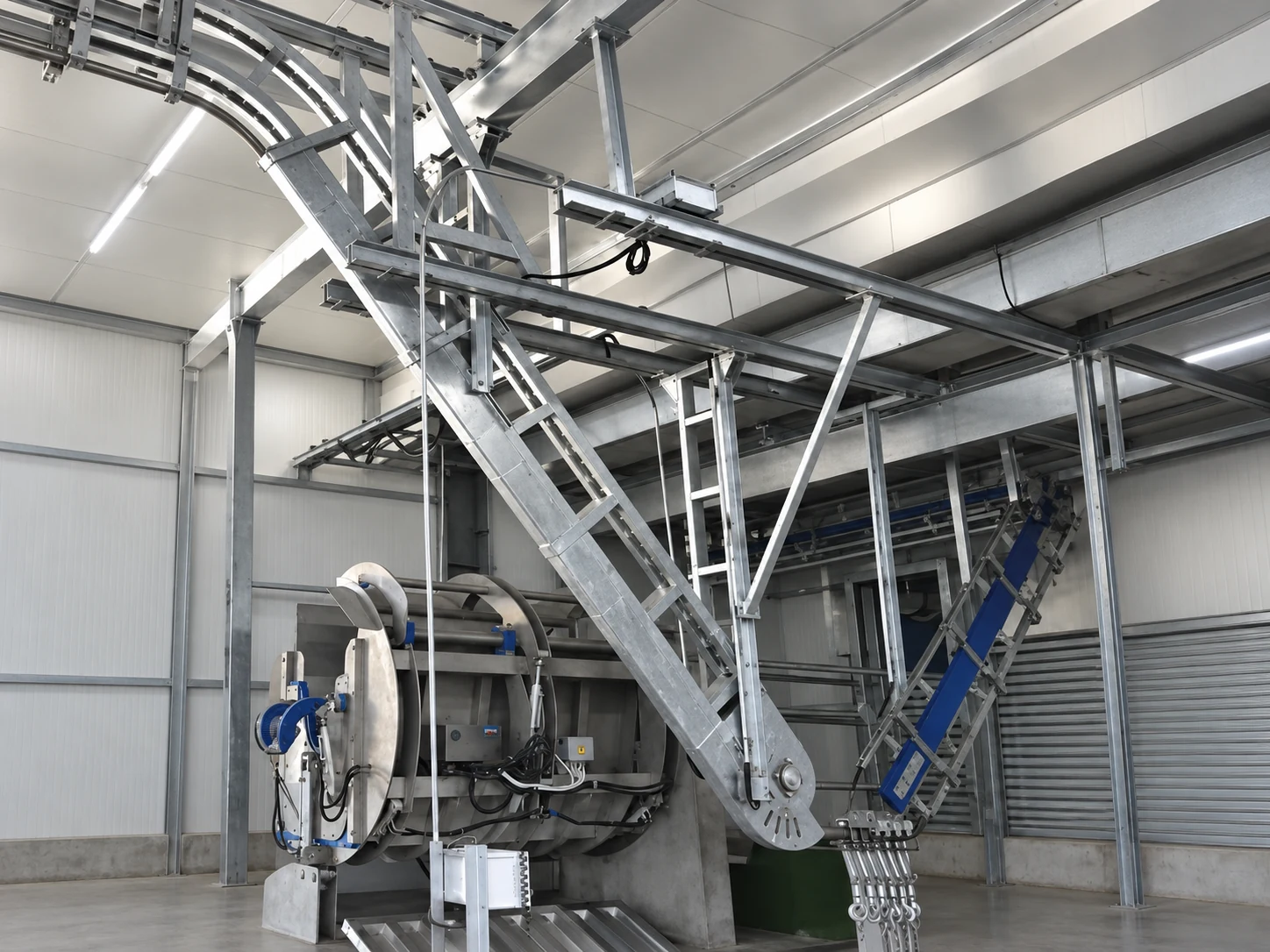
Hide-on cattle hoisting
After the front-end slaughter operation, lift hide-on cattle onto the suspended bleeding rail and connect bleeding and conveying.
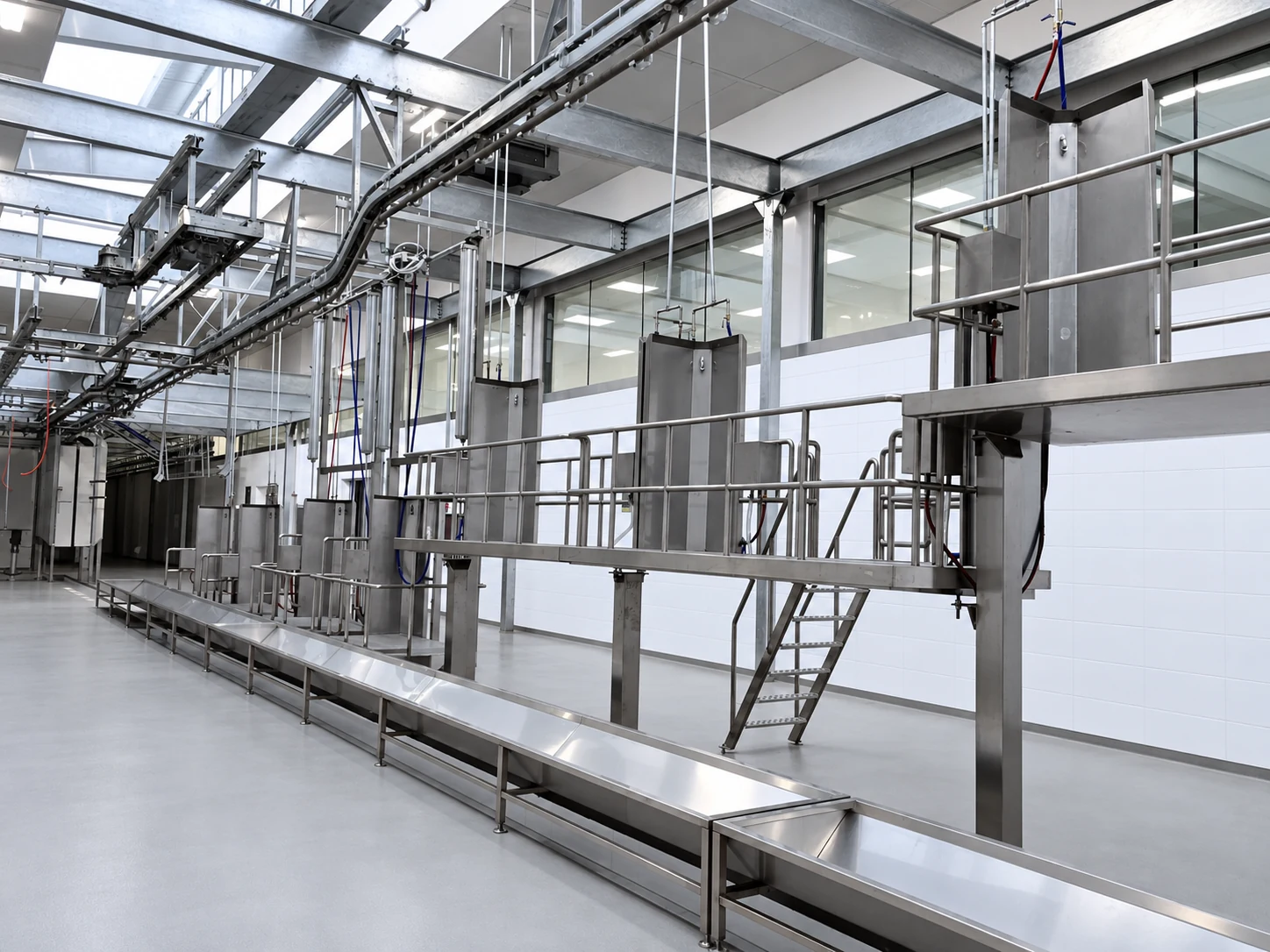
Bleeding and suspended conveying
Connect suspended bleeding to transfer onto the dressing rail. Electrical stimulation can be discussed as a project option.
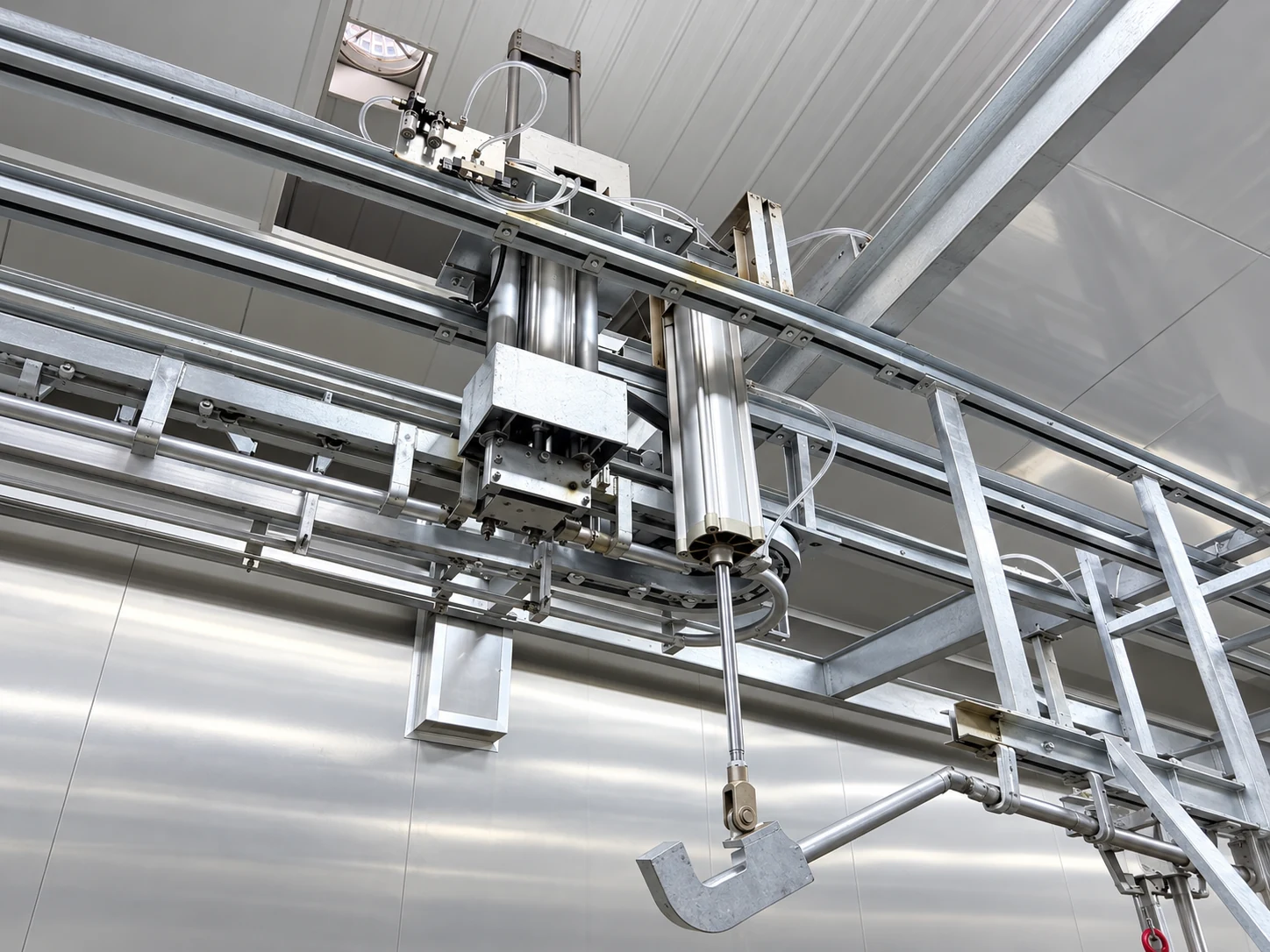
Rehanging
After bleeding, rehang hide-on cattle onto the dressing conveyor and connect the rail to pre-skinning and mechanical hide pulling.
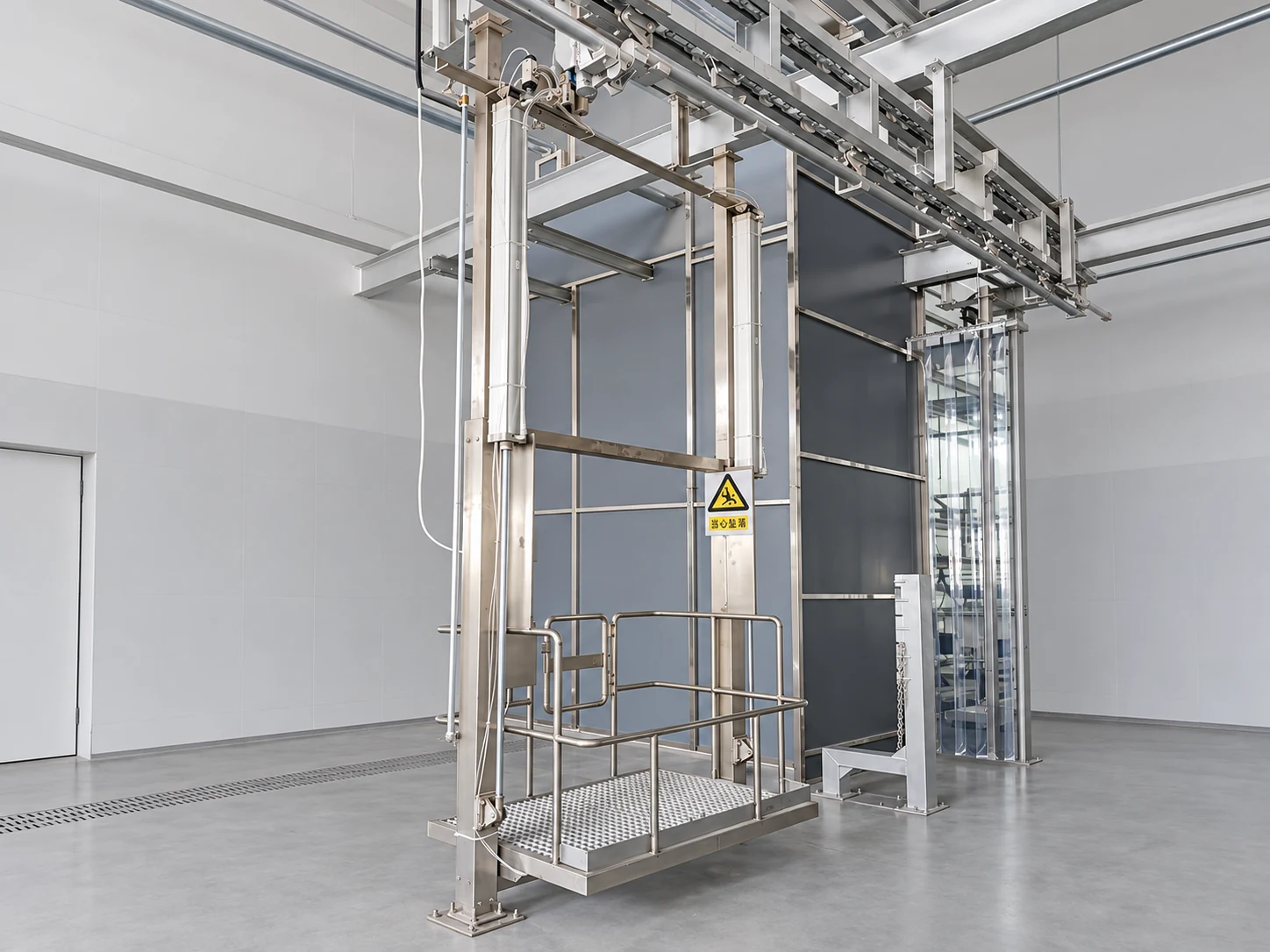
Pre-skinning
Provide a separate manual pre-skinning station after rehanging, with operator platforms connected to mechanical hide pulling.
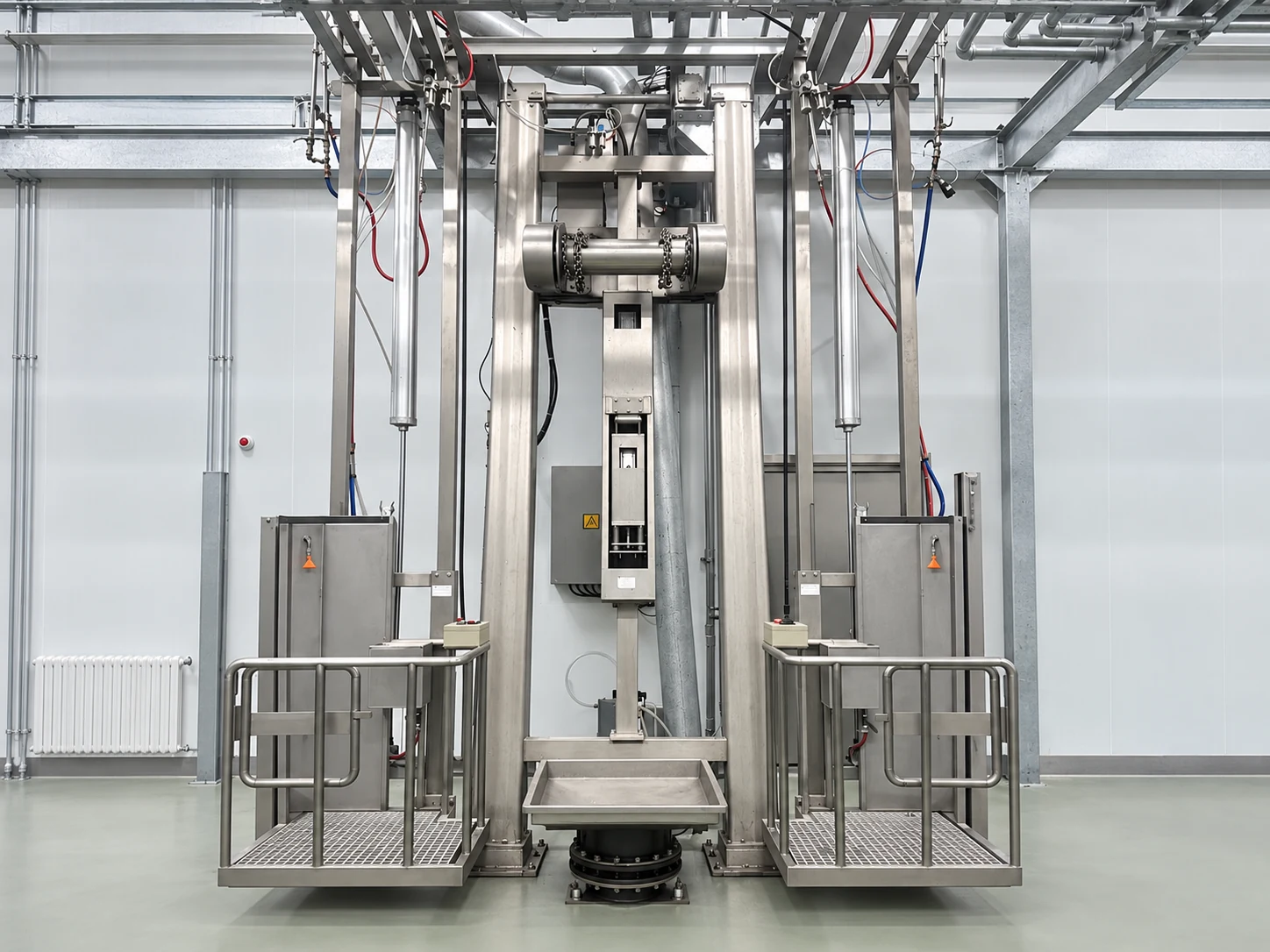
Mechanical hide pulling
Provide operator platforms and a dressing conveyor for the hydraulic hide puller. View the inclined-column cattle hide puller video to discuss installation position and working space.
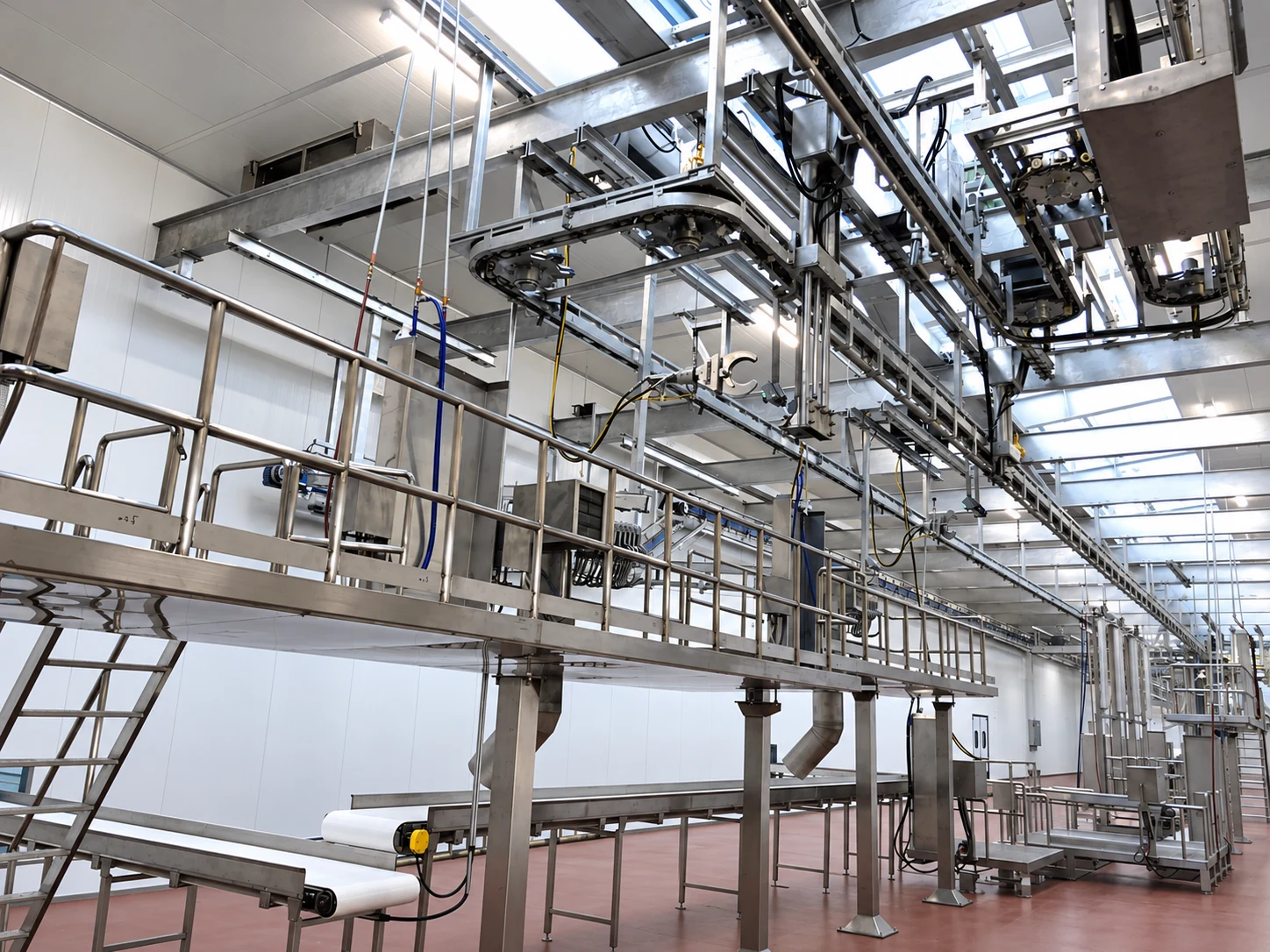
Head removal and evisceration
Provide access for head removal and evisceration and connect viscera reception.
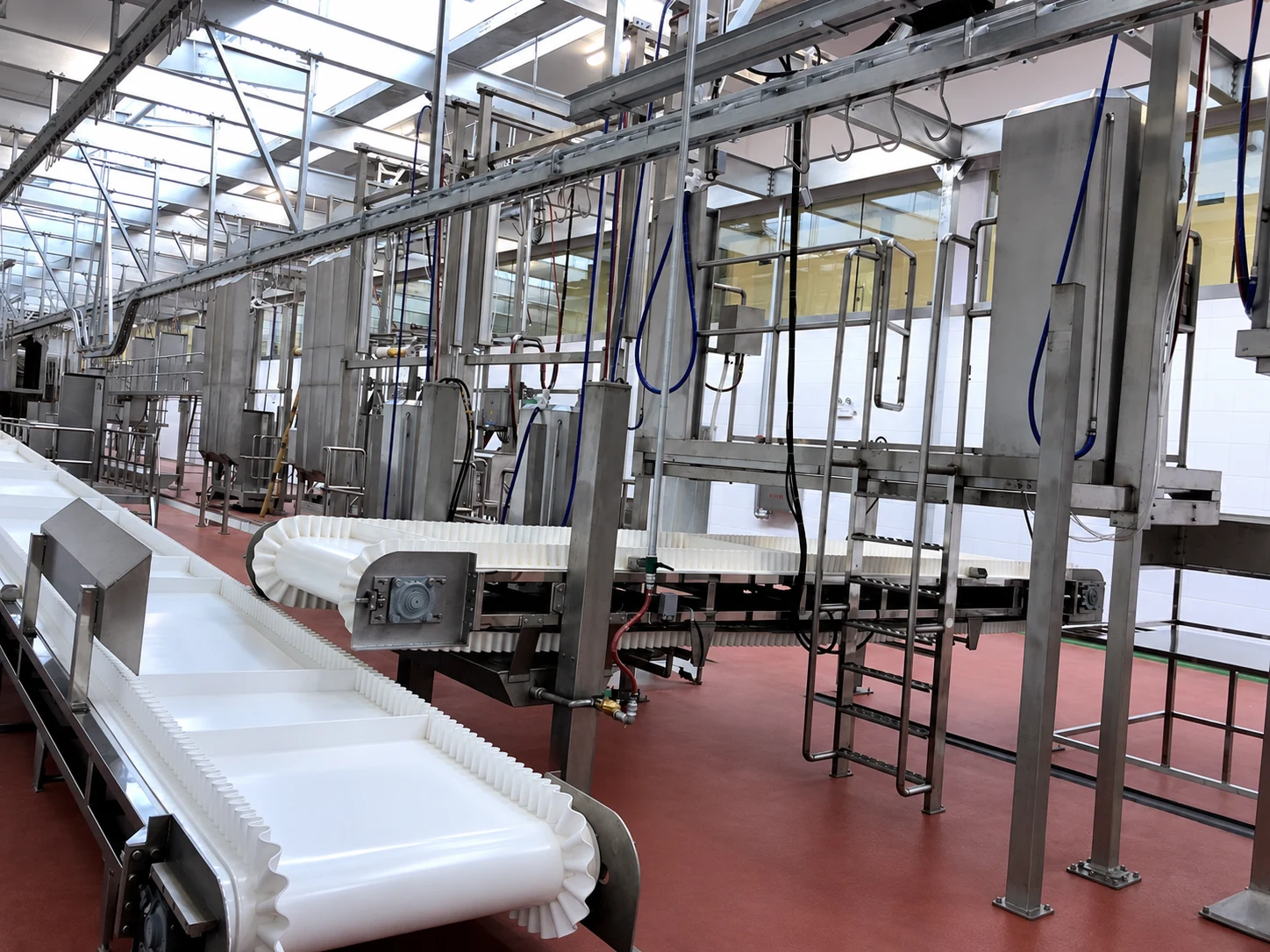
Viscera conveying and synchronized inspection
Receive and convey viscera for inspection synchronized with the carcass. Configure red offal conveyor interfaces for the specific project.
The image shows the white offal conveyor. Red offal conveying follows the project design.
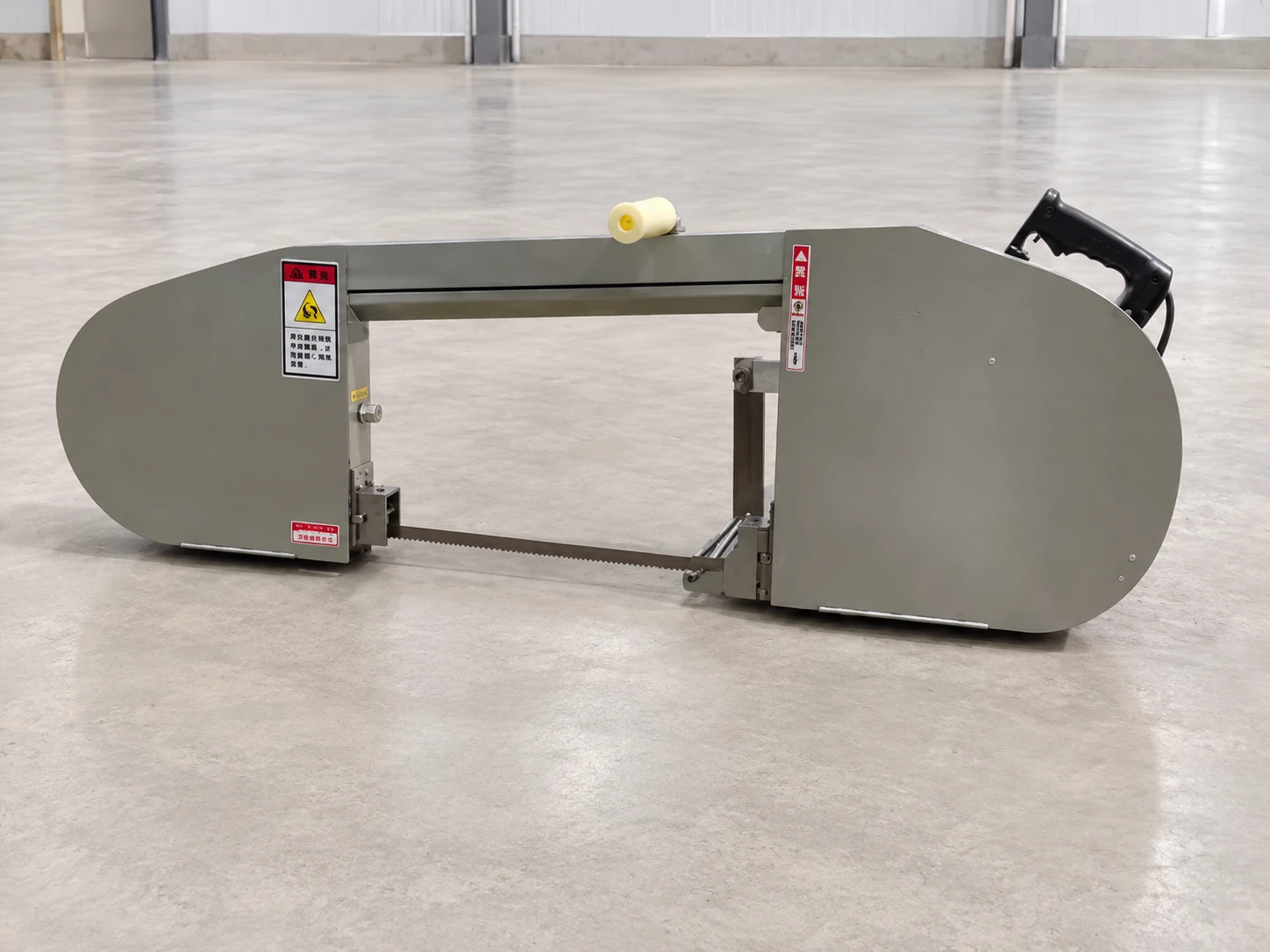
Carcass splitting
Provide a suitable operator platform and carcass conveying system for the splitting saw.
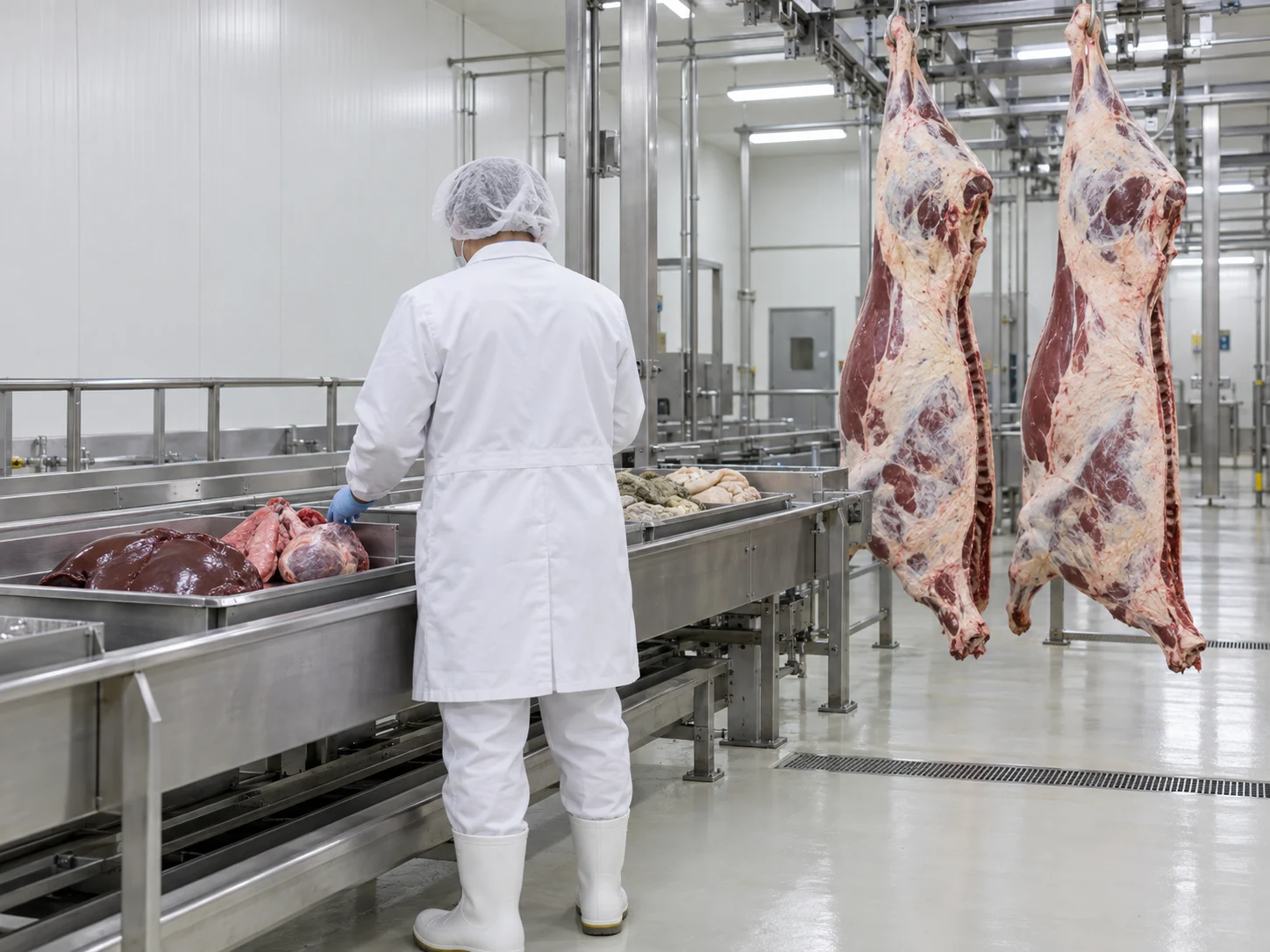
Inspection, trimming and weighing interfaces
Post-mortem inspection includes carcasses and viscera, keeping their correspondence to the same animal. Connect carcass inspection, trimming and weighing before subsequent processing.
Post-mortem inspection reference; weighing equipment is configured separately.
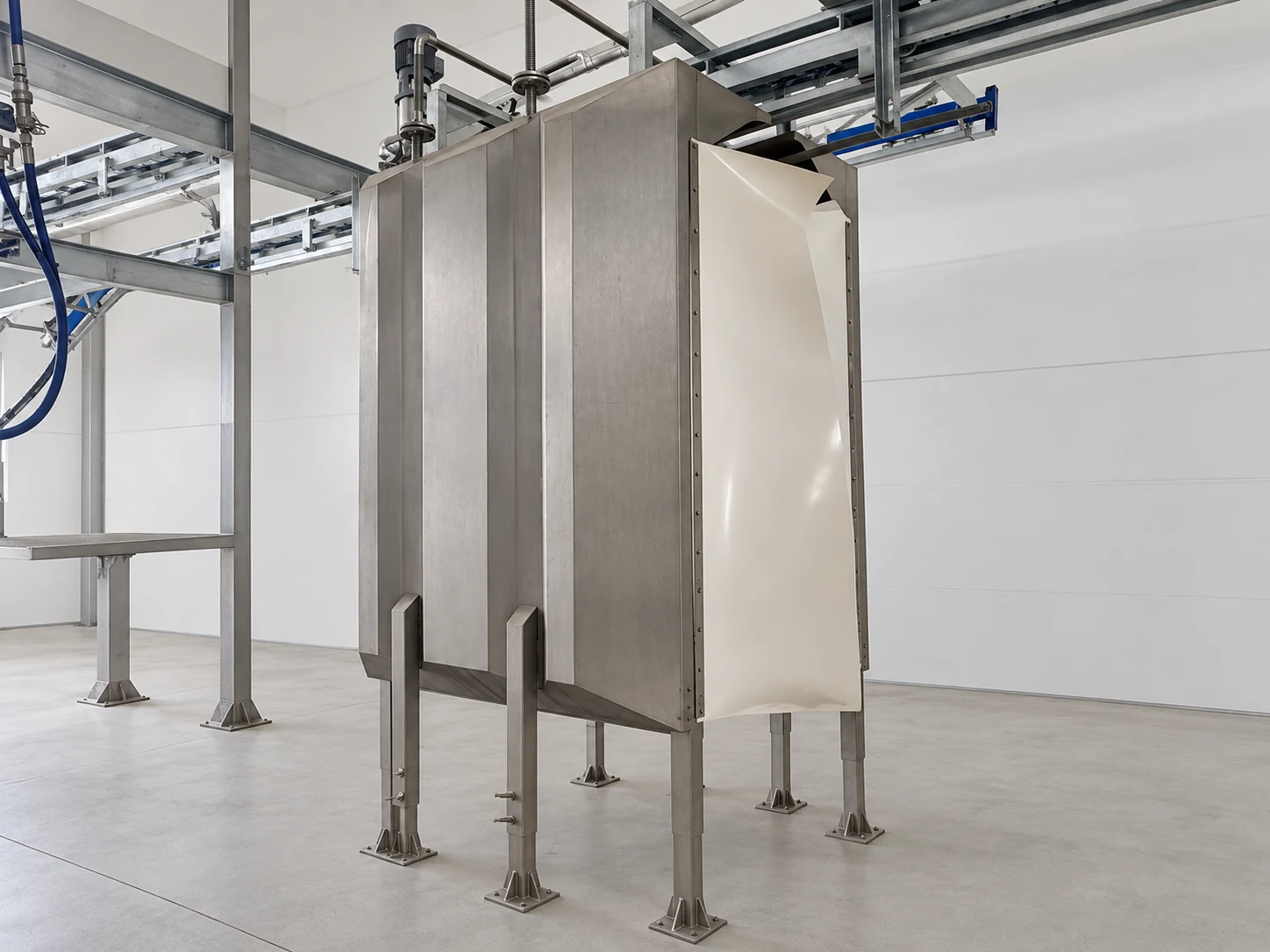
Carcass washing
Connect the carcass spray-washing enclosure to the suspended conveyor section.
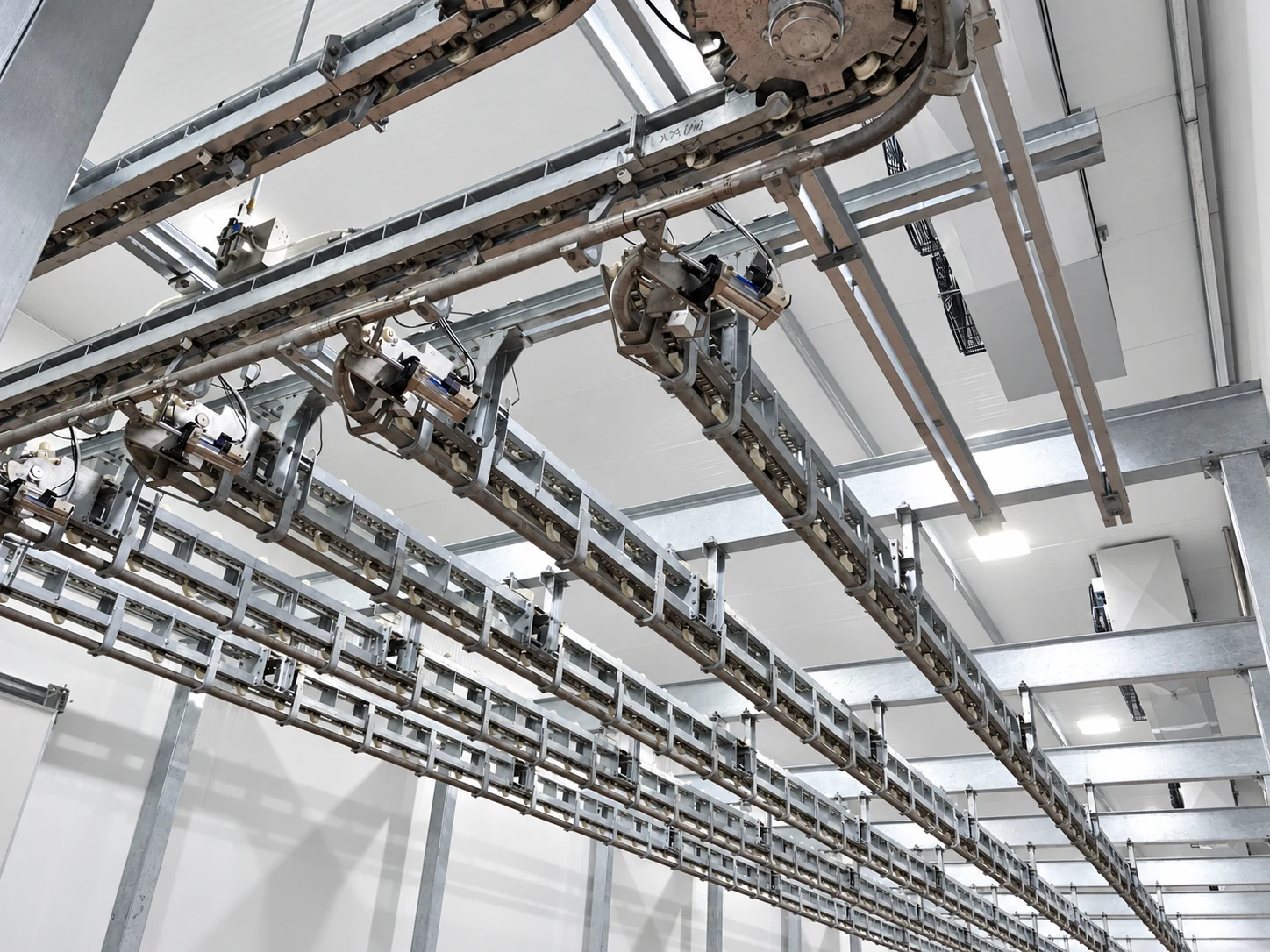
Chilling and maturation interfaces
Connect carcass conveying and downstream transfer according to the project chilling design.
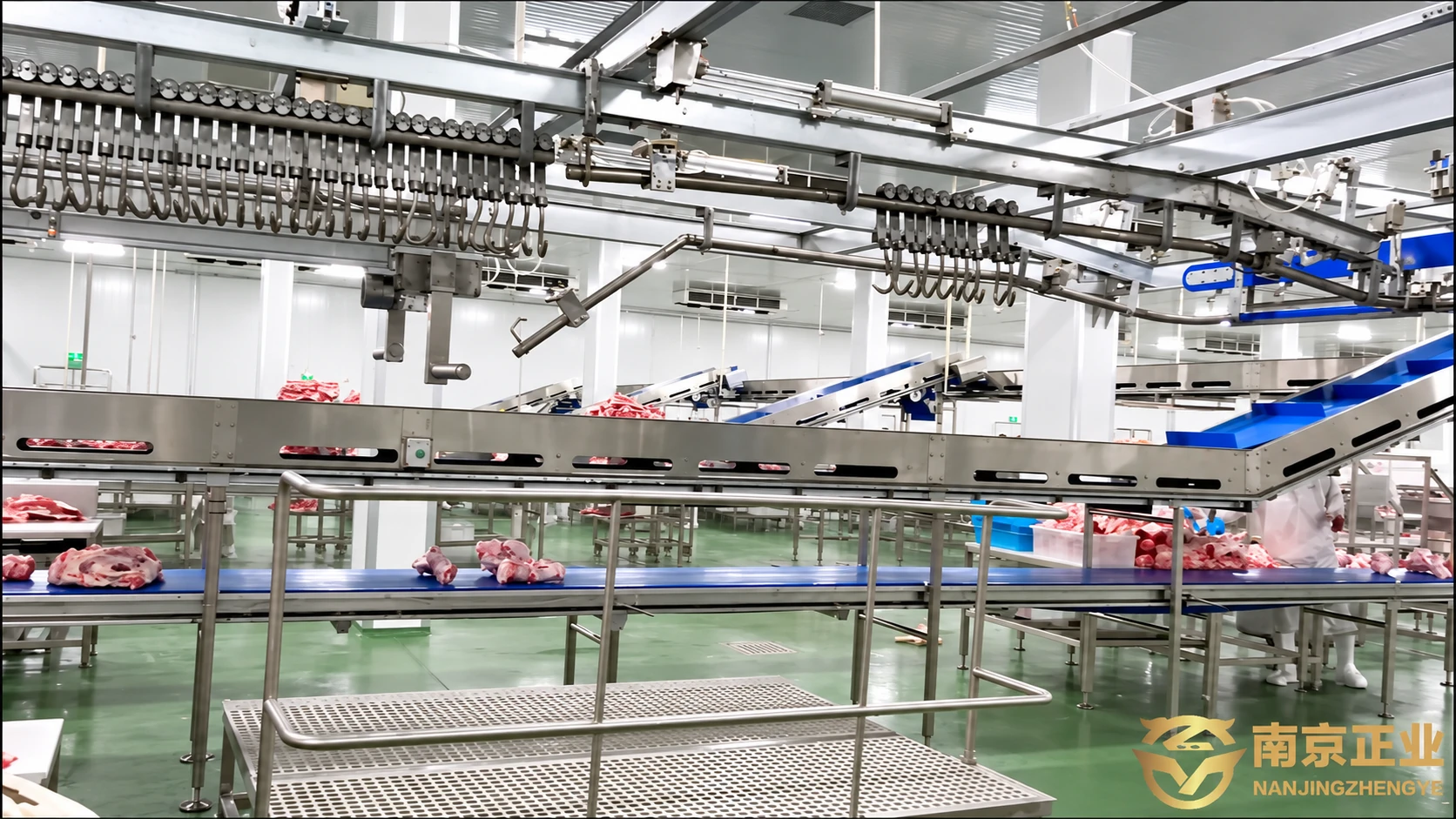
Quartering, deboning and cutting interfaces
Plan quarter transfer and downstream manual deboning and cutting conveyor interfaces.
Downstream transfer and cutting conveyor; quartering and deboning interfaces follow the project design.
Beef Slaughterhouse Layout and Throughput
A beef slaughterhouse is planned around three fixed points: the restrainer at reception, the bleeding rail, and the splitting station. Everything between them — hoisting, dressing, evisceration and inspection — has to run at the same rhythm, otherwise carcasses queue on the rail while operators wait between stations. We size a beef slaughterhouse line in head per hour first, then convert that figure into rail length, floor area, chill room volume and operator count.
Cattle slaughterhouse layouts follow carcass weight. For 30 to 60 head per shift, a single-rail conventional arrangement with manual splitting and a shared offal route is usually sufficient. Above roughly 100 head per shift, the cattle slaughterhouse moves to double-rail dressing, powered splitting, separate hide and offal paths, and a dedicated condemned-carcass room. Halal beef slaughterhouse projects keep the same mechanical equipment but add a Muslim slaughterman station at the bleeding point, knife sterilisation, and a physical separation between halal and non-halal carcass routes.
Because a cattle slaughterhouse handles carcasses from 200 to 400 kg, rail height, hoist capacity and floor loading drive the building design more than the equipment list does. Send the building drawing and target throughput and we will return a layout that works with the rail height you already have, or state clearly where a new rail structure is required.
Halal & Conventional Configuration
The ritual rotary slaughter box is used only for a halal route. Restraint and front-end equipment for a conventional route follow the project requirements. Confirm animal handling, stunning requirements and bleeding arrangements with the project team and certification body. Final certification is provided by the relevant certification body.
Plan Capacity & Line Rhythm
Animal & Throughput
Share cattle size, target throughput, working hours and the required product output.
Building & Utilities
Coordinate rail height, operator access, drainage and hide and offal handling routes with the available building.
Equipment & Interfaces
Match manual workstations, powered transfers, inspection and the chilling area to the agreed line rhythm.
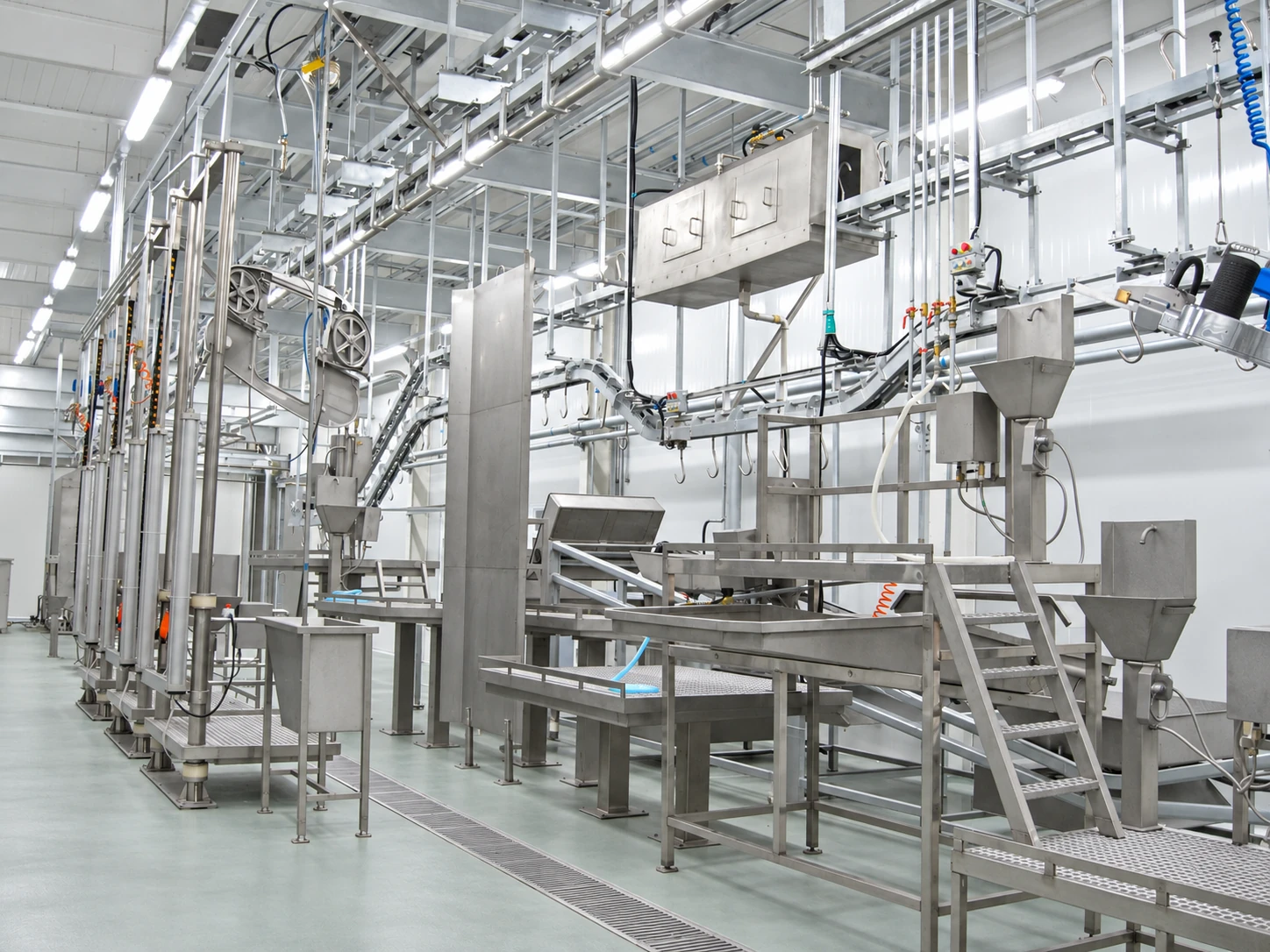
Connect the Equipment to Your Building
Send your floor plan, rail-height allowance, target throughput and chilling scope. We will discuss the equipment arrangement and transfer interfaces for your cattle line.
Project Inputs and Supply Scope
Use these inputs to review the equipment proposal. Design parameters, equipment configuration and the scope of supply and services follow the agreed proposal, quotation and contract.
| Project item | Information to provide or confirm |
|---|---|
| Animals and product requirements | Provide cattle size, target throughput, the working schedule and the required product form. |
| Confirmed capacity configuration | 20–500 heads per shift; the equipment and workstation arrangement follows the project requirements. |
| Building and project conditions | Provide the floor plan, clear height or available rail height, existing water, power and steam conditions, and the project location. Mark any undecided conditions for confirmation. |
| Equipment and service boundaries | Review core and optional equipment, refrigeration and cold rooms, downstream processing, civil works and utilities, on-site installation and training separately in the quotation. Included items follow the contract. |
| Drawing provision | Drawings are prepared to customer requirements and provided as agreed in the contract. |
| Component brands | The regular configuration uses the company’s usual component brands. Higher-grade options can be selected to meet customer requirements; confirm the specific brands and models in the proposal. |
| Equipment testing | Each machine undergoes individual machine testing. |
| Wear spare parts | Selected wear spare parts are provided. Confirm the list and quantities for the project. |
Line Proposal Questions
Can drawings follow my building and process requirements?
Drawings can be prepared to customer requirements. The documents provided and delivery arrangements follow the contract.
Can component brands be upgraded?
The regular proposal uses the company’s usual component brands. Higher-grade requirements can be accommodated and specified in the equipment proposal.
How do I confirm what the quotation includes?
Check the equipment list, optional items, refrigeration and cold rooms, civil works and utilities, installation and training separately. The agreed quotation and contract define the scope of supply and services; process images alone do not establish that scope.
Are machines tested individually, and are wear spare parts provided?
Each machine undergoes individual testing, and selected wear spare parts are provided. Confirm the spare-parts list and quantities for the project.
Plan Your Cattle Processing Line
Share the animal mix, building drawing and project requirements to discuss a suitable configuration.
Cattle Processing Line Video
Workshop footage of the cattle processing line, followed by a 3D layout overview.