
Philippines Slaughterhouse Equipment | Pig, Cattle and Sheep
NMIS-Oriented Slaughterhouse Equipment in the Philippines
Philippine projects often combine pig and cattle processing, local inspection requirements, island logistics and the need to upgrade an existing facility without stopping market supply. Some buyers also require sheep or goat equipment for regional demand.
Zhengye supplies pig, cattle and sheep slaughter line equipment and can prepare a scope around the site, capacity, building and intended inspection or accreditation path. Confirm current NMIS and local requirements with the relevant authority.
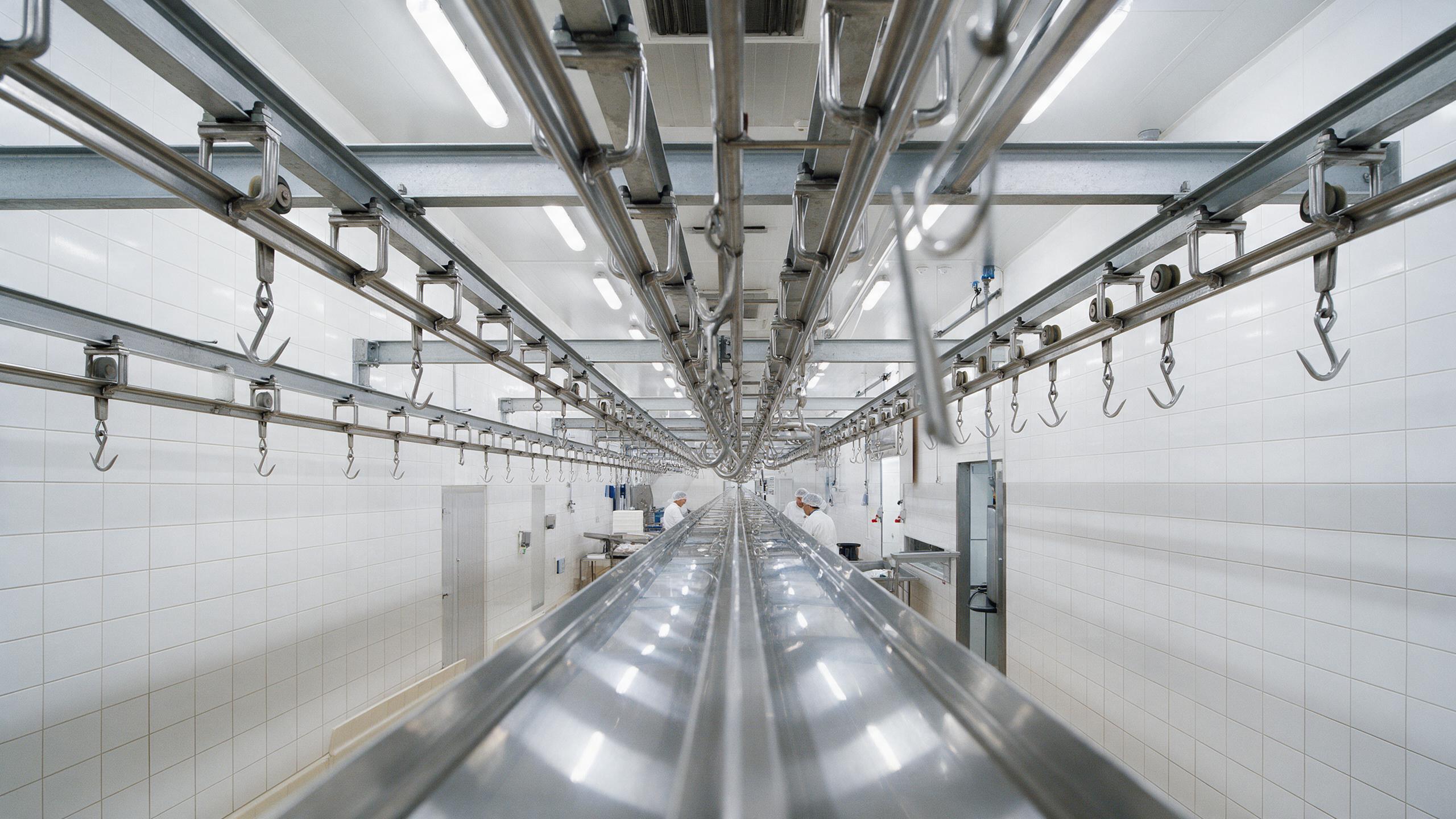
Pig Slaughterhouse Kenya | Equipment for Slabs, County Plants and Abattoirs
Pig Slaughterhouse Equipment for Kenyan Slabs and Licensed Plants
Kenyan pork is a growing but still smallholder-led chain. Most pigs are killed at licensed slabs serving a local market, while a smaller number of plants supply Nairobi supermarkets, hotels and processors. Both need the same core sequence — scalding, dehairing, singeing, evisceration, chilling — at very different scale.
Zhengye builds pig slaughter equipment from a single scalding and dehairing set for a county slab up to a full line with a chilled cutting room, specified for 240/415 V 50 Hz and for import through Mombasa under KEBS PVoC.
Scalding temperature is the first quality decision
A pig scalded too hot loses skin and takes a grey, patchy colour that no amount of washing fixes. The working range is about 60–62 °C for 4–6 minutes with constant agitation; 85 °C water, which is common in manual operations, damages the carcass.
Why a Pig Slaughterhouse in Kenya Is a Different Project
A pig slaughterhouse Kenya buyers describe usually falls into one of two shapes. The first is a county or private slab serving local butchers, killing a handful of pigs a day with a scalding drum, hand scraping and no chilling. The second is a licensed plant supplying Nairobi supermarkets, hotels or a processor, which needs a chiller, a cutting room and a documented hygiene routine.
Between those two there is a wide middle: a plant killing 30 to 100 pigs a day with a scalding-dehairing machine, a rail, a chiller and a small cutting room. That middle is where most of the return sits, because it removes the two things that cap a slab — inconsistent skin quality and the inability to hold meat overnight.
Pigs also differ from cattle and sheep in ways that matter to the equipment. There is no hide to remove, so scalding, dehairing and singeing replace dehiding. Carcass weight is lower, so the rail and hoist are lighter. And the skin is the product surface, which makes water temperature, agitation and knife hygiene the quality-critical points rather than the pelt.
Licensing, Standards and Import Path
| Layer | Authority | What it means for the project |
|---|---|---|
| Slaughterhouse licence | Director of Veterinary Services under the Meat Control Act (Cap. 356) | Slaughterhouse class, permitted throughput, inspection and hygiene standard; operating without a licence is an offence. |
| County public health | County government | Premises approval, water, waste and worker facilities. |
| Product standards | KEBS | Product and process standards; meat and food handling requirements. |
| Import conformity | KEBS PVoC programme | A Certificate of Conformity (CoC) is needed for controlled imports, and since July 2025 a Certificate of Origin is also required; the importer must raise an IDF first. |
| Environment | NEMA | Effluent, odour and waste handling for a plant of your size. |
The Meat Control Act classes slaughterhouses, and the lowest class — commonly operated as a slaughter slab — is limited to small daily volumes and local supply. Moving up a class is not only a paperwork step: it brings requirements on lairage, separation of clean and dirty operations, water, chilling and records. If your business plan depends on supplying a supermarket chain or a processor, plan the building for the class you will need in three years, not the one you can licence today.
On the import side, the practical sequence is: your Kenyan company obtains an IDF, the supplier applies for PVoC inspection through a KEBS-appointed agency, a CoC is issued against the invoice and packing list, and a Certificate of Origin is added. Missing documents are the most common reason equipment sits at Mombasa. Voltage, plug and documentation requirements should be settled before the crates are packed, not after.
Typical Equipment Scope
Receiving and lairage
Unloading ramp, holding pens with water, rest area and ante-mortem inspection point.
Stunning and bleeding
Restrainer or crate, bleeding rail and trough, knife steriliser, blood collection if required.
Scalding and dehairing
Scalding tank or scalder with temperature control, dehairing machine, singeing and polishing.
Evisceration
Evisceration rail, viscera table, pluck and gut handling, condemned-material bin.
Splitting and chilling
Splitting saw, weigh station, chiller with rail or tree trolleys, carcass wash.
Cutting and dispatch
Cutting room tables, vacuum packing, cold store, dispatch dock and record station.
Matching the Line to the Volume
| Operation | Pigs per day | Appropriate scope |
|---|---|---|
| County or private slab | 5–20 | Scalding drum or small scalder, hand scraping, simple hoist, no chilling |
| Small licensed plant | 20–60 | Scalder and dehairing machine, singeing, rail, chiller, wash area |
| Mid-size plant | 60–150 | Full line with dehairing, singeing, evisceration rail, chiller and cutting room |
| Processor-linked plant | 150–300 | Two-shift line, blast chilling, cutting and packing, cold store |
Pig lines are usually limited by scalding and dehairing rather than by the rail. A single dehairing machine handles a pig in two to four minutes including loading, so the practical ceiling is around 120–150 pigs over an eight-hour day on one machine. If your plan needs more, the answer is a second machine and a second operator, not a longer rail.
Chilling is the second limit. A 70 kg carcass needs to move from about 38 °C core to below 7 °C, and in a Kenyan ambient of 25–30 °C that takes both refrigeration capacity and air movement. We size the chiller on carcass weight per day, not on the number of hooks. Most pig slaughterhouse Kenya projects we quote fall between 20 and 150 pigs a day, which is the range where a powered dehairing machine pays for itself against hand scraping.
Power Supply, Voltage and Backup
| Item | Kenya |
|---|---|
| Single-phase supply | 240 V, 50 Hz |
| Three-phase supply | 415 V, 50 Hz, 3-phase 4-wire |
| Wall sockets in common use | Type G (British standard, three rectangular pins) |
| Motors and drives | 415 V three-phase, 50 Hz; 240 V single-phase for small machines |
| Grid behaviour | Outages and dips are common; generator or solar backup is normal for chilling |
- Motors, starters and VFDs are set for 415 V / 50 Hz, with 240 V control circuits and Type G plugs on single-phase equipment.
- The panel includes phase-failure and under-voltage protection; single-phasing from a weak feeder is a frequent cause of burnt windings.
- Chiller and cold store are on a separate critical-load circuit so a small generator can carry them through an outage.
- Compressor restart is staggered after an outage; simultaneous restart trips a generator that is otherwise adequately sized.
- Enclosures are IP55 or better in wash-down areas, with anti-condensation heaters in the panel.
- Submersible borehole pump and water treatment are treated as part of the utility scope, not an afterthought.
For a slab or a small plant, the honest question is whether chilling is affordable at all. If the grid is unreliable and no generator is budgeted, a chilled-meat business cannot be run on hope. We will quote the line either way, but the business case should include the backup power cost from the start.
Installation, Logistics and Site Conditions
Equipment arrives through Mombasa and travels by road to Nairobi, Nakuru, Kisumu, Thika or Eldoret. Module sizes are planned for a standard trailer and for whatever lifting is available at site — usually a chain block, a fork lift or a hired crane. Where the site is a converted building, the door width and the route from truck to kill floor decide the maximum module size.
- Measured survey before fabrication: door widths, ceiling height, floor level and drain position.
- Scalder position fixed relative to the dehairing machine and the rail, because the transfer distance decides labour and skin damage.
- Hot water supply sized for both scalding and cleaning; a separate potable line for knife and hand wash.
- Floor falls toward a trapped gully, with a wash-down point at the dehairing area where blood and hair collect.
- Effluent and hair screening agreed with the county and NEMA requirements before the floor is cut.
- Installation supervised for scalder levelling, rail alignment and commissioning; local fitters do the bulk mechanical work.
Coastal sites near Mombasa need a different corrosion specification from Nairobi. Salt air attacks galvanised frames, door hardware and electrical enclosures, and a plant that looks fine in year one can be rusty by year three. Tell us if the site is coastal.
Water, Waste and Everyday Operation
A pig plant uses more hot water per carcass than a cattle line because scalding and wash-down dominate. If the supply is a borehole, test hardness and iron first: hard water scales the scalder and the hot-water circuit, and iron stains stainless surfaces that customers see.
Waste is the other recurring issue. Hair, blood, gut contents and wash water all leave the kill floor, and a slab with no screening blocks the drain within weeks. A simple hair screen, a blood collection point and a grease trap cost little at construction and are difficult to retrofit.
On labour, a Kenyan slab typically runs three to five people; a 60-pig plant runs eight to twelve. The line should be designed around the crew you can actually staff and keep, which is often the real constraint rather than the machine rate.
From Slab to Licensed Plant
| Current state | Next step | What to fix first |
|---|---|---|
| Slab with scalding drum | Scalder and dehairing machine, hoist and rail | Water heating, floor drainage, wash area |
| Small plant without chilling | Chiller and cutting room | Power capacity and insulation |
| Plant supplying local butchers | Consistent skin quality and overnight holding | Scalding control and cold room discipline |
| Plant aiming at supermarkets | Documented hygiene, cutting room, packing | Records, separation of clean and dirty flows |
The usual mistake is to buy a bigger kill line before fixing chilling and skin quality. Both are cheaper than a new line and both decide whether a supermarket or processor will buy from you. Fix those first, then add capacity when the market asks for it.
What to Send for a Kenya Quotation
- Pigs per day now and the target in two years
- Average live weight and carcass weight
- Site: county, town, and whether it is coastal
- Building drawing or dimensions, ceiling height and door width
- Electrical supply — single or three phase, sanctioned load, generator or solar
- Water source, daily volume and a water analysis if available
- Product destination: local butchers, supermarkets, hotels, or a processor
- Whether the plant will be licensed as a slab or a higher class from the start
The pig slaughter line page covers the process sequence in more detail, and the scope template lets you compare two offers on the same items. If the project is a first plant, the feasibility study page sets out what a lender will ask for.
Frequently Asked Questions
Do you supply equipment for a slaughter slab?
Yes — a scalder, dehairing or hand-scraping set, hoist and wash area. A slab is a stepping stone, so we also flag what a higher class would require later.
What scalding temperature should we use?
About 60–62 °C for 4–6 minutes with agitation for a typical pig. Higher temperatures damage the skin and cause patchy colour.
What voltage is the equipment built for?
415 V three-phase and 240 V single-phase, 50 Hz, with Type G plugs on single-phase items.
Can you help with KEBS PVoC documentation?
We provide the invoice, packing list, test and material certificates and technical documents that your clearing agent needs for the CoC application. The application itself is made by the importer.
How long does delivery to Mombasa take?
Typically 45–70 days for manufacture and sea freight, then transport and installation on site depending on the line size.
Can a plant be halal as well?
Halal certification is separate and applies to species and method. Pig slaughter is not halal, so a pig line and a halal red-meat line must be separate operations, not a shared floor.
Start from the volume you can sell, not the biggest machine
Send the pigs per day, carcass weight, county and building details. We will propose a scope that matches the class you intend to licence and the power you actually have.