
Philippines Slaughterhouse Equipment | Pig, Cattle and Sheep
NMIS-Oriented Slaughterhouse Equipment in the Philippines
Philippine projects often combine pig and cattle processing, local inspection requirements, island logistics and the need to upgrade an existing facility without stopping market supply. Some buyers also require sheep or goat equipment for regional demand.
Zhengye supplies pig, cattle and sheep slaughter line equipment and can prepare a scope around the site, capacity, building and intended inspection or accreditation path. Confirm current NMIS and local requirements with the relevant authority.
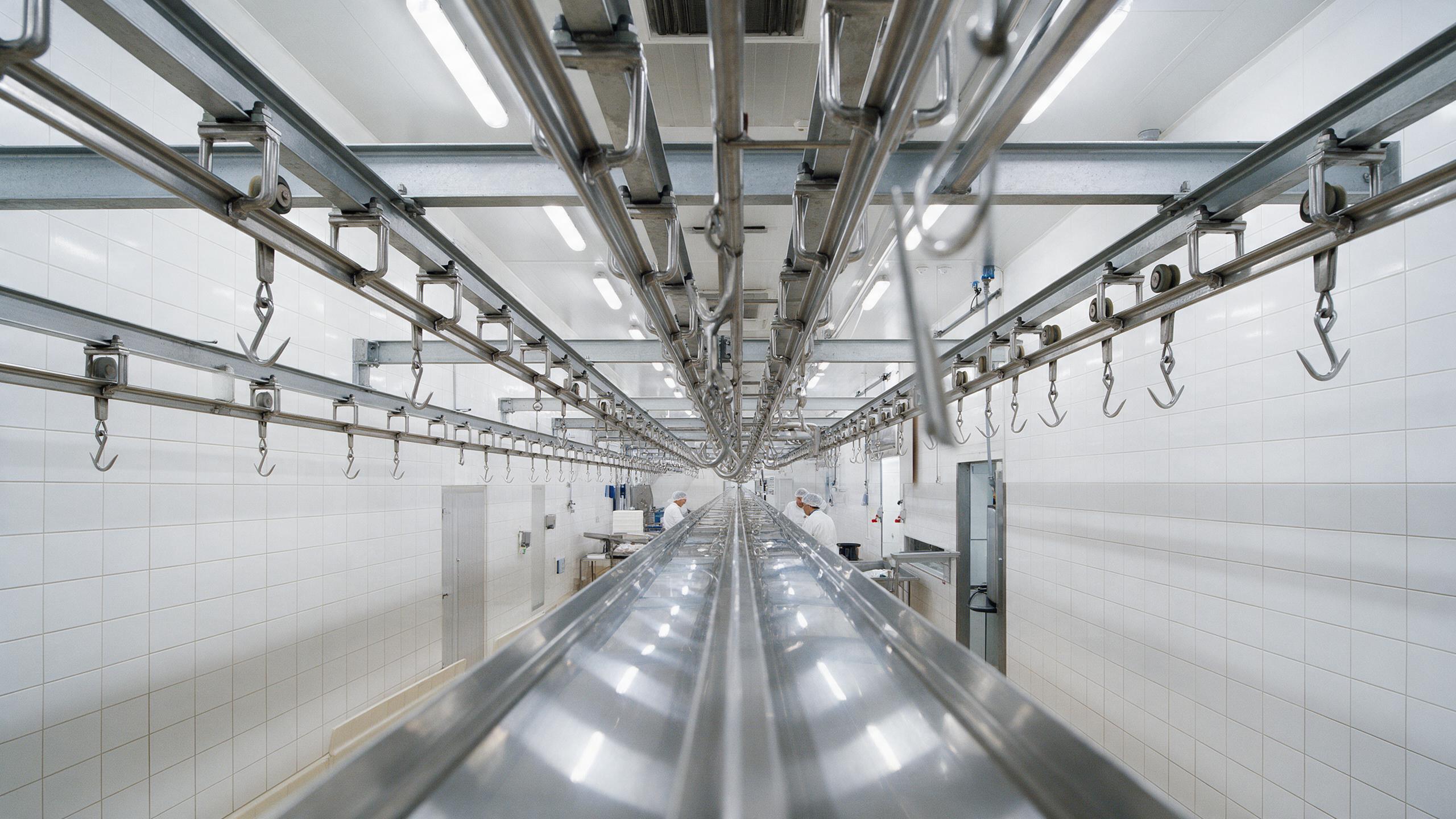
Slaughterhouse Equipment Pakistan | Cattle, Buffalo, Goat and Sheep
Halal Slaughterhouse Equipment for Pakistan Cattle and Sheep Plants
Pakistan is a red-meat market with an export ambition. Domestic plants serve city beef and mutton demand, while export-oriented plants aim at the Gulf and need a halal mark, a registered slaughterhouse and a cold chain that survives a 45 °C summer.
Zhengye supplies cattle, buffalo, goat and sheep slaughter equipment for both cases, with electrical scope set for 230/400 V 50 Hz and refrigeration sized for real Pakistani summer conditions.
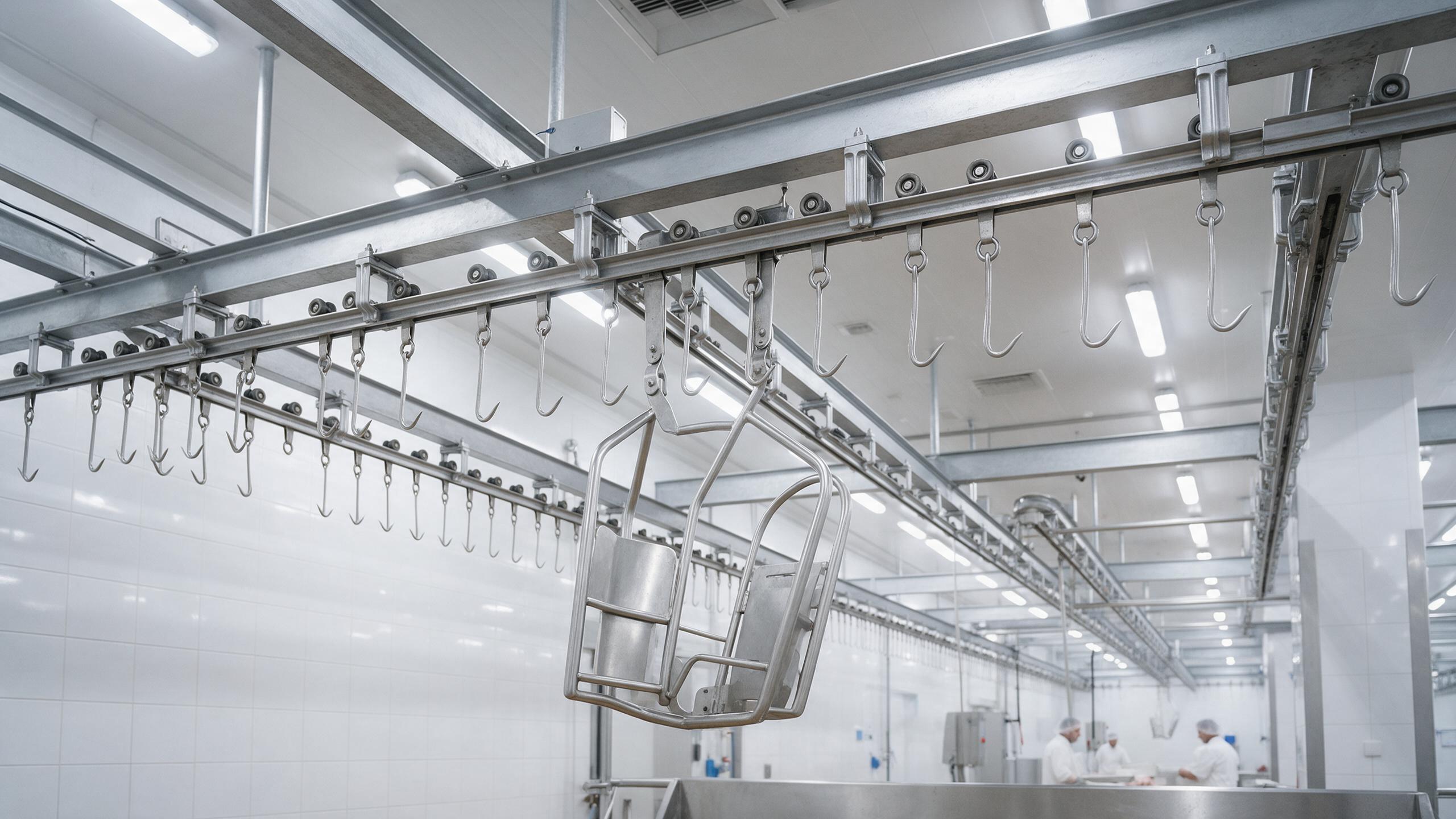
Heat decides half the specification
At 45 °C ambient a chiller sized on a European catalogue number will not pull a hot carcass down in time. We calculate refrigeration against your local summer maximum and the real incoming carcass temperature, then check that the condensing unit has somewhere to reject that heat.
Why Slaughterhouse Equipment in Pakistan Is Specified Locally
Slaughterhouse equipment in Pakistan is bought in three fairly distinct situations. A city plant supplies beef and mutton to butcher shops and hotels and cares about throughput per rupee. A rural or peri-urban plant slaughters for a contractor or a market and cares about robustness and simple maintenance. An export plant targets Saudi Arabia, the UAE, Qatar or Kuwait and cares about the halal mark, documented slaughter supervision and a cold chain that holds from kill floor to container.
The same equipment family serves all three, but the scope should not be identical. The city plant needs a chiller and a cutting room. The export plant needs a separate clean and dirty flow, a blast freezer, a packing room and a documented halal supervision route. The contractor plant may not need chilling at all if the meat leaves warm on the same day — and pretending otherwise adds cost without adding sales.
We ask which of those three you are before quoting, because the answer changes the layout more than the head count does. If the plant is being built for a family business with an eye on export later, the useful approach is to fix the final flow now and build it in stages.
Registration, Halal Mark and Export Requirements
| Layer | Authority | Why it matters to the equipment |
|---|---|---|
| Halal certification and mark | Pakistan Halal Authority (PHA), under the Pakistan Halal Authority Act 2016 | Slaughter method, supervision, segregation and records; the national “One Country One Mark” scheme applies. |
| Slaughterhouse registration | PHA registration scheme for slaughterhouses and food service providers | Facility layout, hygiene and traceability are reviewed, not just the certificate paperwork. |
| Food safety and premises | Provincial food authority and local government | Building approval, drainage, water and pest control. |
| Environment | Provincial EPA | Effluent treatment, rendering odour and boiler emissions. |
| Product standards | PSQCA, for products inside its mandatory list | Most slaughter machinery falls outside the list, but electrical components and some products are covered. |
| Export documentation | Animal health and veterinary certification, plus the importing country’s requirements | Cold chain records, plant approval and residue monitoring. |
The Pakistan Halal Authority has moved from certificate issuing toward facility registration, and in 2025 it approved a national halal mark with the certification fee waived for exported halal goods. For a plant builder this means the layout and the records matter as much as the slaughter method: a supervisor has to be able to follow an animal from lairage to dispatch without crossing a non-halal stream.
We supply the equipment and the documentation that supports those reviews — line drawings, material and test certificates, cleaning and operating procedures, spare-parts lists. Certification and registration remain with your company and the authority.
Typical Equipment Scope
Lairage and receiving
Unloading ramp, holding pens, inspection race, washing point and shaded waiting area.
Restraint and bleeding
Cattle or buffalo restrainer, goat and sheep restrainer, bleeding rail, knife steriliser.
Hide and skin
Dehiding platform or puller, hide handling, goat skin table with separate drainage.
Evisceration
Viscera table, offal tray system, paunch and intestinal handling, condemned bin route.
Splitting and chilling
Splitting saw, rail switch, weigh station, chiller sized for summer ambient.
Cutting, freezing, packing
Cutting room tables, vacuum packing, blast freezer, cold store, dispatch dock.
Capacity Planning for Pakistani Plants
| Plant type | Typical daily kill | Bottleneck to check first |
|---|---|---|
| City beef and mutton shop supply | 20–60 cattle or buffalo | Chilling and cutting room space |
| District plant with contractors | 50–150 cattle | Lairage turn-over and water supply |
| Goat and sheep plant | 200–800 head | Skin handling and offal route |
| Export-oriented plant | 100–300 cattle | Blast freezing, cold store and halal supervision flow |
Head per day is only meaningful with the working hours attached. A plant that receives animals between 6 am and 11 am and then has to chill before an evening dispatch needs a different chiller from one that kills across two shifts. Give us both numbers and we will show the rail length, the number of operators and the refrigeration load that follow.
The project cost model is the right place to compare a plant with and without a blast freezer, because freezing usually costs more than the kill floor and is often the item that gets underestimated.
Power Supply, Voltage and Summer Load
| Item | Pakistan |
|---|---|
| Single-phase supply | 230 V, 50 Hz |
| Three-phase supply | 400 V, 50 Hz, 3-phase 4-wire |
| Wall sockets in common use | Type C, D, G and M, mixed by region and building age |
| Motors and drives | 400 V three-phase, 50 Hz |
| Grid behaviour | Load shedding and voltage sag; generator or solar-hybrid backup is common |
- Motors and starters are set for 400 V / 50 Hz with a control circuit transformer that accepts 380–420 V.
- VFDs are configured with a widened input tolerance and a restart delay so a dip does not trip the whole line.
- Panels include phase-failure, phase-sequence and under-voltage protection, plus anti-condensation heaters where the panel sits in a cold store plant room.
- Motor derating is applied for 45 °C ambient: a motor rated at 40 °C loses roughly 8–10% of its output at 45 °C, so we specify the next frame size on saws and compressors.
- Generator changeover is interlocked, and the critical load list covers chiller, cold store, control system and lighting.
- Refrigeration condensing units are positioned for shade and airflow, because a unit in direct sun and still air loses a large part of its capacity.
Solar is increasingly part of the answer for cold stores in Punjab and Sindh. If a hybrid system is planned, tell us the inverter rating and whether it can run the compressors directly, because starting current is usually what decides whether the design works.
Installation, Water and Site Conditions
Most Pakistani projects are inside an existing compound or a new shed on agricultural land. Access is normally straightforward from Karachi or Port Qasim, and the practical constraints are water, power and the summer working window rather than transport. Installation is best scheduled outside the hottest weeks, or with a night shift, because rail work in a metal-roofed shed at 45 °C is slow and unsafe.
- Measured survey before fabrication: door widths, ceiling height at the rail, floor level and drain position.
- Rail height fixed before the roof steel is complete, particularly for buffalo and cattle.
- Borehole or canal water tested for hardness and iron; hard water scales the hot-water circuit and the wash-down nozzles.
- Effluent route and soakage or treatment agreed with the provincial EPA requirement before the floor is cut.
- Rendering or condemned-material handling planned as a closed route away from the clean area.
- Dust protection for motors and panels in sites next to unpaved roads or animal markets.
Where the plant is in a rural area, spare parts availability matters. We ship a first-year kit — blades, bearings, seals, belts, proximity switches — and label it against the drawings so a local machinist can match a part instead of waiting for an import.
Heat, Dust and Water
Pakistan’s summer is the single largest technical difference from a European or Chinese plant. Three things need attention: chiller capacity calculated at the local maximum ambient, ventilation in the lairage so animals are not stressed before slaughter, and electrical enclosures that keep dust out. A panel full of fine dust and running at 50 °C inside a shed fails long before its rated life.
Evaporative cooling works well in dry Punjab and Sindh air and badly in coastal Karachi humidity. The right choice depends on your city, so tell us where the plant is rather than only the country. For coastal sites, salt-laden air also means a higher specification on galvanised steel, door hardware and electrical enclosures.
Water hardness is the quiet cost. A softener on the hot-water circuit and a filter on the wash-down line usually pay for themselves within a year in reduced descaling and nozzle replacement.
Upgrade or New Build?
| Situation | Typical move | Constraint |
|---|---|---|
| Manual slaughter, city supply | Restrainer, bleeding rail, offal handling, floor repair | Shed height and drainage |
| Plant with kill floor but no chilling | Chiller and cutting room first | Power capacity and insulation |
| Export ambition | Segregated flow, blast freezer, packing room, halal supervision route | Certification timeline and cold chain |
| Seasonal or contractor operation | Simple lairage plus mobile bleeding set | Site access and water |
If the plant already exists, send photographs of the kill floor, the rail and the ceiling. In most Pakistani upgrades the ceiling height limits what can be installed, and it is better to know that before a quotation than after a shipment.
What to Send for a Pakistan Quotation
- Species and mix — cattle, buffalo, goat, sheep, with percentages
- Daily kill and the hours available for slaughter
- City and province, because heat, water and local requirements differ
- Building drawing, ceiling height and the largest door opening
- Sanctioned electrical load and whether a generator or solar hybrid is installed
- Water source and daily volume
- Product destination: fresh local, chilled, frozen, or export (and to which country)
- Whether a PHA halal mark is required at commissioning or planned later
The equipment scope template lets you compare two offers line by line, and the build guide sets out the sequence from site to commissioning. For halal process detail, see halal slaughtering requirements.
Frequently Asked Questions
Do you provide PHA halal certification?
No. The certificate and the national halal mark are issued by the Pakistan Halal Authority or an accredited body. We supply equipment and documentation that supports your registration and audit.
Can the equipment run at 45 °C ambient?
Yes, with motors and refrigeration derated for that ambient. Send the local summer maximum so the specification is built around it rather than around a catalogue value.
Is the voltage 230 V or 400 V?
Both. Single-phase is 230 V and three-phase is 400 V, 50 Hz. We build the panel and drives for that supply.
Can one line handle cattle and goats?
On separate shifts with separate dressing areas. Simultaneous processing of large and small animals on one floor is not recommended.
How long does a plant take to deliver and install?
Typically 60–90 days for manufacture and shipping, then 3–5 weeks on site depending on the line and building readiness.
Do you supply chilling as part of the line?
Yes — chillers, blast freezers and cold stores can be included, and we size them against the peak kill rather than the average.
Specify for the summer, not the catalogue
Send the species, daily kill, city, building dimensions and power details. We will prepare the equipment scope, the refrigeration load at your summer ambient, and the site requirements.