
Key points
- US 9 CFR 416.3 addresses equipment construction, thorough cleaning and inspection access.
- Cleaning frequency and responsibilities belong in a written sanitation procedure.
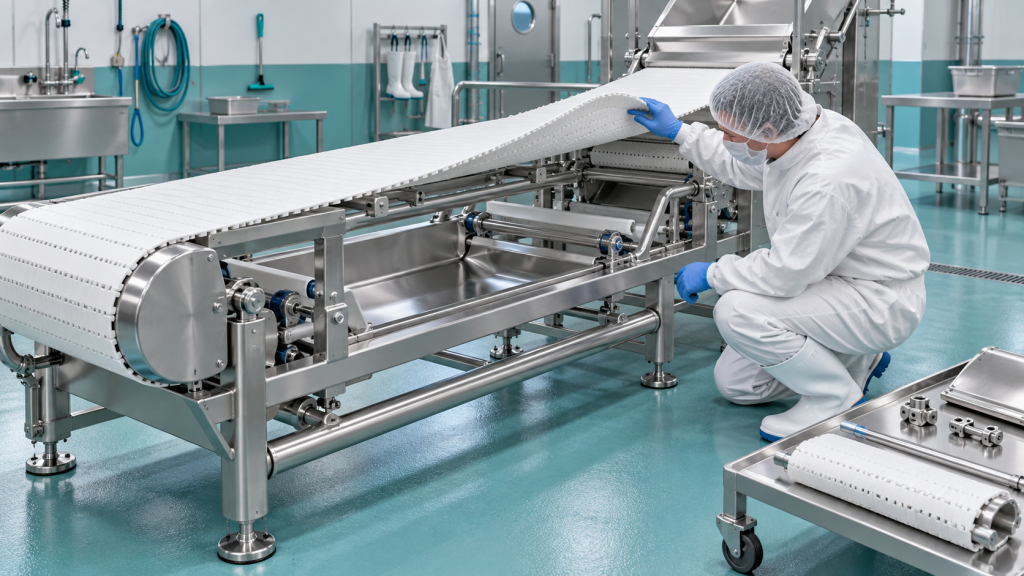
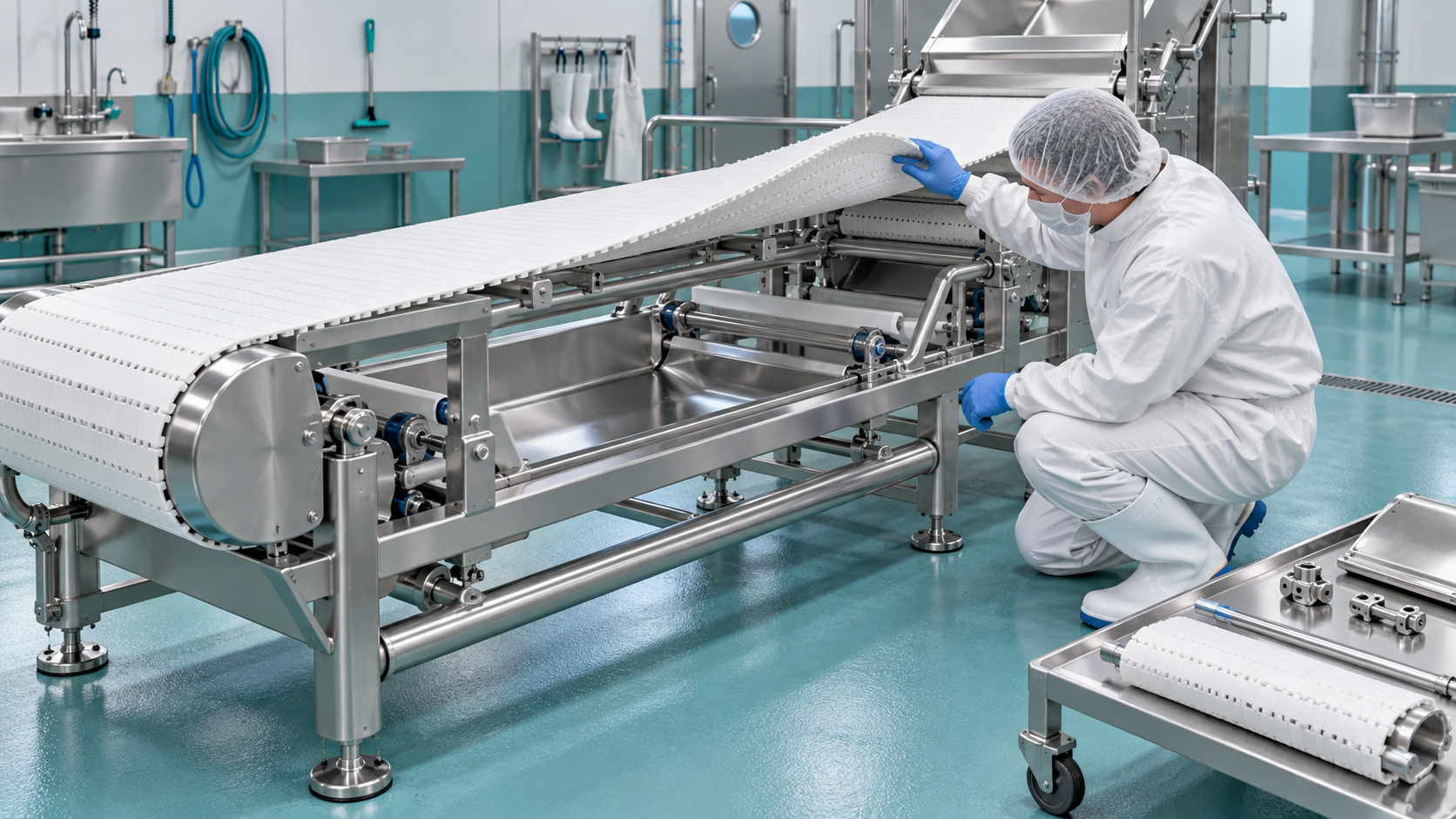
- Check access and drainage against the actual installation, not just the catalogue image.
A stainless appearance does not answer how a machine is cleaned. Confirm access, inspection points and written responsibilities before ordering.
Use the right regulatory context
US 9 CFR Part 416 covers sanitation for establishments within its scope. Sections 416.3 and 416.4 address equipment, utensils and sanitary operations; section 416.12 addresses written sanitation procedures. This is a US regulatory reference, not a universal requirement or a certification of any supplier’s equipment. Confirm the applicable rules with the authority for the intended destination.
Ask how the surface will be reached
Our procurement recommendation is to request an access explanation for product-contact surfaces and likely accumulation points. Identify what opens, what is removed, which tools are needed and whether access remains possible after installation. Compare these answers with the proposed operating and cleaning methods. Stainless steel appearance alone says little about hidden joints or access beneath a belt.
Connect the machine to the room
Review the space needed to remove parts, the handling route for those parts and the destination of wash water. Check whether a wall, neighbouring machine or pipe will block access. These are site-specific integration questions rather than a claim that one open-frame design suits every process. Any inspection or disassembly must follow the manufacturer’s safe isolation procedure and the operator’s safety rules.
Make sanitation verifiable
A working procedure should connect the machine, cleaning frequency, responsible person and pre-operation checks. Define how an unsatisfactory check is corrected and recorded. US section 416.12 includes pre-operational cleaning of food-contact surfaces within its scope. Keep the drawing and procedure revision aligned so later changes to a guard, belt or support do not silently remove an inspection point.
Practical question
Does stainless steel automatically establish hygienic design?
No. Construction details, cleanability, access, operating procedures and applicable requirements must all be reviewed for the actual installation.
Related equipment and planning resources
Sources and further reading
Sources checked: