
Key points
- USDA ARS describes HotHog as a weather-based heat-stress decision aid developed chiefly from sow data, not a universal diagnosis for every pig class.
- Water access, ventilation and animal behaviour should be checked together when heat risk rises.
- Record the time, pen, observations and corrective action so a warning becomes an operational response.
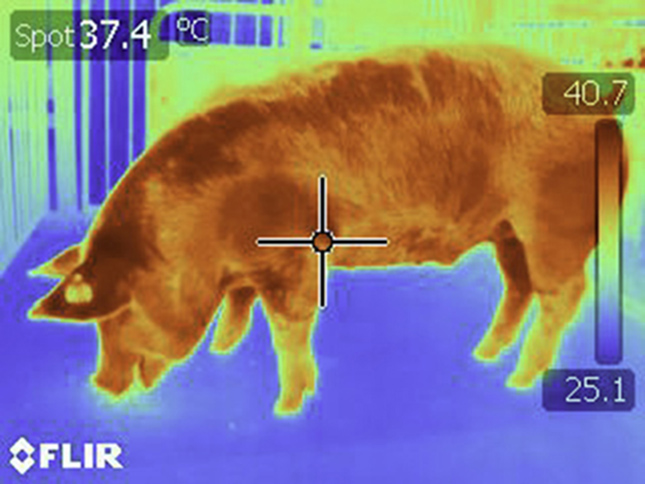
A thermal picture or weather alert starts a check; it does not diagnose a whole herd. Link warning signs to water, airflow and recorded action.
What the research supports
USDA ARS reported in 2023 that the HotHog app uses local weather data to forecast heat-stress categories and offers management observations. Its development data concerned non-pregnant breeding females and mid- to late-gestation sows; the source did not validate the same threshold for every growing pig. The ARS thermal photo is a separate research image of a pig's surface temperature, not a measure of internal temperature or proof that a particular cooling system works.
Turn an alert into a pen check
When a forecast signals risk, the farm team can inspect drinking points, airflow, shade or cooling provision and the pigs' breathing, activity and intake. WOAH's pig-welfare chapter calls for animal-based observations alongside environmental measures. Record which group was checked and whether water or ventilation actually reached that group; a single image should never stand in for repeated observations.
Put access and maintenance in the brief
A housing or transfer plan should show water supply, service access, airflow paths, power contingencies and who can respond to a failed fan or blocked drinker. Cooling methods and safe operating limits depend on climate, animal class and the installed system, so the operator and veterinary adviser must confirm them. When discussing downstream pig handling, keep farm heat observations separate from claims about slaughter-line capacity.
Evidence and limits
This is an original planning interpretation of the cited ARS report and WOAH chapter, checked on 15 October 2026. The ARS report was published in 2023 and the photograph is older; neither is presented as a new 2026 experiment. Site-specific settings, animal care and legal duties require local review.
Practical question
Can a thermal image alone confirm that pigs are free of heat stress?
No. Surface imagery is one observation. Check animal responses, water and the pen environment over time with qualified staff.
Related equipment and planning resources
Sources and further reading
Sources checked: