
Key points
- WOAH’s 2024 guidance calls for unloading without undue delay and access to drinking water as soon as possible after unloading.
- Slipping, falling and reluctance to move are useful animal-based observations.
- Check the complete route from ramp to pen, including staff access and group management.
Good arrival planning connects the truck ramp to pens, water and safe staff access. Observe animals to identify where the route needs improvement.
Start with arrival, not the conveyor
The 2024 edition of WOAH Chapter 7.5 discusses unloading, water, handling and animal-based measures. It is an international reference, not a newly issued 2026 rule or a substitute for local requirements. For a cattle facility, the receiving brief should describe what happens from truck arrival until animals enter the next operating stage.
Review one continuous route
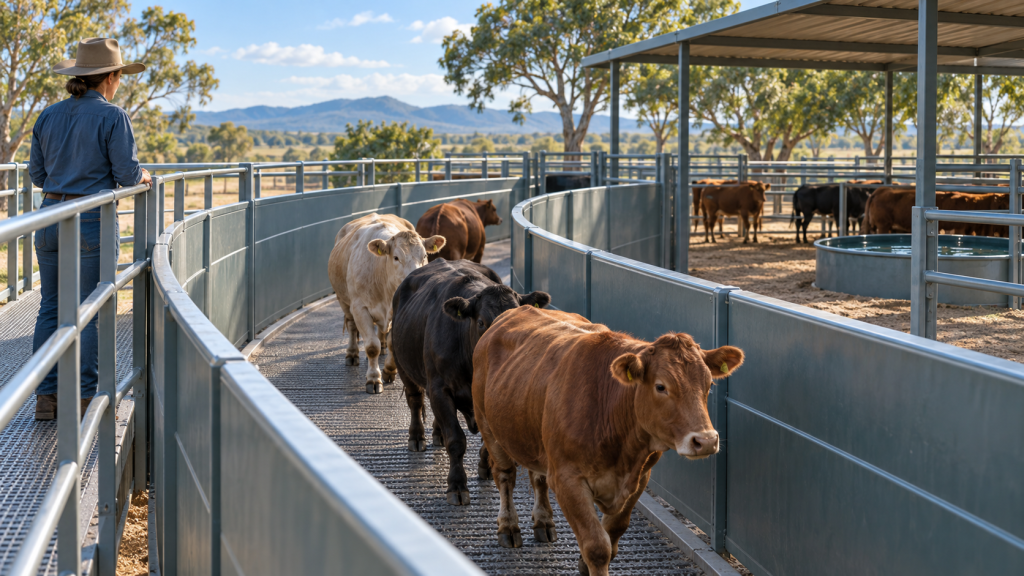
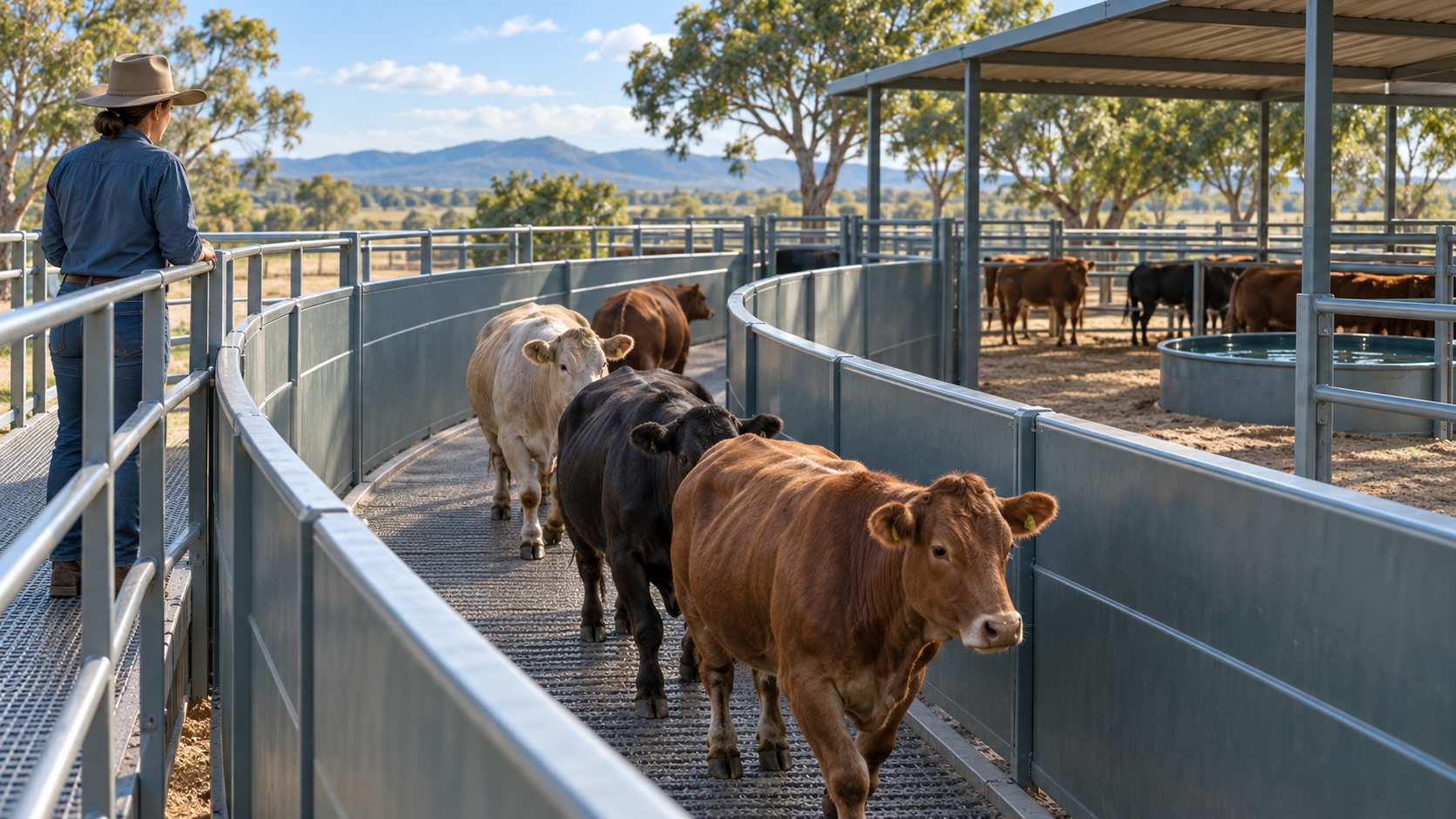
Our engineering recommendation is to review the ramp, transitions, gates and holding pen as one route. Identify changes in level, drainage, obstacles and places where cattle hesitate. Provide a protected working position for handlers and a way to resolve a blockage without entering a pinch point. The illustration is conceptual: the necessary dimensions, slope and surface must be checked for the actual animals, vehicles and site.
Use observations to guide correction
WOAH identifies measures such as slipping, falling and reluctance to move. A receiving log can record where these occur, the group involved and the corrective action. Pair these observations with inspection of flooring and gate operation. A quiet-looking scene or a single throughput figure does not establish acceptable welfare; the operator needs repeatable observations during actual operation.
Include water and waiting arrangements
Confirm how drinking water is available after arrival, who checks it and how animals are assigned to waiting pens. Avoid planning the pen solely from an average hourly delivery figure: actual delivery peaks and interruptions also matter. Bring the arrival pattern, vehicle details and welfare procedures to the layout discussion before choosing equipment interfaces.
Practical question
Can a ramp drawing alone confirm good cattle handling?
No. Review the complete movement route and operating procedure, then use animal observations and site checks to assess performance.
Related equipment and planning resources
Sources and further reading
Sources checked: