
Key points
- WOAH identifies contaminated clothing, footwear and vehicles as possible ASF transmission routes.
- Receiving-area planning should distinguish animal, staff and vehicle movements.
- Use a documented handover and a reviewed cleaning procedure rather than assuming a visible wash is sufficient.
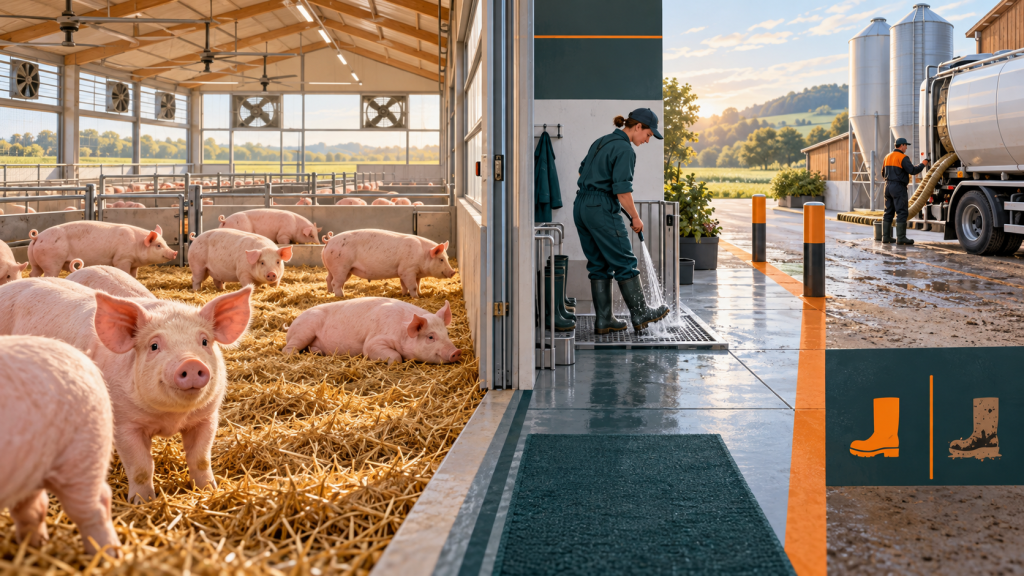
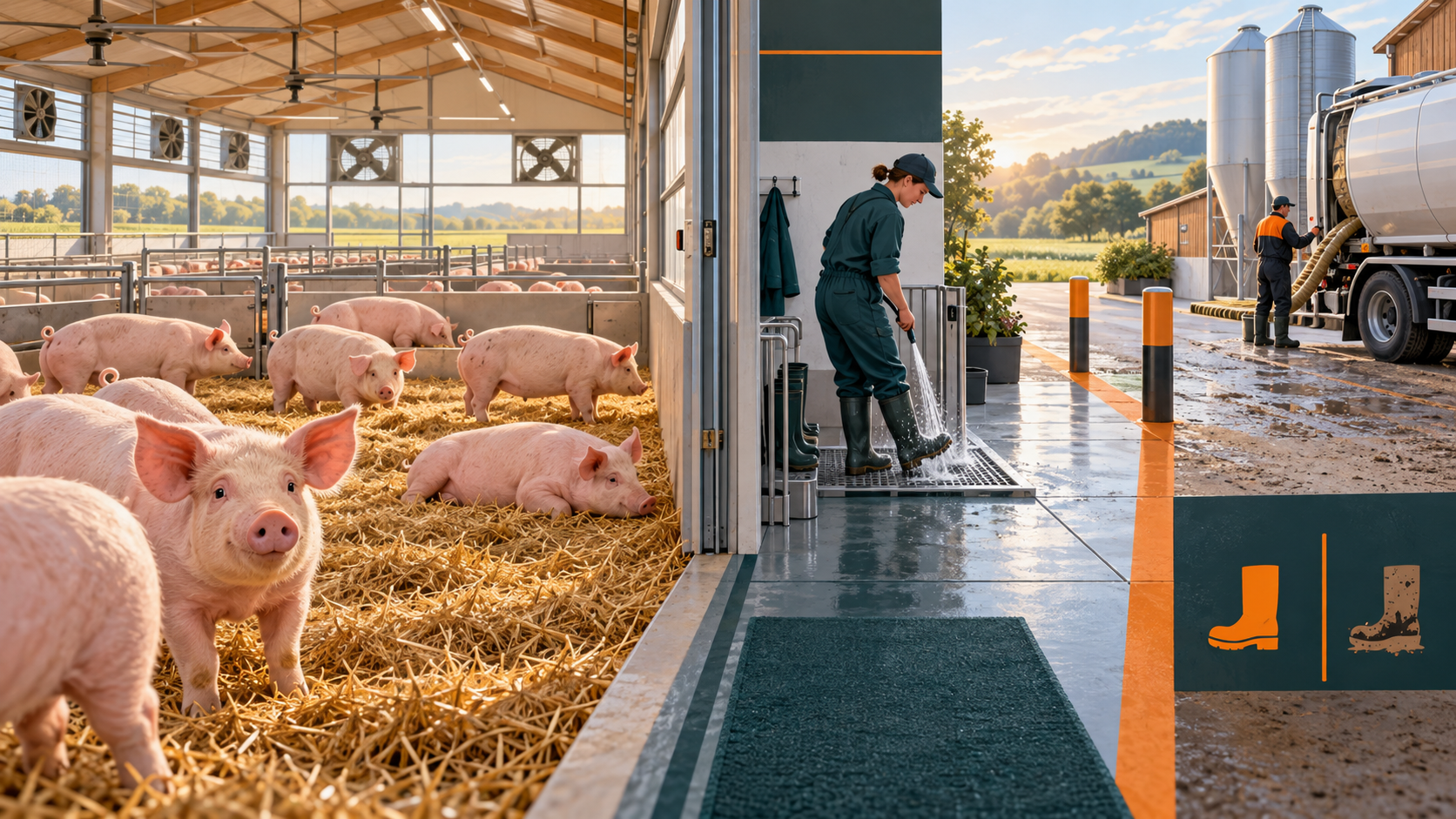
The delivery boundary connects farms, vehicles and receiving pens. Plan who crosses it, where equipment is cleaned and how each handover is recorded.
Why the delivery boundary matters
African swine fever affects domestic and wild pigs. WOAH describes indirect transmission through contaminated materials, including clothing, footwear and vehicles. A truck may visit several premises, so the handover point deserves the same attention as the animal pen. This article is an operational interpretation of existing guidance, not a report of a new outbreak.
Turn a boundary into an operating plan
Our planning recommendation is to mark the delivery route, the staff entry and the place where tools change hands on one receiving-area drawing. Record which person remains on each side, where boots and handling equipment are cleaned, and how a vehicle leaves after unloading. Keep manure and wash-water movement visible in the brief. These are review questions for the operator and veterinary team, not a claim that one layout prevents disease.
Make the handover traceable
A practical record can identify the supplying farm, animal batch, vehicle, arrival time, responsible receiver and cleaning confirmation. Attach the operating procedure and its revision to the record instead of relying on a driver’s verbal assurance. Review cleaning and disinfection with the competent veterinary authority; organic contamination and poorly defined responsibilities can undermine a routine.
What to bring to an equipment discussion
Provide a measured receiving plan, proposed traffic arrows, expected delivery pattern and cleaning responsibilities before specifying gates, pens or wash facilities. If the drawing is still uncertain, separate confirmed dimensions from questions awaiting a site check. Equipment planning supports a biosecurity programme; it does not replace movement restrictions, veterinary assessment or the farm’s disease-control responsibilities.
Practical question
Does adding a vehicle wash establish biosecurity?
No. Review its location, operating procedure, contamination control and responsibilities within the complete programme. A wash facility alone does not prove effective disease prevention.
Related equipment and planning resources
Sources and further reading
Sources checked: