
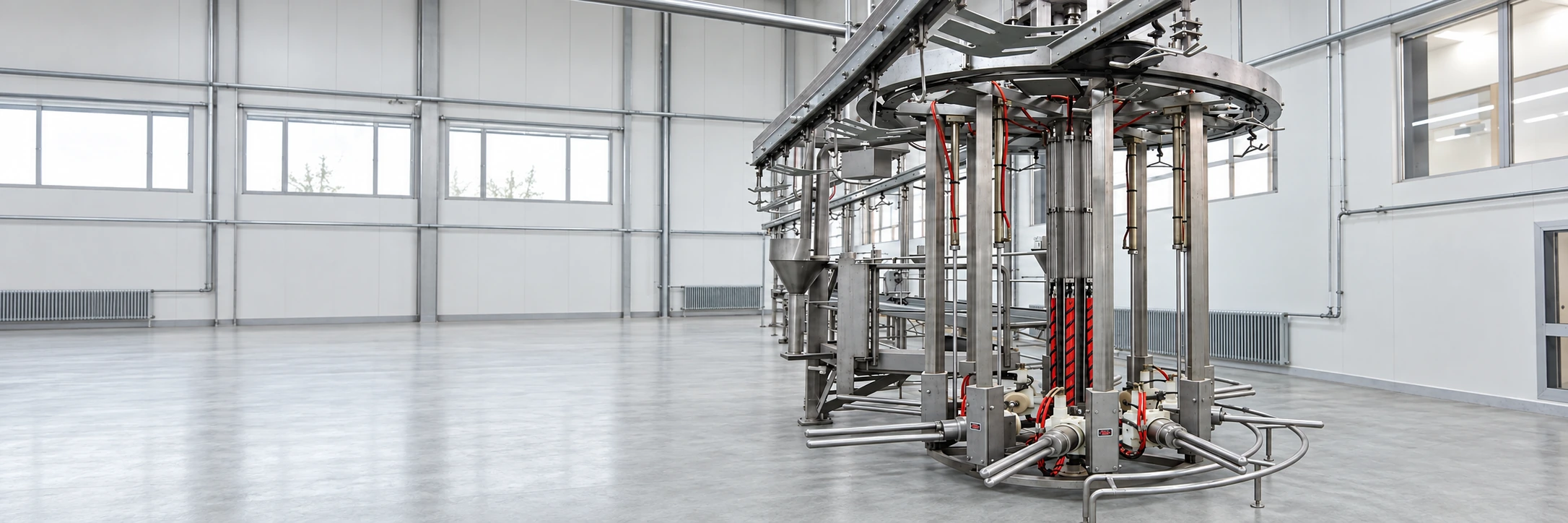
Sheep and goat slaughter processing
Plan separate routesSheep and goat slaughter lines
Zhengye Slaughter Machinery plans sheep slaughterhouse and goat slaughterhouse lines with separate equipment routes for sheep skinning and goat scalding and dehairing, each connecting bleeding, evisceration, inspection and transfer to chilling. A mutton slaughterhouse built around adult sheep needs a heavier restrainer and a longer bleeding rail than a goat line, which is why the two routes are quoted separately.
Explore the Sheep and Goat Processing Routes
Start with the sheep skinning route, followed by the goat scalding and dehairing route. Each route presents its stages and equipment, with proposal links below. The final configuration depends on the species, product form, building conditions and project requirements.
Sheep Skinning Process Drawing
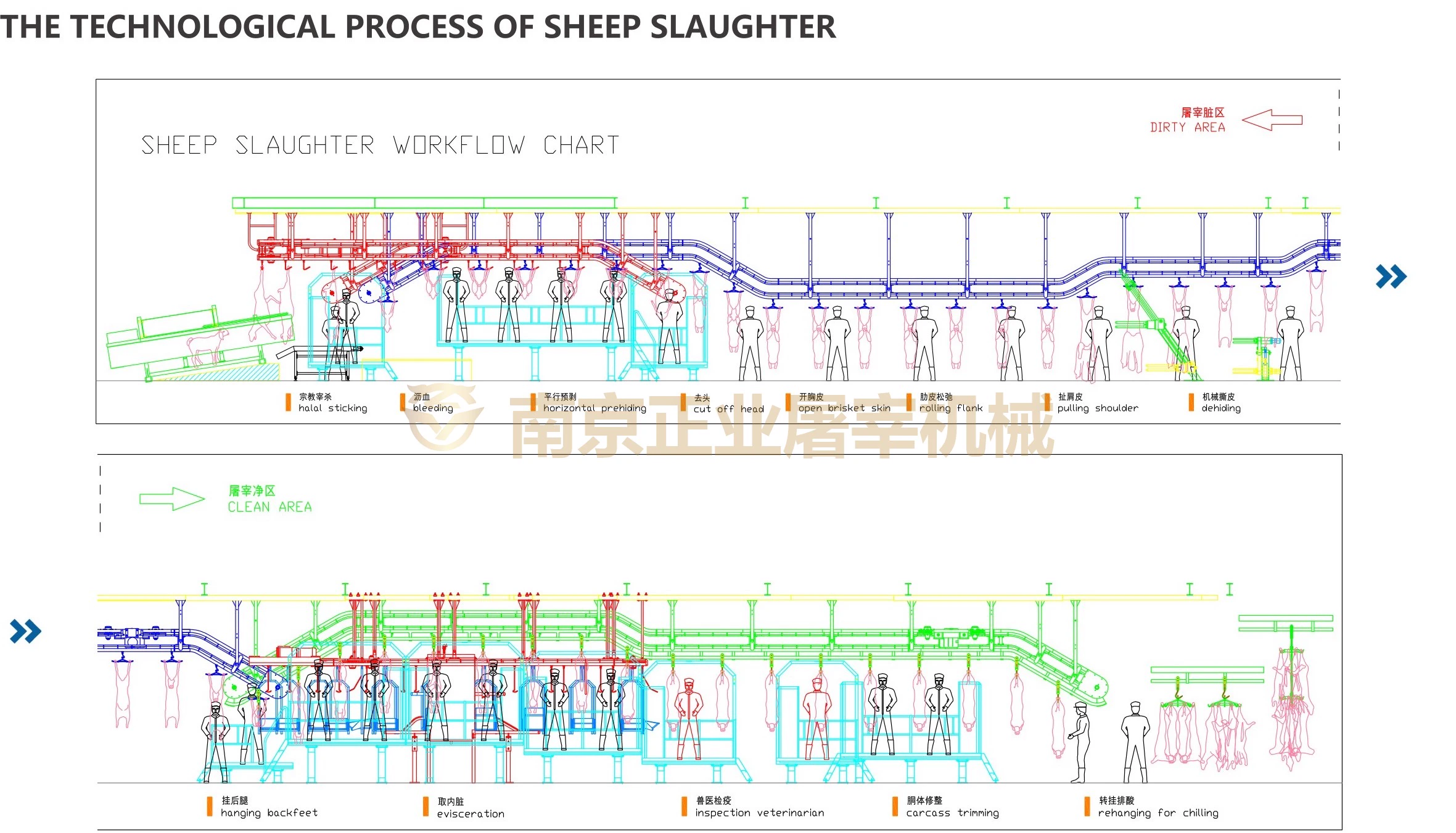 View the Full-Size Process Drawing →
The process drawing shows a horizontal pre-skinning configuration, while the stage cards show vertical pre-skinning. Either configuration can be selected to meet project requirements.
Sheep processing route
Sheep Skinning Route
Suspended bleeding → Rehanging → Vertical pre-skinning → Preparation → Mechanical skinning → Evisceration → Veterinary inspection and trimming → Transfer to chilling
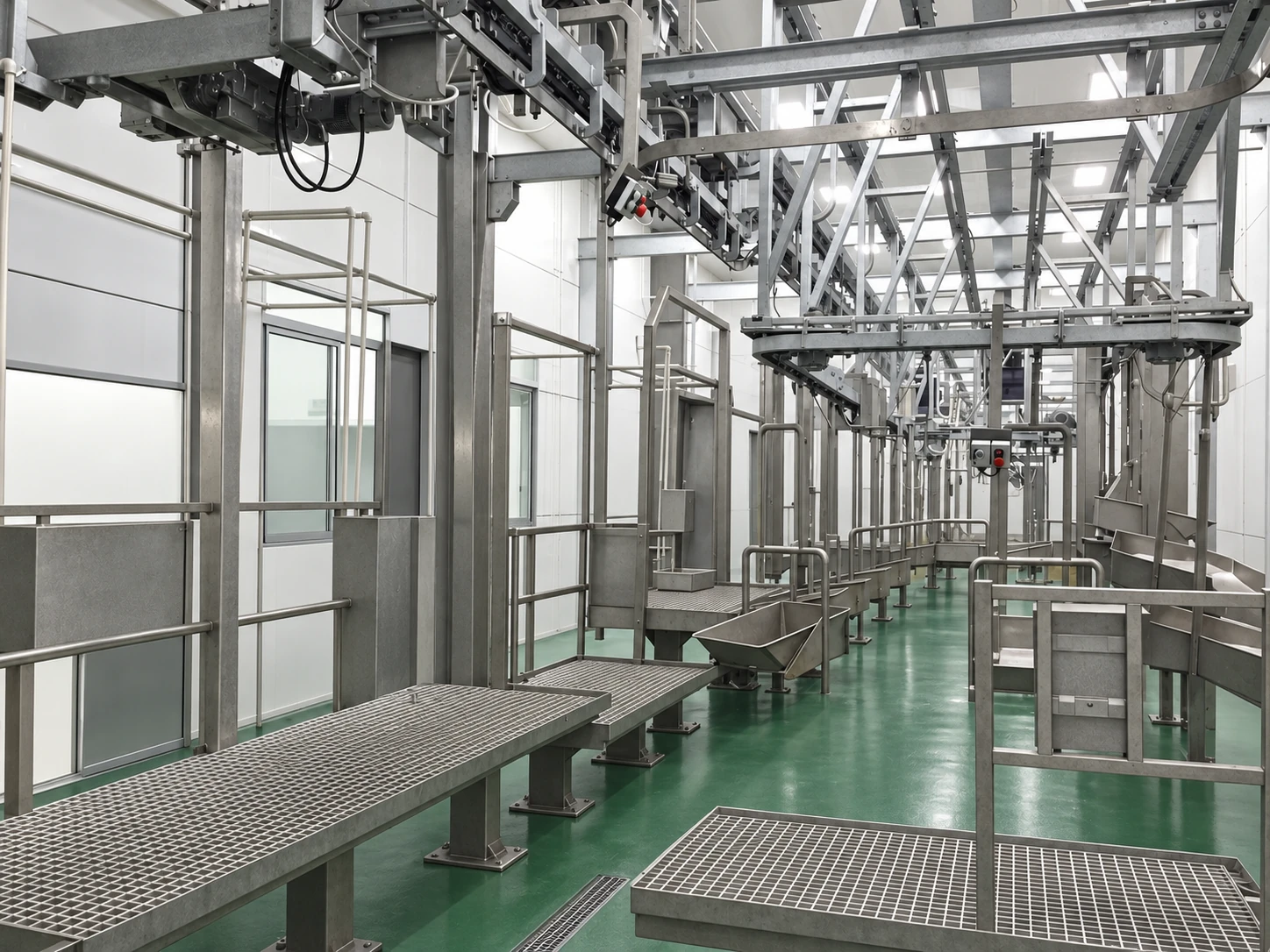
Slaughter, Hoisting and Bleeding
Connect the slaughter method selected for the project with the hoisting and bleeding stations, and plan the initial rail section to suit the production pace.
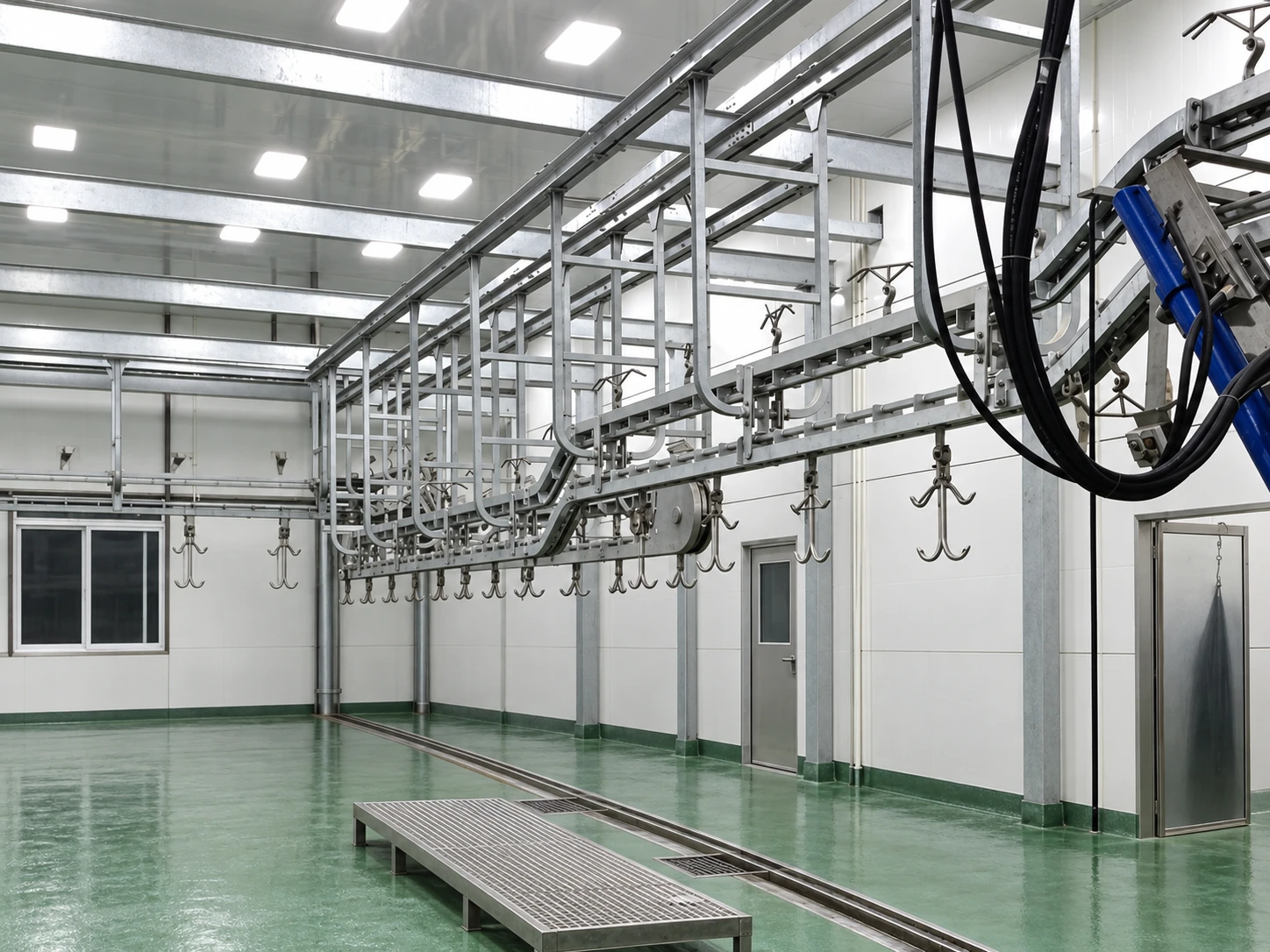
Rehanging
After bleeding, rehang the carcass onto the dressing rail leading to the vertical pre-skinning station.
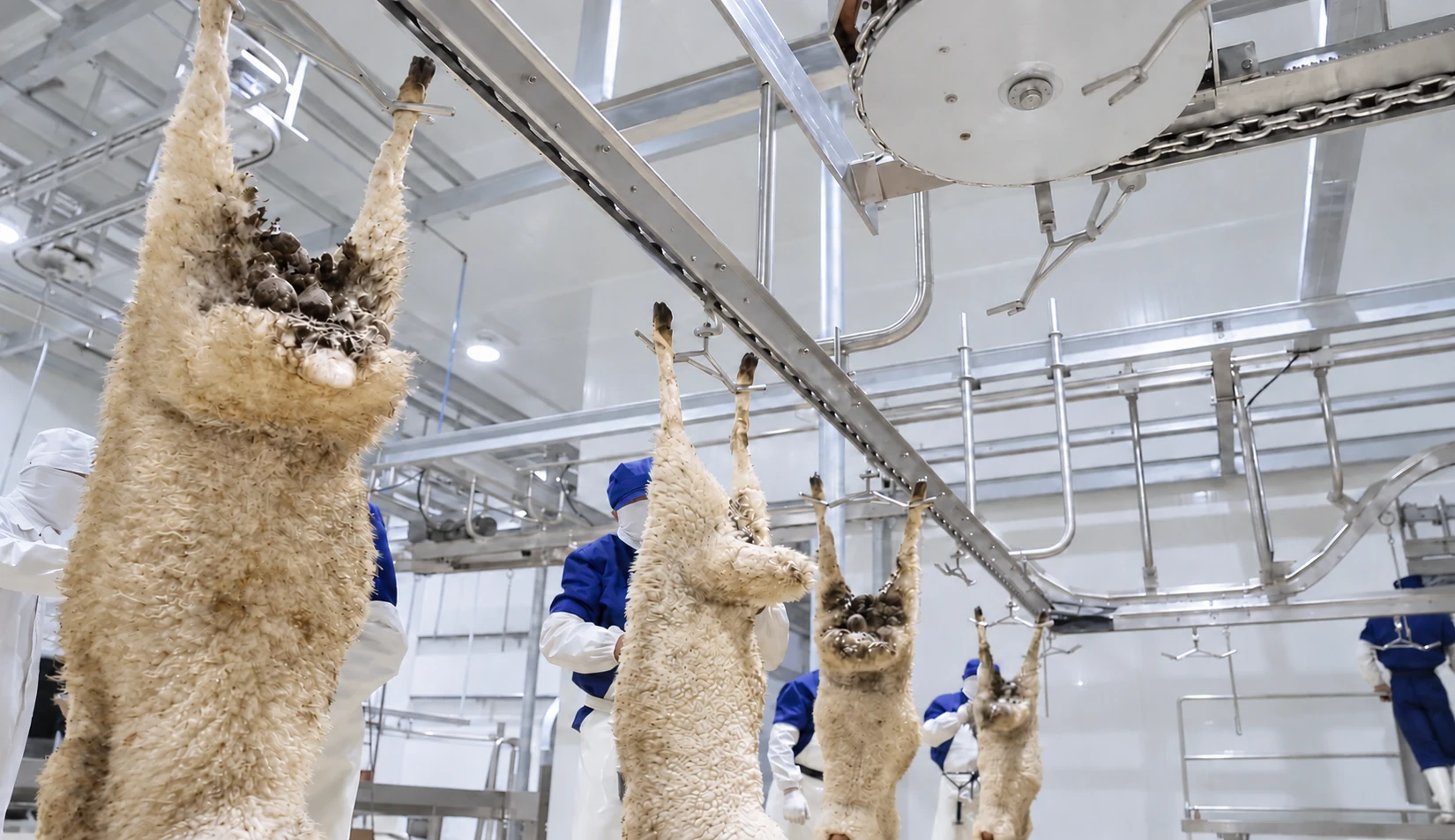
Vertical Pre-Skinning
A vertical pre-skinning station after rehanging prepares the carcass for mechanical skinning. Plan the working height and access to suit the size of the sheep and the equipment configuration.
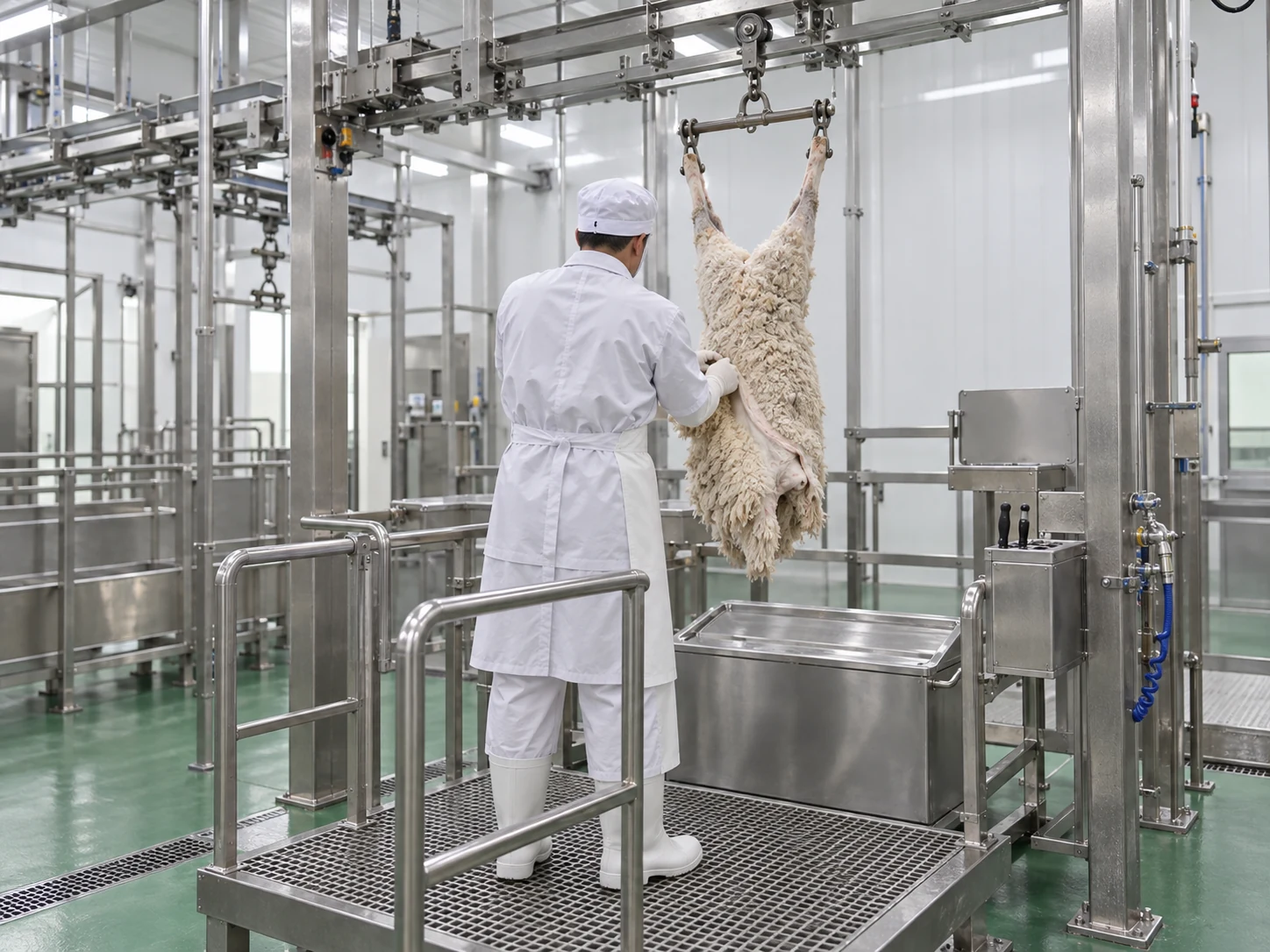
Head Removal and Carcass Preparation
Before mechanical skinning, arrange head removal, opening the skin over the breast, loosening the flank skin and pre-skinning the shoulders. Match the sequence to the selected skinning equipment.
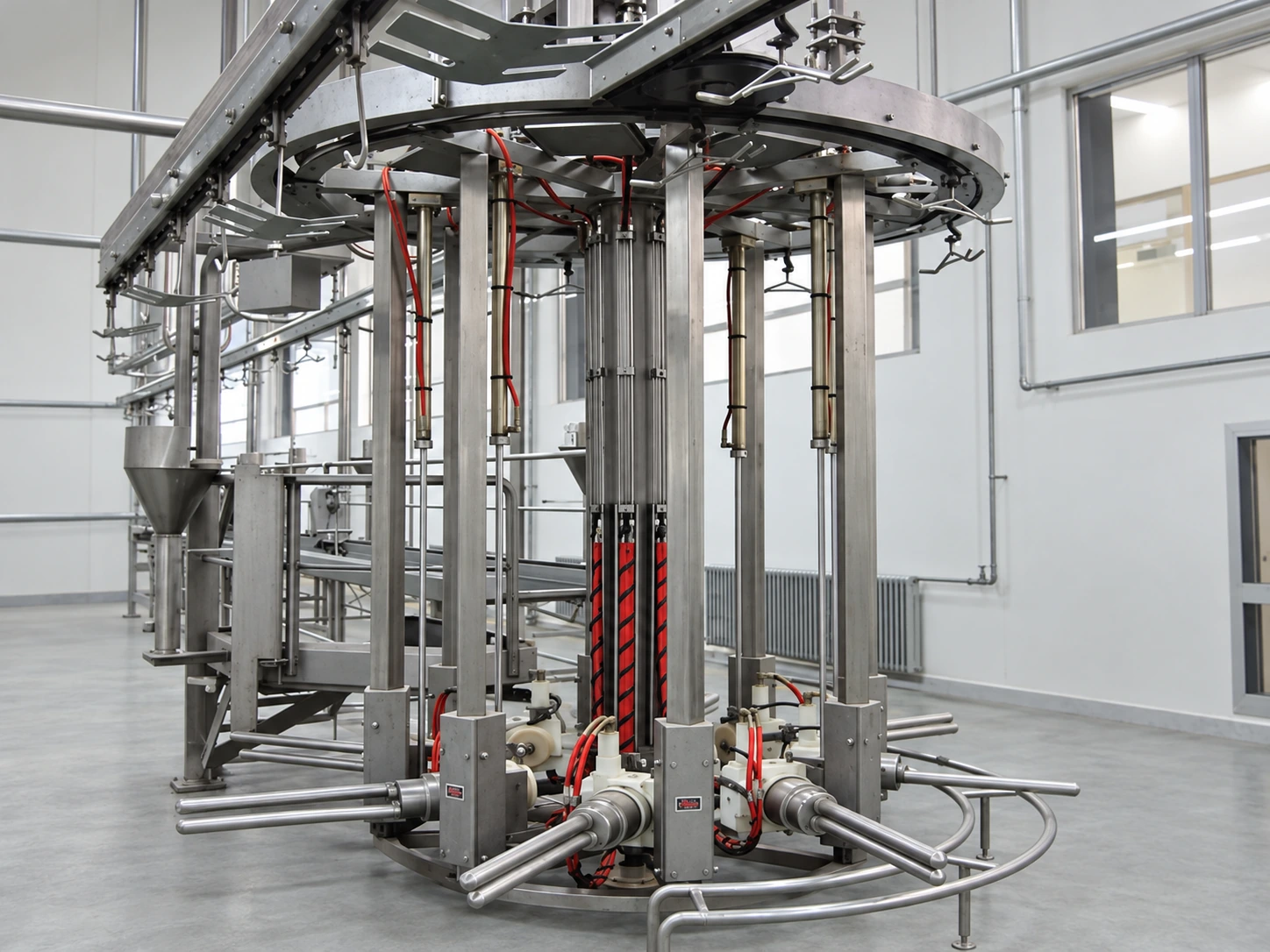
Mechanical Skinning
After pre-skinning, the carcass enters the mechanical skinning station. Coordinate pelt collection and carcass conveying routes to avoid cross-contamination.
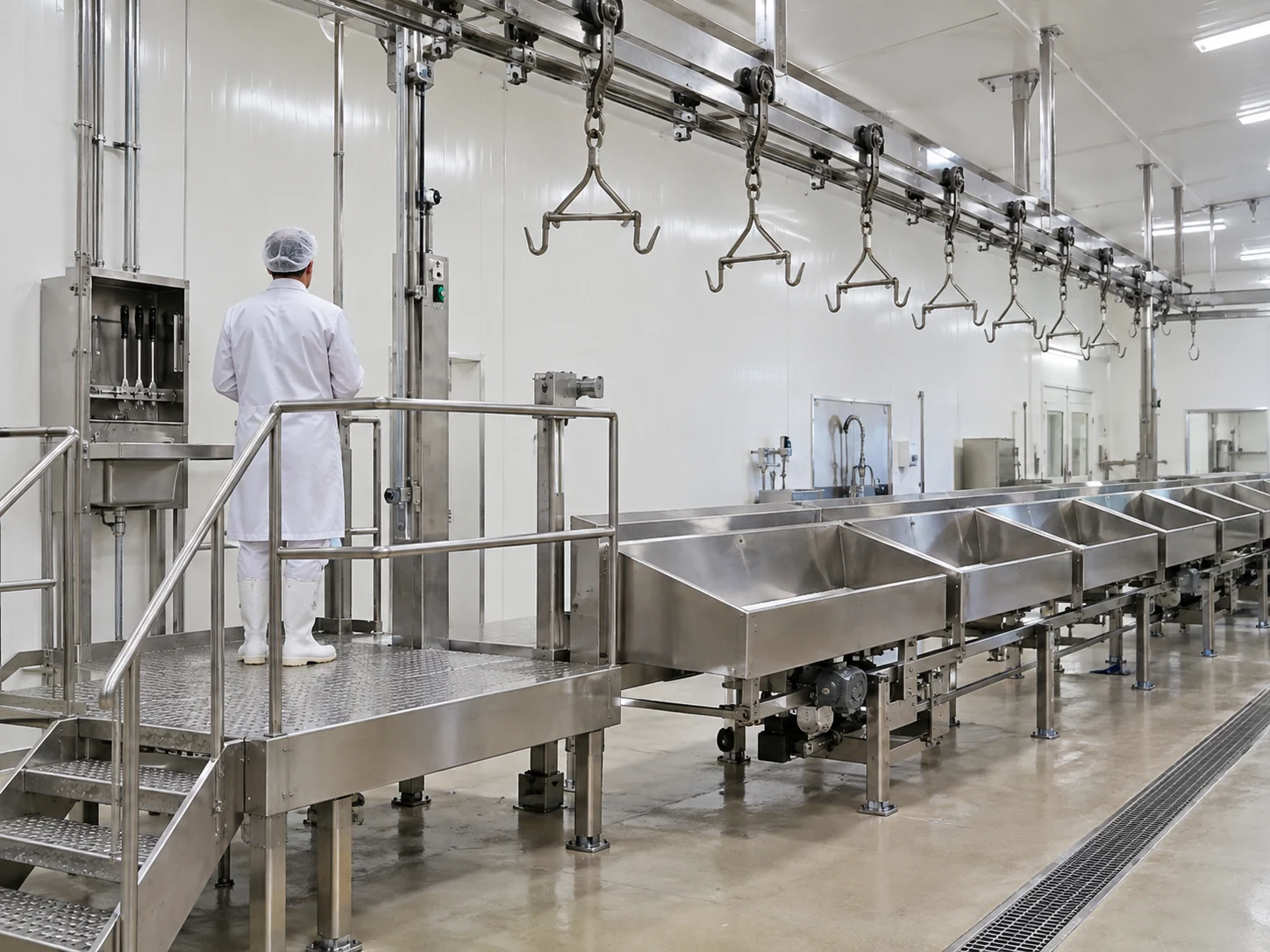
Carcass Opening and Evisceration
Provide carcass opening and evisceration stations after skinning. Collect the digestive tract and red offal separately, retaining their association with the same sheep for subsequent inspection.
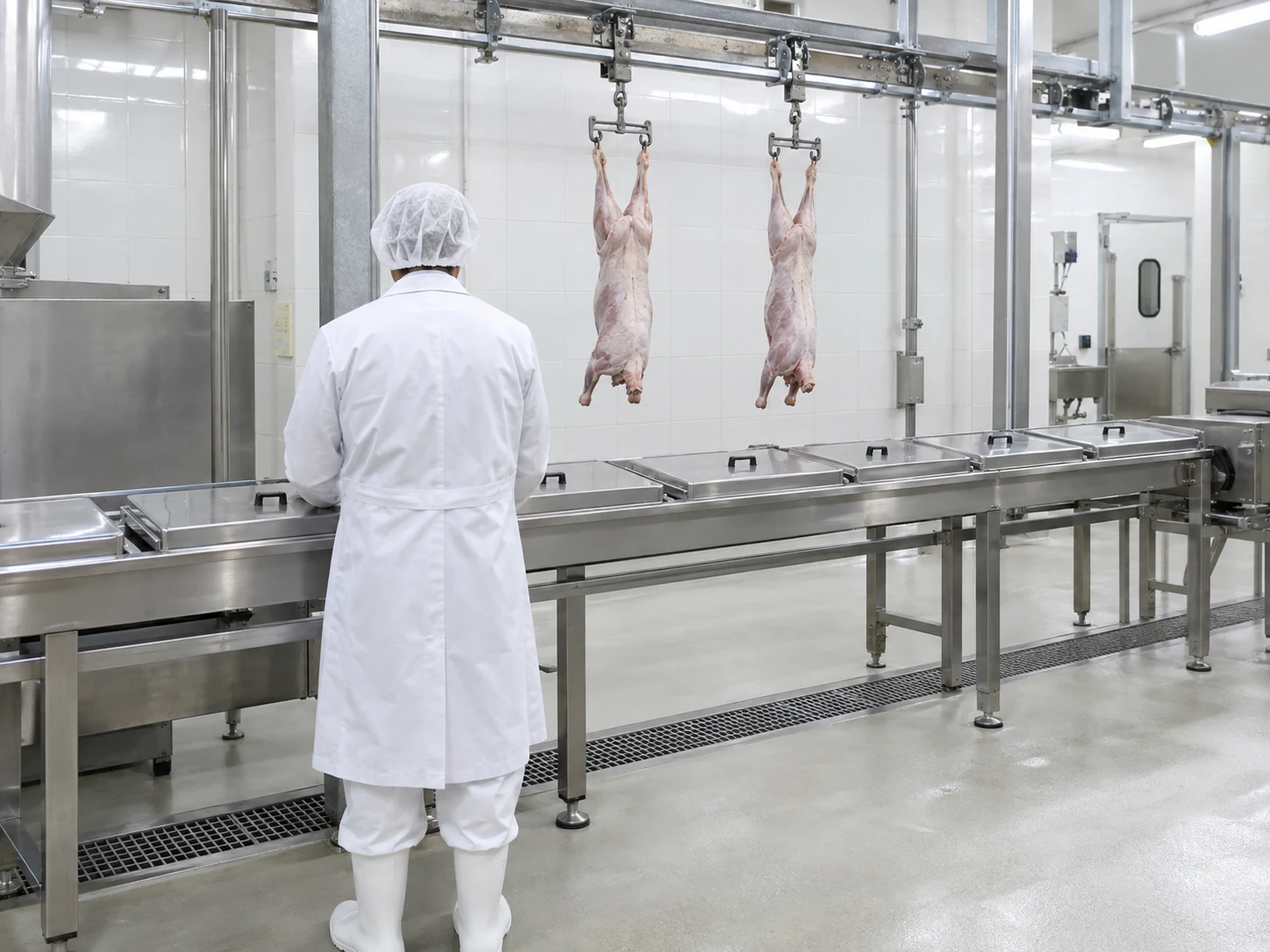
Veterinary Inspection and Trimming
Post-mortem inspection covers the carcass and its corresponding offal. After inspection, trim to the product requirements before transfer to chilling.
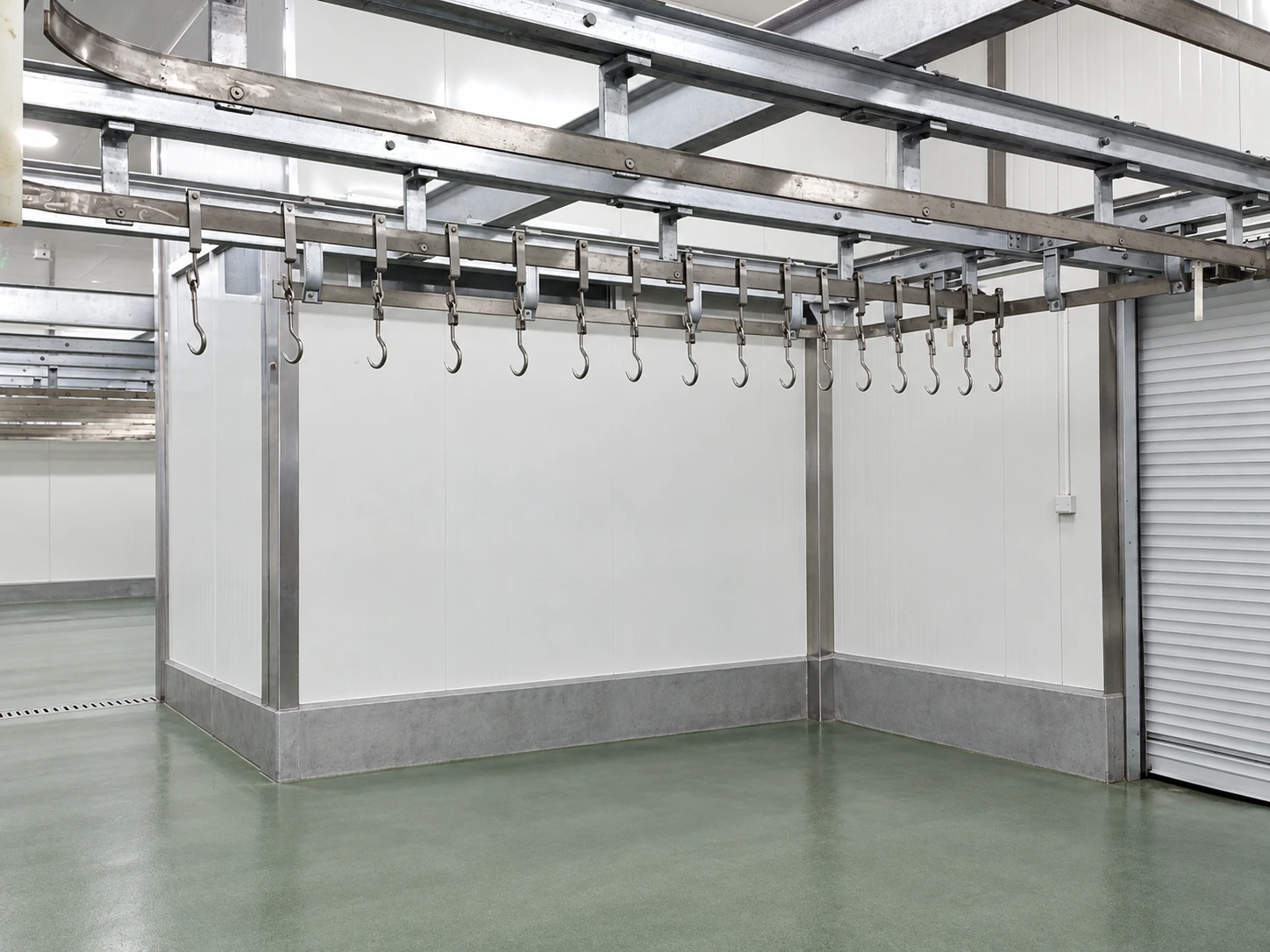
Rehanging and Transfer to Chilling
After inspection and trimming, connect to the hooks and transfer rails serving the chilling area. Plan the refrigeration system and chilling room separately according to the project scope.
Goat Scalding and Dehairing Process Route
Process schematic · 9 stages. Suspended bleeding connects to scalding, dehairing and hoisting, followed by evisceration, inspection, trimming and transfer to chilling.
- 01Suspended Bleeding
- 02Carcass Lowering
- 03Scalding
- 04Dehairing
- 05Hoisting
- 06Carcass Opening and Evisceration
- 07Veterinary Inspection
- 08Carcass Trimming
- 09Rehanging and Transfer to Chilling
During inspection, maintain the association between the carcass and offal from the same goat before subsequent trimming and transfer to chilling.
Goat processing route
Goat Scalding and Dehairing Route
Suspended bleeding → Carcass lowering → Scalding → Dehairing → Hoisting → Evisceration → Veterinary inspection → Trimming → Transfer to chilling
Suspended Bleeding
Connect the slaughter method selected for the project with the suspended bleeding station, and plan the bleeding rail to suit the production pace.
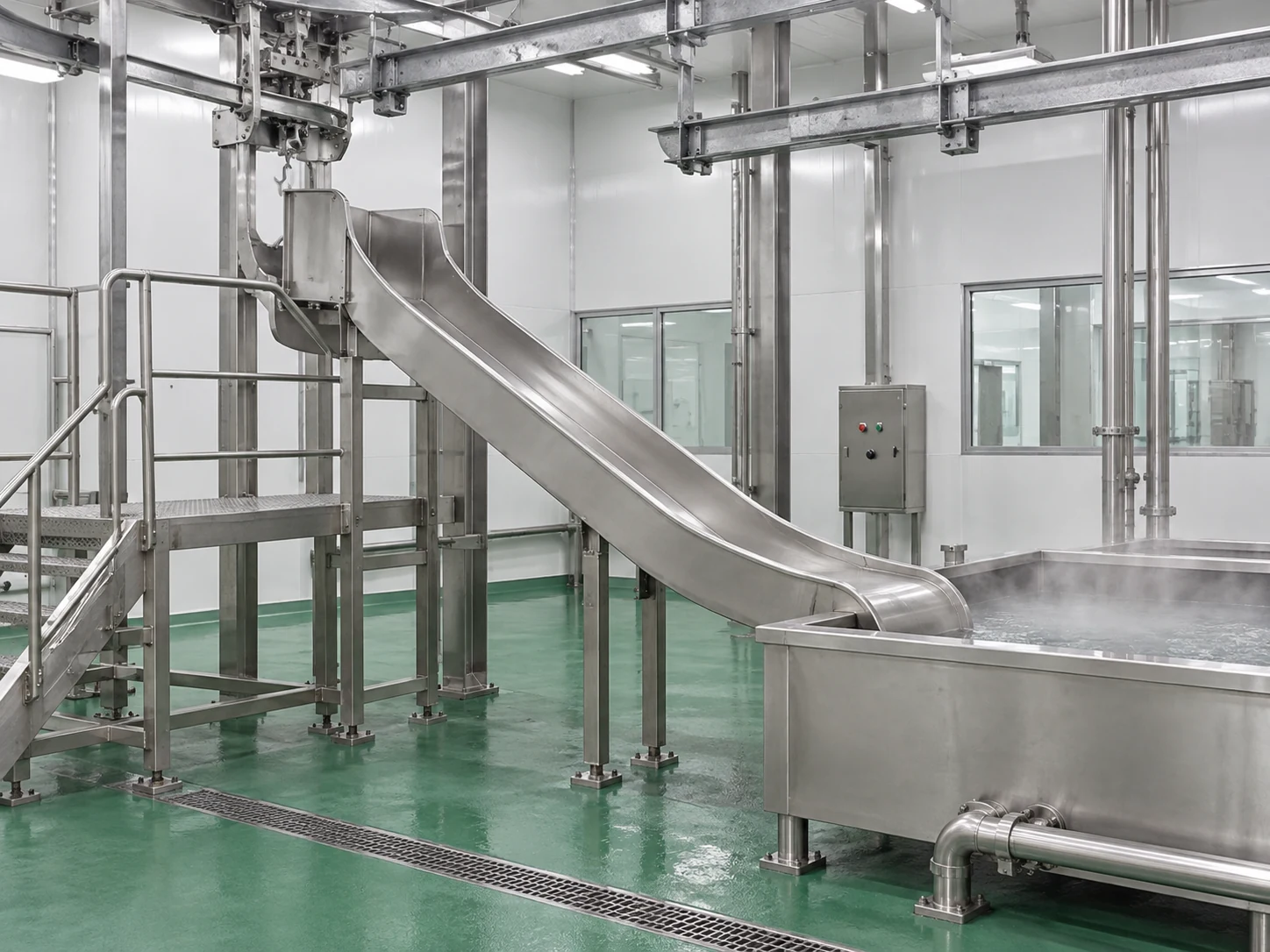
Carcass Lowering
After bleeding, transfer the carcass from the overhead rail into the scalding section. Coordinate the lowering and receiving devices with the equipment layout.
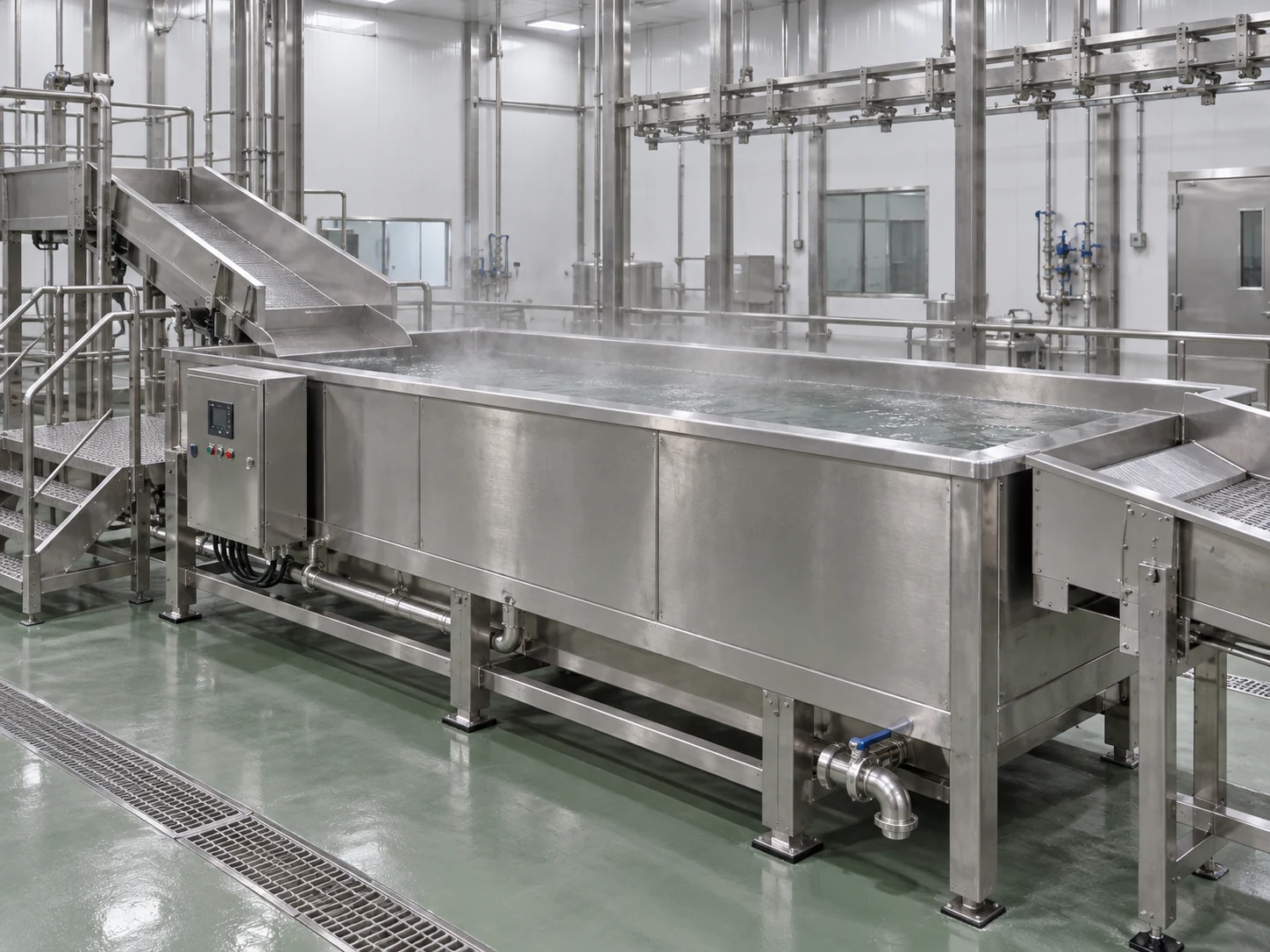
Scalding
In the goat scalding section, select the scalding equipment and temperature control configuration to suit the animal size, product requirements and production pace.
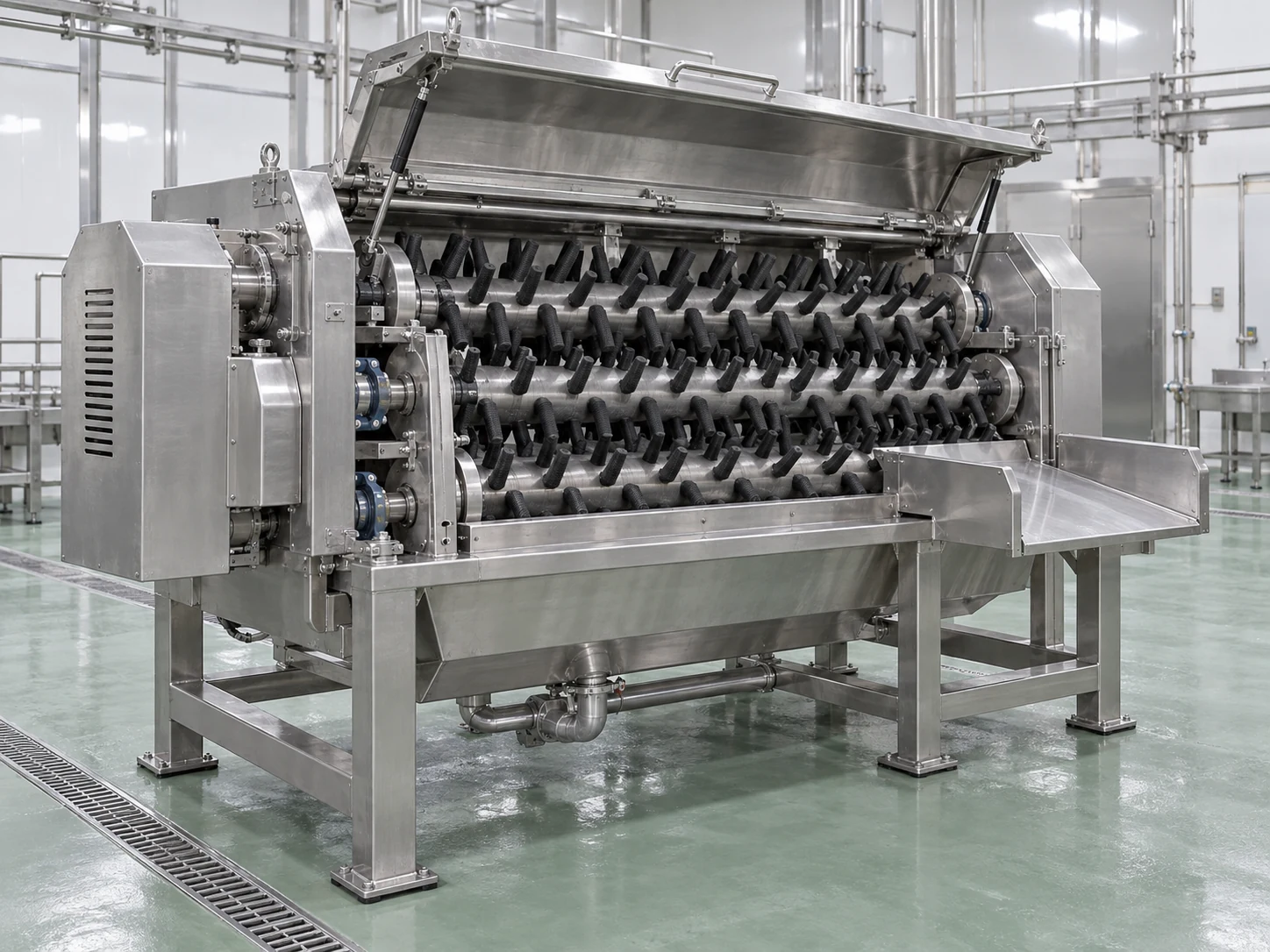
Dehairing
After scalding, the carcass enters the dehairing equipment to remove surface hair before the subsequent hoisting station.
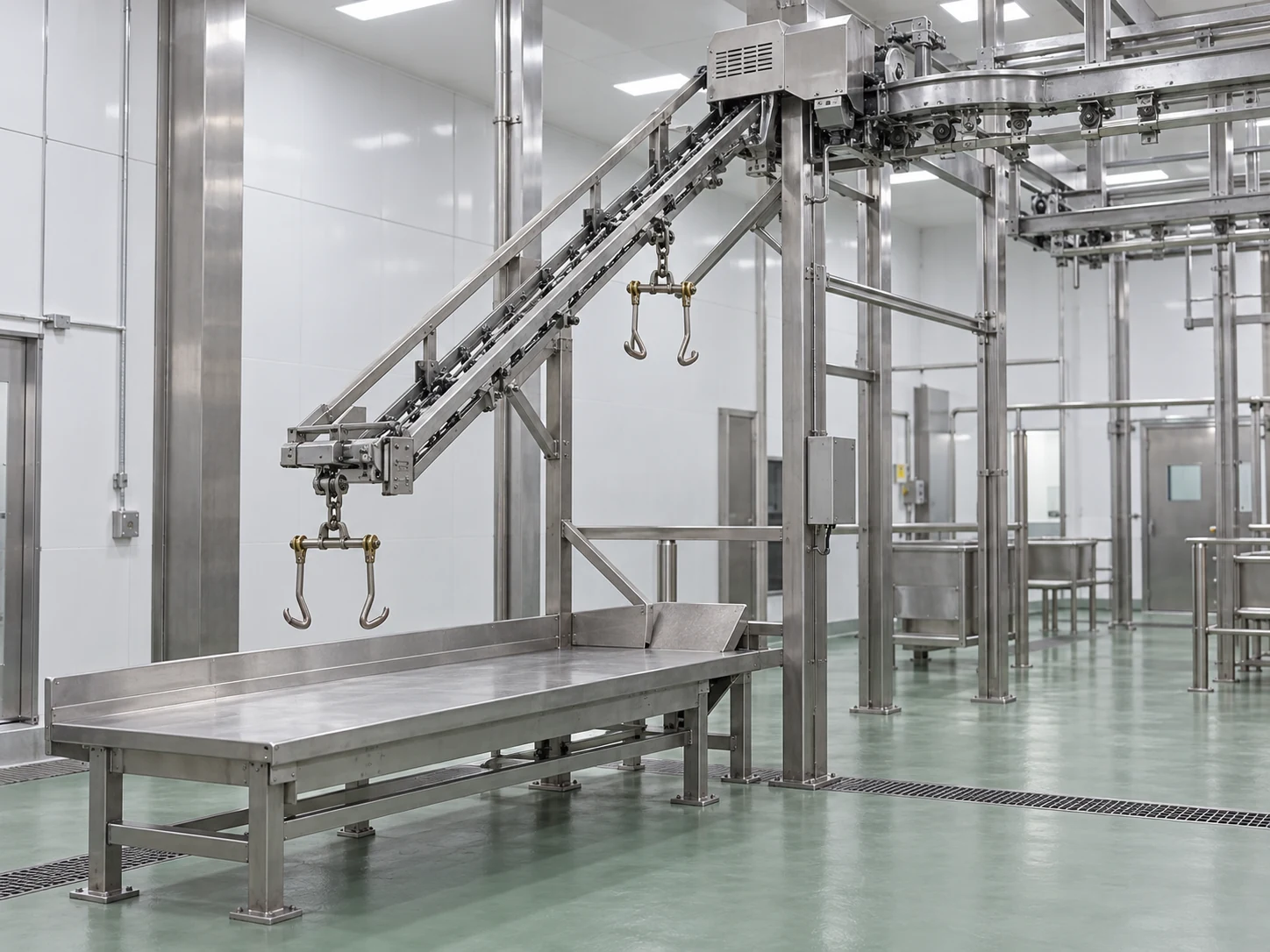
Hoisting
After dehairing, hoist the carcass onto the dressing rail. Plan the suspension method, rail height and operator access.
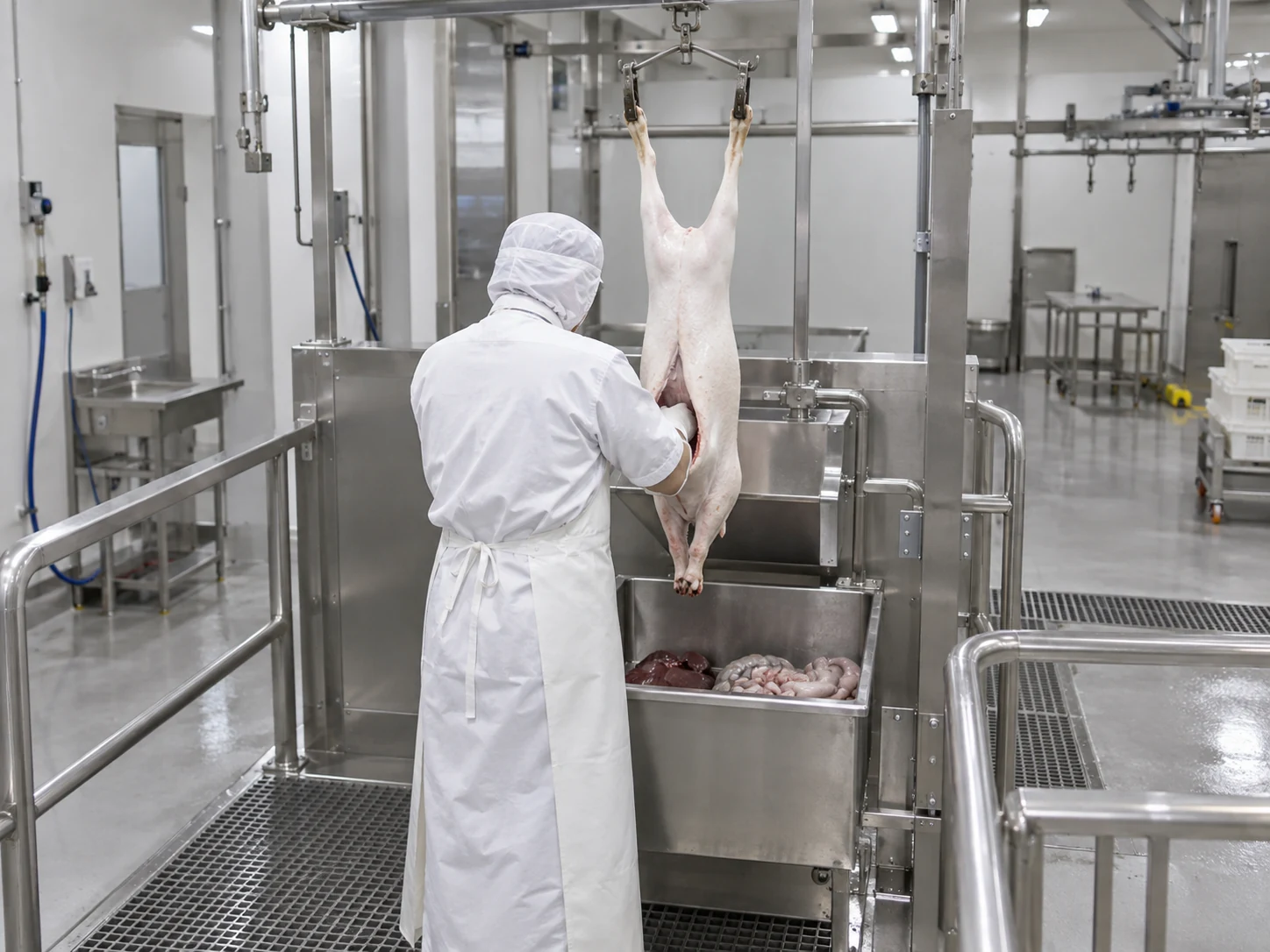
Carcass Opening and Evisceration
Provide carcass opening and evisceration stations after hoisting. Collect the digestive tract and red offal separately, prevent their contents from contaminating the carcass and retain their association with the same goat.
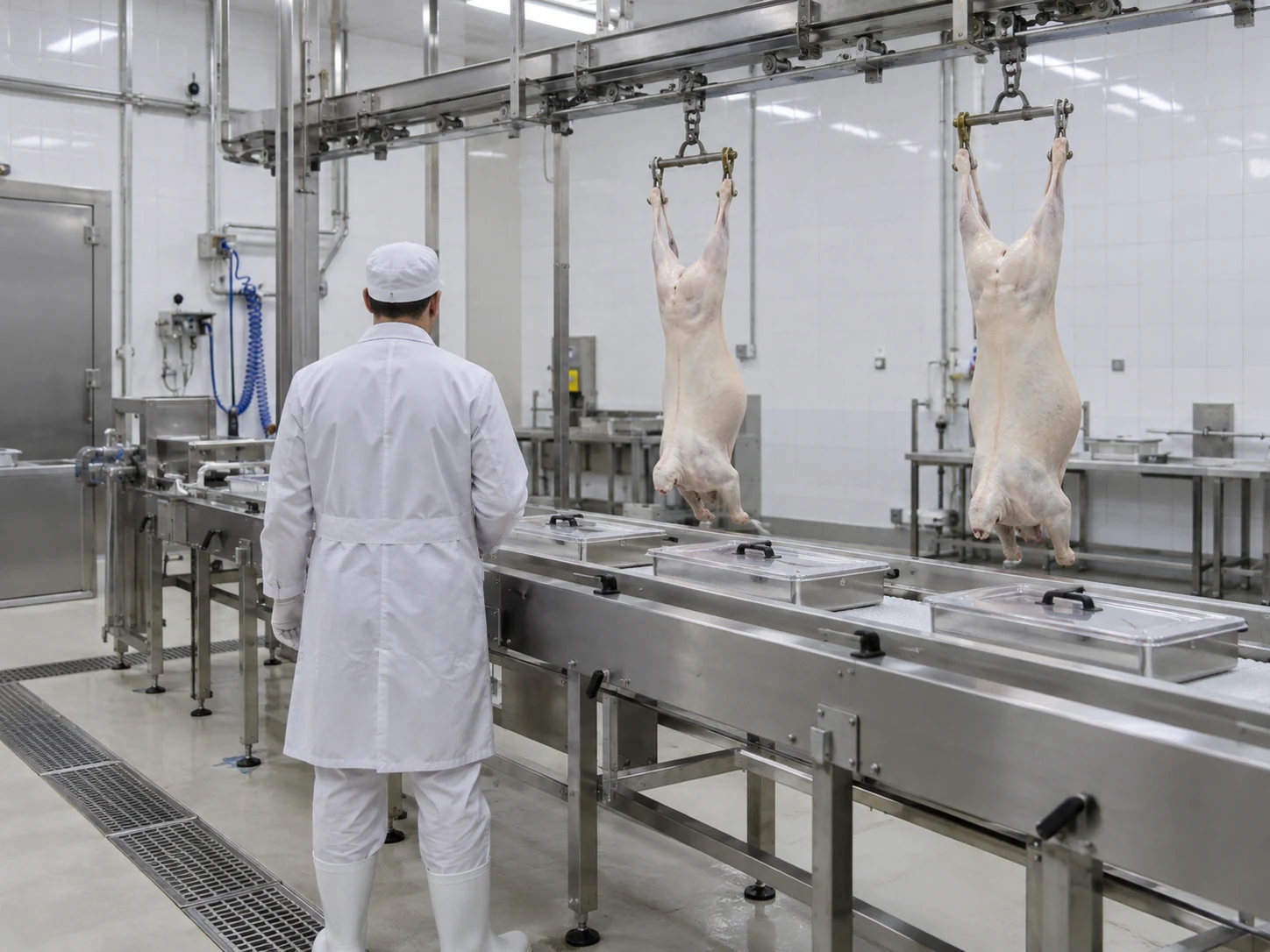
Veterinary Inspection
Post-mortem inspection covers the carcass and its corresponding offal. Plan inspection access and conveying interfaces, followed by trimming and transfer to chilling.
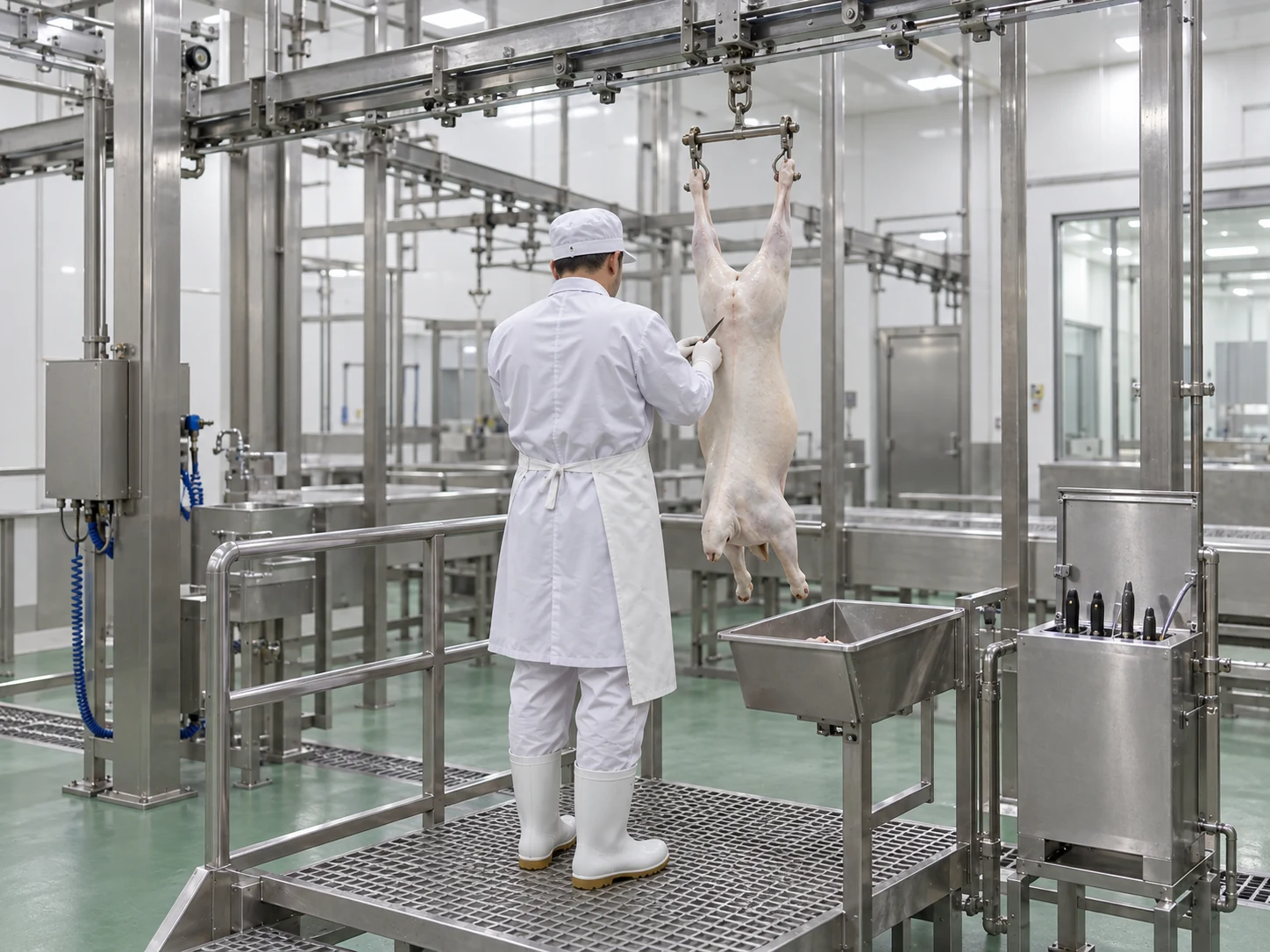
Carcass Trimming
Provide a trimming station after inspection, with onward transfer arranged to suit the product requirements and project layout.
Rehanging and Transfer to Chilling
After inspection and trimming, rehang the carcass onto the chilling transfer rail. Plan the refrigeration system and chilling room separately according to the project scope.
Get a Sheep or Goat Slaughter Line Proposal
Share your building plan, species and animal size, available rail height, target throughput and chilling system scope. We will plan the equipment layout and transfer interfaces for sheep skinning or goat scalding and dehairing.
Sheep and Goat Slaughterhouse Layouts
A sheep slaughterhouse and a goat slaughterhouse share the same rail, bleeding and chilling equipment but diverge at the hide station. Sheep are usually skinned on a cradle with mechanical dehiding, while goats in many markets are scalded and dehaired before dressing. That single difference changes the wet area, the floor drains, the water and energy demand and the labour per head, so the route should be fixed before any equipment is ordered.
From about 100 to 300 head per shift, a compact sheep slaughterhouse with one skinning cradle, manual transfer and a shared inspection point can cover both species if a scalding branch is added for goats. From 500 head per shift upward the line usually separates into two parallel routes with powered bleeding, one mechanical dehiding station per rail and a continuous chill tunnel. A goat slaughterhouse running the scalding route needs a larger wet zone and a singeing position, which is often the real constraint in an existing building.
Small stock also means high head counts per hour, so a sheep slaughterhouse is more sensitive to rail speed and operator position than to hoist capacity. Share your target head per shift, species mix and building plan, and we will set rail speed and station spacing for the mix you actually process.
Halal and Conventional Slaughter Configurations
Confirm animal handling, restraint, stunning requirements and bleeding arrangements with the project team and the relevant certification body before selecting equipment. Final certification is provided by the relevant certification body.
Plan Capacity and Production Pace
Species Mix and Throughput
Provide the size of your sheep or goats, target throughput, working hours and required product form.
Building and Utilities
Plan rail heights, operator access, drainage, and pelt and offal handling routes around the existing building conditions.
Equipment and Interfaces
The goat line uses scalding and dehairing equipment, while the sheep line uses pre-skinning and skinning equipment. Each connects to inspection and chilling transfer.
Project Inputs and Supply Scope
Use these inputs to review the equipment proposal. Design parameters, equipment configuration and the scope of supply and services follow the agreed proposal, quotation and contract.
| Project item | Information to provide or confirm |
|---|---|
| Animals and product requirements | Specify the sheep skinning or goat scalding and dehairing route, animal size, target throughput, the working schedule and the required product form. |
| Confirmed capacity configuration | Both the sheep skinning and goat scalding and dehairing routes are 100–3,000 heads per shift. Confirm the actual configuration and throughput against the project requirements. |
| Building and project conditions | Provide the floor plan, clear height or available rail height, existing water, power and steam conditions, and the project location. Mark any undecided conditions for confirmation. |
| Equipment and service boundaries | Review core and optional equipment, refrigeration and cold rooms, downstream processing, civil works and utilities, on-site installation and training separately in the quotation. Included items follow the contract. |
| Drawing provision | Drawings are prepared to customer requirements and provided as agreed in the contract. |
| Component brands | The regular configuration uses the company’s usual component brands. Higher-grade options can be selected to meet customer requirements; confirm the specific brands and models in the proposal. |
| Equipment testing | Each machine undergoes individual machine testing. |
| Wear spare parts | Selected wear spare parts are provided. Confirm the list and quantities for the project. |
Line Proposal Questions
Can drawings follow my building and process requirements?
Drawings can be prepared to customer requirements. The documents provided and delivery arrangements follow the contract.
Can component brands be upgraded?
The regular proposal uses the company’s usual component brands. Higher-grade requirements can be accommodated and specified in the equipment proposal.
How do I confirm what the quotation includes?
Check the equipment list, optional items, refrigeration and cold rooms, civil works and utilities, installation and training separately. The agreed quotation and contract define the scope of supply and services; process images alone do not establish that scope.
Are machines tested individually, and are wear spare parts provided?
Each machine undergoes individual testing, and selected wear spare parts are provided. Confirm the spare-parts list and quantities for the project.
Discuss Your Building and Project Interfaces
Share the species mix, building drawings and project requirements to discuss a suitable configuration.
Explore Equipment Videos
View filmed equipment demonstrations and related design information.
Equipment Videos and Demonstrations →