Halal Slaughterhouse Equipment | Cattle and Sheep Focus
Halal Slaughterhouse Equipment Designed for Audit-Ready Operations
Zhengye supplies halal-oriented slaughterhouse equipment for cattle, sheep and goats. The aim is not to claim that a machine can certify a plant. It is to build a line that makes it easier for the operator to follow the approved religious method, maintain hygienic separation and present the evidence required during an audit.
Every project begins with the authority, animal type, hourly throughput, stunning policy, building layout and product destination. Those inputs determine the restraint system, bleeding rail, dressing sequence, cleaning stations and project documents.
Equipment Support Is Not the Same as Halal Certification
A halal certificate is issued after the competent authority evaluates the facility, process, personnel, product, records and management system. Equipment suppliers can contribute drawings, material information, cleaning instructions and operating documentation, but they cannot replace the audit or make a certificate automatic. Buyers should therefore separate two questions: whether the proposed line can support the requirements of the relevant authority, and whether the operating company has the personnel and procedures needed to satisfy that authority.
This distinction matters commercially. Two identical cattle lines can receive very different audit outcomes if one plant controls knives, carcass identification, cleaning and recordkeeping while the other does not. A sound equipment design reduces avoidable risk, but the routine belongs to the plant. Read the halal certification overview before fixing the procurement scope.
Typical Halal Line Flow
The exact station order changes with species and building shape, but the control logic remains the same. Animals should move forward without unnecessary reversal. Clean and dirty operations should not share a work surface or traffic path. The slaughter position must give trained personnel safe access. Bleeding must continue without interruption before dressing starts. Product identification and condemned-material handling should be visible in the layout rather than left to informal practice.
Halal Slaughterhouse Equipment Scope
Restraint and access
Race, head restraint, rotary cattle box or sheep cradle configured around animal size and the method accepted by the certifier.
Bleeding system
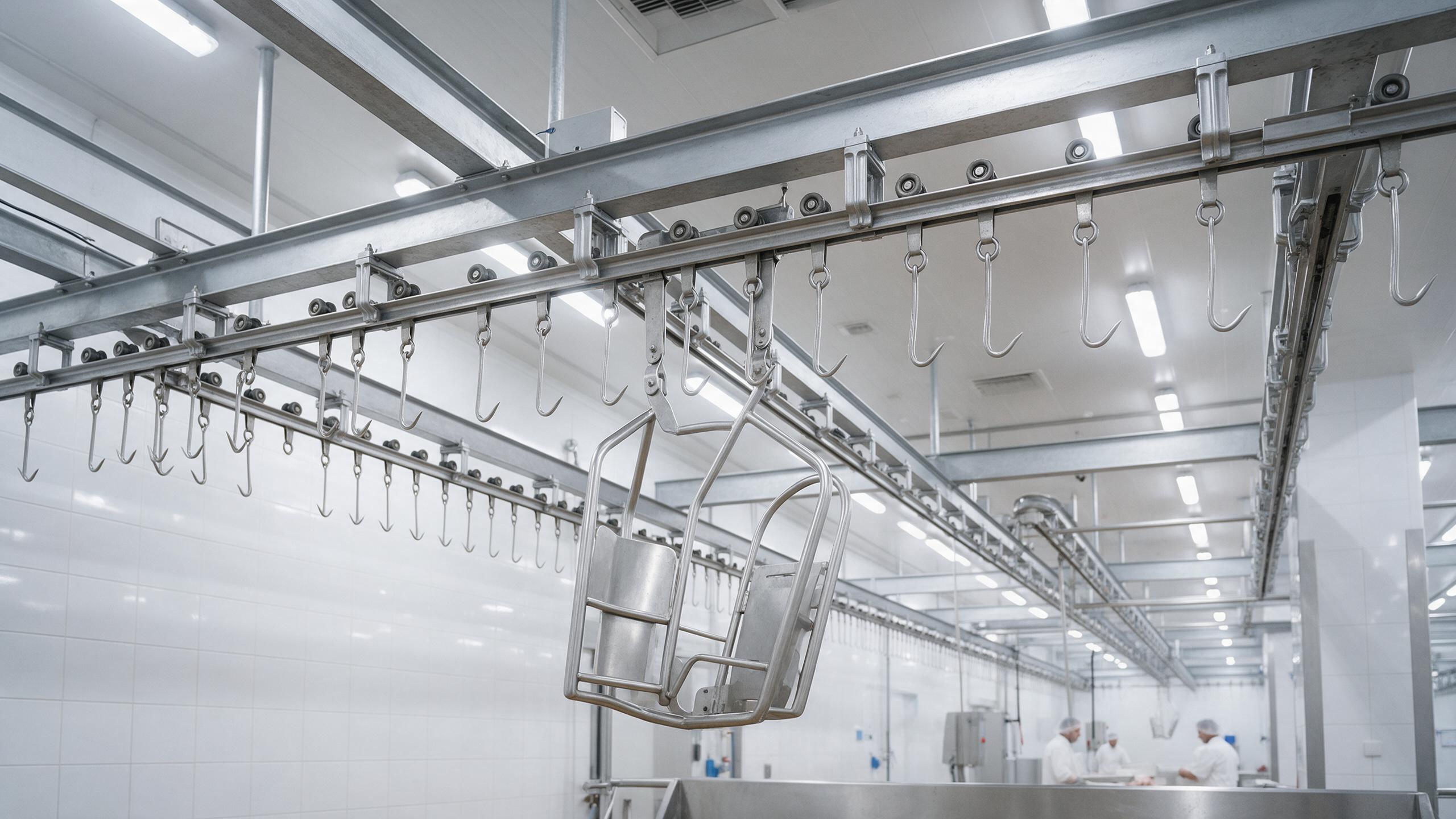
Overhead rail, hooks, curves, drip collection and line length designed to provide an uninterrupted bleeding interval.
Hygiene stations
Knife sterilizers, hand-wash points, apron cleaning and controlled access between dirty and clean zones.
Dressing equipment
Platforms, hide or skin pullers, head and hoof stations, saws, evisceration pans and transfer rails.
Inspection and grading
Layout space, lighting, product identification and offal routing for veterinary or quality-control checks.
Control and records
Motor controls, interlocks, operating instructions, material records and maintenance documentation.
Cattle Line Requirements
Cattle require more space, heavier restraint and a longer bleeding rail than sheep or goats. A rotary killing box can improve access for the approved slaughterman while controlling the animal. The box, head restraint and platform must suit the live weight range. If reversible stunning is used, the equipment should permit recovery time and a clear decision point before slaughter. If the authority requires no stunning, the restraint must still allow a safe, single, effective cut without unnecessary stress.
After bleeding, the line typically moves through head and hoof removal, hide opening, hide pulling, brisket opening, evisceration, splitting and final inspection. Hide handling is a major contamination risk. The layout should keep the hide path away from exposed carcass surfaces, and workers should have a practical way to change or clean equipment when moving between dirty and clean tasks. See the halal cattle slaughter line page for a process-level scope.
Sheep and Goat Line Requirements
Sheep and goat lines are usually faster and more compact, but they still need controlled restraint, a clean slaughter position, adequate bleeding time and careful skin handling. A V-rail or overhead rail system can move animals through bleeding, skinning, evisceration and inspection. For Qurban or seasonal peaks, temporary stations and additional chilling capacity may matter more than a small increase in normal line speed.
Goat and sheep size differences can affect hook spacing, rail height and worker reach. The equipment should be adjustable where practical, and the operator training should explain how to position animals consistently. The halal sheep and goat slaughter line page includes capacity ranges and peak-load considerations.
Layout Rules for Halal and Hygiene Separation
- Separate animal entry from finished-product movement
- Define clean and dirty work zones before equipment placement
- Provide dedicated knife and hand-wash points
- Keep hides, skins and digestive contents away from edible product
- Prevent floor splash and condensation from reaching carcasses
- Make approved product identification easy to read
- Provide a controlled route for condemned material
- Plan cleaning access around rails, guards and control panels
- Use smooth, cleanable food-contact surfaces
- Keep maintenance access without crossing hygiene boundaries
- Provide enough lighting at inspection and decision points
- Document how the plant will manage non-halal material if present
Materials, Cleaning and Washdown
Food-contact and splash-contact equipment should use suitable stainless steel and smooth finishes. Frames, platforms and guards need drainage that avoids standing water. Electrical panels should be positioned or protected so washdown water does not enter them. Open bearings, rough welds, unsealed timber and traps for organic material create maintenance and audit problems. These details may look minor in a quotation, but they determine whether the plant can clean the line within the available shift window.
Cleaning should be planned by zone. The slaughter area, bleeding rail, dressing stations, offal room, chiller and waste route have different contamination risks. A single cleaning instruction for the entire plant is rarely enough. Equipment drawings should identify surfaces that need daily cleaning, periodic disassembly and inspection. Zhengye’s quality-control process covers material, fabrication and factory testing before shipment.
Stunning Policy and Equipment Selection
Stunning is one of the most market-specific decisions in a halal project. Some authorities accept reversible stunning, some require no stunning, and some apply conditions to electrical parameters, recovery time or verification. The equipment must match the accepted method, and the plant should be able to demonstrate that the method is controlled in practice. A supplier cannot choose the religious position for the buyer; it should instead provide an option that the authority can review.
| Question | Why it changes the line | Evidence to agree before purchase |
|---|---|---|
| Is stunning permitted? | Determines whether a stunner, recovery position or no-stun restraint is required. | Written acceptance from the recognized authority or local certification partner. |
| Which stunning type? | Penetrating, non-penetrating and electrical systems have different equipment and operator controls. | Approved parameters, maintenance plan and verification procedure. |
| Who performs slaughter? | Access and platform design depend on the person’s position and training. | Qualification records, appointment procedure and operating instruction. |
| How is bleeding verified? | Rail length and supervisor control must provide the required interval. | Process time, monitoring method and record format. |
Capacity Planning by Species
Cattle projects commonly range from around 20 to 500 head per day, while sheep and goat lines may range from about 100 to 3,000 head per shift. These are planning bands, not guaranteed rates. The actual capacity depends on live weight, worker count, inspection intensity, stunning method, rail length, chilling time and the number of hours the plant can operate. A high headline rate is not useful if the chiller, waste system or loading dock cannot keep up.
The quotation should show the rate at each bottleneck. For example, the slaughter station may reach a higher instantaneous rate than the hide puller or evisceration position. The line should use the slowest necessary station to set a realistic average. A capacity-based proposal should also state the assumed working hours, breaks, product mix and number of operators.
Documentation for Certification Review
Useful supplier documents may include general arrangement drawings, process flow diagrams, equipment lists, material descriptions, electrical drawings, utility schedules, operation manuals, maintenance instructions and packing lists. The exact package depends on the certification body and the phase of review. Some authorities also ask for evidence of cleaning, calibration and traceability. These records are generated by the plant, but the equipment design should make them practical to maintain.
Keep document revisions under control. If the slaughter position, rail route, equipment material or capacity changes after the authority reviews a drawing, the plant may need to resubmit. A buyer should appoint one project owner who controls the approved technical file and distributes the current revision to the builder, equipment supplier and certification team.
Procurement Checklist
Before inquiry
Animal species, capacity, country, target authority, stunning policy, building dimensions and product route.
Before order
Approved layout, scope boundary, utilities, materials, documentation language, FAT plan and delivery schedule.
Before installation
Civil work, drainage, power, water, compressed air, lifting access, operator names and certification contact.
Frequently Asked Questions
Can you supply a complete halal cattle or sheep line?
Yes. Zhengye can coordinate restraint, bleeding, dressing, evisceration, inspection, splitting, controls and related project documentation. The final certification decision remains with the recognized authority.
Do you provide halal certificates for the equipment?
No. A halal certificate normally applies to the facility, product or process under an approved management system. We can provide technical documents that support the client’s audit, but we do not issue the certificate.
Can a line be converted from conventional to halal operation?
Sometimes, but the restraint, slaughter position, bleeding, segregation and documentation need to be reviewed. A conversion should not be treated as a simple change of signage or procedure.
How much space is needed?
Space depends on species, capacity, automation, inspection positions and chilling. A compact sheep line can fit a much smaller building than a cattle line with a full hide-handling route. Send the floor plan for review.
Can the line support future capacity growth?
Yes, if the initial design reserves rail length, utility capacity, floor area and a safe expansion route. Adding equipment later without these allowances can be more expensive than planning them at the start.
Prepare an audit-ready equipment brief
Tell us the authority, animal type, capacity, building size and acceptable stunning method. We will identify the equipment scope and the documents to confirm before order.