Slaughter Process Overview | Pig, Cattle & Sheep
Pig, Cattle and Sheep Slaughter Process: From Lairage to Chilling
Every slaughter line follows the same broad sequence: receive and inspect the animal, restrain it, slaughter or stun according to the accepted method, bleed, dress the carcass, remove and inspect internal organs, split or finish the carcass, then move it into controlled chilling.
The similarities stop at the headline. Animal size, skin or hide, rail height, bleeding time, dressing stations and hygiene risk change the equipment and layout. This guide explains those differences so a project team can ask the right technical questions before selecting equipment.
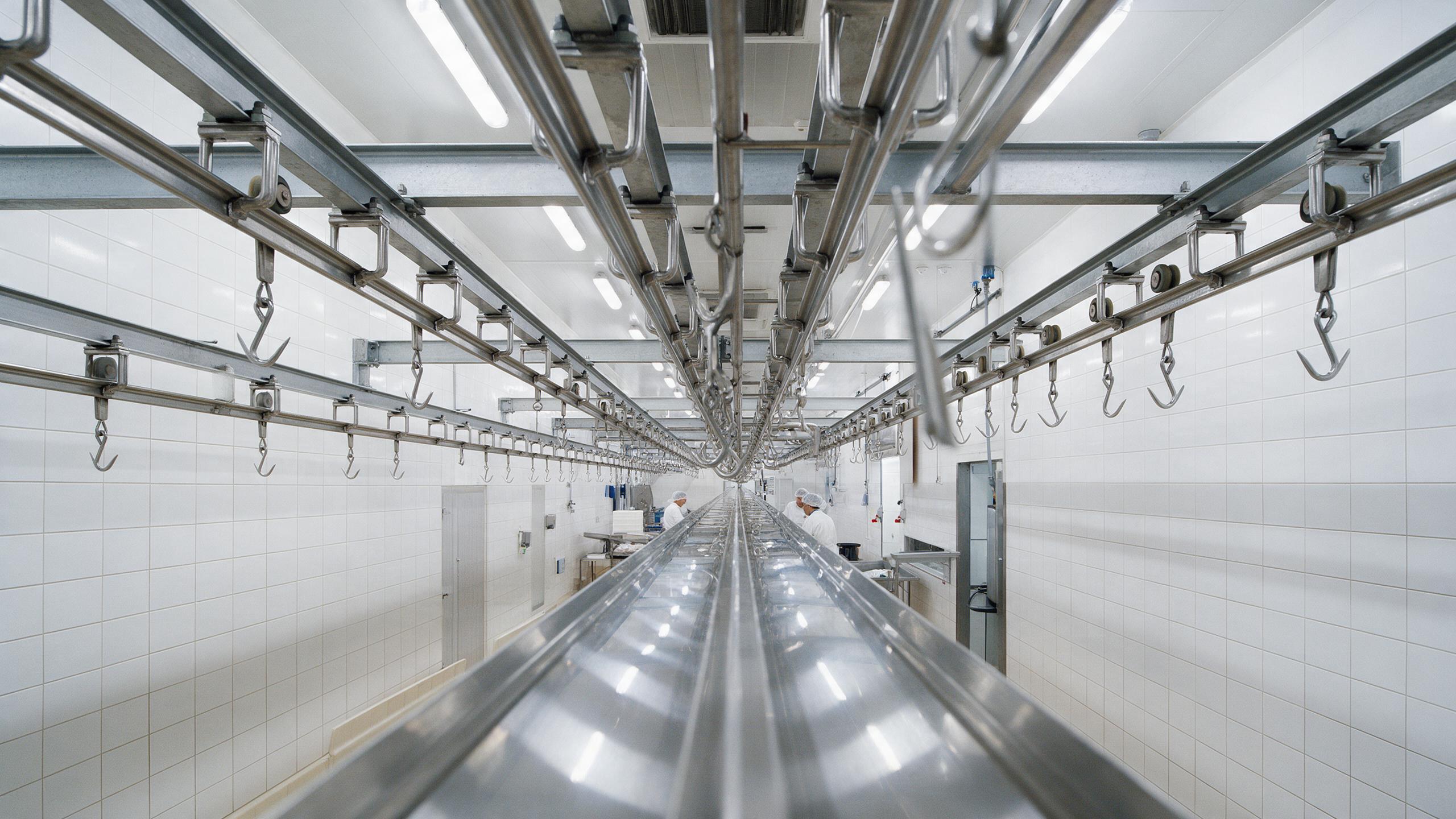
The Shared Slaughter Process
The process flow defines rail direction, floor levels, room separation and staffing. A line is balanced when every station completes its work within the same takt time, not when a single machine has the highest nominal speed. For example, faster stunning is useless if bleeding, evisceration or chilling cannot absorb the additional carcasses. During design, we calculate the cycle of each station and identify the real bottleneck before selecting equipment.
Step 1: Receiving, Lairage and Ante-mortem Inspection
Animals arrive by truck and move through receiving, weighing where required, lairage and inspection. The layout should avoid unnecessary mixing, provide clean water and ventilation, and let the veterinary or inspection team identify animals that should not enter the slaughter process. Lairage capacity must cover transport batch size and the time required by local animal-welfare rules. Races, gates and restraint surfaces should be designed for the largest animal weight expected, not only the average.
Step 2: Restraint, Stunning and Slaughter Method
Restraint keeps the animal and operator safe and positions the animal for the accepted method. Cattle may use a head restrainer or rotary killing box. Sheep and goats may use a cradle, V-restrainer or race. Pigs often use a stunning pen or individual restraint followed by electrical or CO2 stunning. In halal processing, the restraint and access must support the cut required by the certifier, with stunning or no stunning selected according to that authority’s written requirement.
Operator safety
Restraint should reduce sudden movement and keep the operator outside kick and strike zones. Emergency release and isolation must remain accessible.
Animal welfare
Handling surfaces, lighting, noise and restraint duration affect stress and meat quality. The equipment should encourage calm, consistent movement.
Method control
Parameters must be repeatable and recorded where required. The process should not rely on an operator adjusting settings without a documented standard.
Step 3: Bleeding and the Time-Rail Relationship
Bleeding begins immediately after slaughter or stunning, depending on the approved method. The rail must carry the carcass long enough to complete exsanguination before dressing begins. Required time varies by species, size and regulation. We convert that time into rail length using line speed, then add room for the blood collection or drainage system and inspection. During peak production, this design prevents operators from shortening the interval to gain speed.
Step 4: Dressing the Carcass
Pig Dressing: Scalding, Dehairing and Singeing
Pig dressing is organized around skin preparation. After bleeding, the carcass enters a scalding tank or canal where temperature and time must be controlled. A spiral dehairer removes most hair, followed by singeing and polishing to finish the skin. The animal then moves to gambrelling, brisket opening, evisceration, splitting and washing. Pig weight and target skin quality determine whether scalding can be manual, semi-automatic or continuous.
Cattle Dressing: Hide Removal and Heavy-Carcass Handling
Cattle dressing requires rails, hoists and platforms rated for heavy carcasses and high loads. Head and hoof removal are separated to control contamination, then the hide is opened and pulled by machine under controlled tension. Evisceration follows on a raised platform with a dedicated route for the digestive tract. The carcass is split, inspected and trimmed before transfer to chilling. Building clear height and rail elevation are major design constraints, so the layout usually starts with section drawings rather than equipment dimensions alone.
Sheep and Goat Dressing: Rhythm, Skinning and Peak Capacity
Sheep and goat dressing moves quickly because the carcass is lighter. The critical tasks are restraint, bleeding, pre-skinning, machine skinning, evisceration and inspection. Pelt value can be damaged by incorrect pulling angle, while contamination can spread if clean and dirty operations are too close together. At Qurban or holiday peaks, staffing and the cold chain often become the real bottleneck rather than rail speed.
Step 5: Evisceration and Inspection
The abdomen and thorax are opened, and edible viscera are separated from condemned or inedible material. Inspection must happen with adequate light, clean surfaces and enough space to prevent product from accumulating. The layout should establish dedicated routes for head, tongue, heart, liver, lungs, stomach, intestines and waste. In halal plants, these routes must also support the certifier’s segregation and identification requirements.
Step 6: Splitting, Weighing and Chilling
Pig and cattle carcasses are commonly split and transferred by rail; smaller sheep and goat carcasses may be finished without splitting. Weighing and classification can occur before or after chilling, depending on the market and traceability system. Chilling room capacity must match the slaughter rhythm and carcass size. If the slaughter line finishes before the chilling room can accept product, carcasses queue in the wrong temperature zone; if the room is oversized but the rails are poorly coordinated, handling labor increases without improving quality.
Slaughter Process Comparison
| Process area | Pig | Cattle | Sheep / Goat |
|---|---|---|---|
| Restraint | Stunning pen or individual restraint | Head restrainer or rotary killing box sized for heavy animals | Cradle, V-restrainer or race for mixed-size animals |
| Bleeding | Powered rail or conveyor after stunning | Heavy-duty bleeding rail with clear time interval | Fast bleeding conveyor with peak-season control |
| Skin / hide | Scalding, dehairing, singeing and polishing | Opening, hide pulling and hide route control | Pre-skinning and machine skinning with pelt protection |
| Evisceration | Raised platform and synchronized evisceration table | Heavy-platform evisceration with separate offal route | Compact station and rapid inspection |
| Splitting | Splitting saw and sterilization station | Heavy carcass splitting and quartering conveyor | Often no splitting; finish, wash and transfer |
| Main constraint | Scalding quality and line balance | Building height, animal weight and hide control | Peak throughput, skinning quality and staffing |
Critical Control Points in a Slaughterhouse
Time and temperature
Scalding, stunning, bleeding, washing and chilling each have a defined working window. The line should make deviations visible before product moves downstream.
Cross-contamination
Tools, hands, rails and waste routes are the usual transfer points. Separation must be designed into the layout, not handled only by cleaning instructions.
Traceability
Identification starts with the live animal and continues through carcass, offal and packing. The right level of records depends on regulation and customer requirements.
Animal welfare
Handling, restraint, stunning and backup procedures should be trained and auditable. Equipment design can reduce stress but cannot replace competent operators.
Bottleneck control
Line speed is limited by the slowest station. Capacity proposals should state the assumed takt time, staffing and working hours.
Cleaning access
Guards, welds, rails, drains and conveyors must be accessible for routine washdown. Hidden soil traps create audit and food-safety risk.
Common Process-Design Mistakes
- Buying machines before fixing the process flow. Equipment cannot be matched until animal type, capacity and product route are defined.
- Confusing rated machine speed with line capacity. Takt time, staffing and transfer time determine real output.
- Ignoring the building section. Rail elevation and clear height can disqualify an otherwise suitable cattle or pig line.
- Sizing only the slaughter area. Lairage, inspection, offal, waste, chilling and dispatch must be able to absorb the same flow.
- Treating halal requirements as a sticker. Restraint, access, bleeding and separation change the physical layout and operating procedure.
- Leaving utilities as a later detail. Water, steam, drainage, compressed air and electrical capacity should be confirmed before equipment is ordered.
- Planning for average output only. Seasonal peaks, night shifts and maintenance downtime need a stated operating strategy.
How Process Design Becomes an Equipment Package
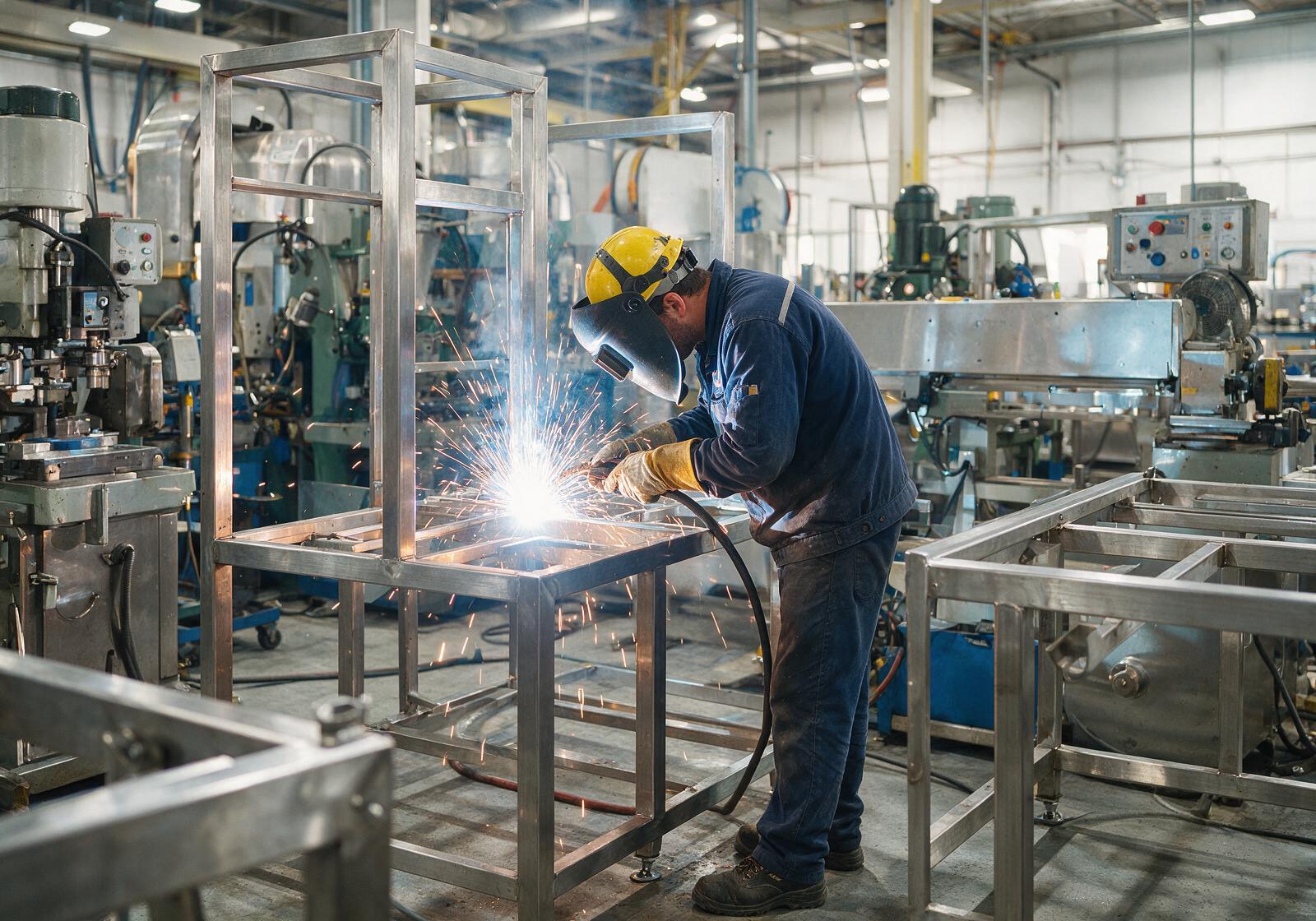
- Confirm animal, weight, capacity and working hours.
- Agree stunning or slaughter method and certification target.
- Draw the process flow and calculate station takt time.
- Check building section, room zoning, drainage and utilities.
- Select equipment and define the responsibility boundary.
- Pre-assemble and test agreed sections in the factory.
- Install, commission and verify the line at defined capacity.
- Train operators and establish cleaning and maintenance routines.
Frequently Asked Questions
What is the basic slaughter process for cattle?
The usual sequence is receiving and inspection, restraint, stunning or halal slaughter, bleeding, head and hoof removal, hide removal, evisceration, inspection, splitting or quartering, weighing and chilling. Halal and conventional lines differ mainly at restraint, the slaughter operation and the requirements around bleeding and segregation.
Why is bleeding time so important?
Bleeding time affects animal welfare, product quality and, in halal processing, compliance with the certifier’s requirements. Rail length is calculated from required time and line speed so the process is controlled rather than relying on operator memory.
What is the main difference between pig and cattle processing?
Pig lines use scalding, dehairing, singeing and polishing to prepare the skin. Cattle lines use hide removal and heavier rails, restrainers and splitting equipment. Cattle projects are also more sensitive to building height and structural loads.
Can sheep and goat be processed on the same line?
Yes, if the animal size range and throughput are known. Restraint, rail height, skinning and station spacing can be made adjustable. A very wide size range may require interchangeable components or separate stations.
When should chilling begin after slaughter?
The target start time and cooling curve depend on species, carcass size, local regulation and the customer’s food-safety plan. Chilling capacity is then matched to the line’s real takt time and maximum daily production.
How do we choose between a manual and automatic line?
Compare labor cost and availability, throughput consistency, product size, traceability requirements, downtime tolerance and future expansion. Automation should solve a defined bottleneck. Adding conveyors without balancing the line can increase capital cost without increasing output.
Can the process be designed around an existing building?
Yes. We use the building plan as a constraint and test whether animal flow, rail elevation, room zoning, drainage and utilities fit. If a complete line cannot fit, the design may be staged or the building modifications can be itemized.
Fix the Process Before You Compare Equipment Prices
Send your animal type, weight, capacity, building size and target market. We will return the process assumptions and the information needed to develop a technical proposal.